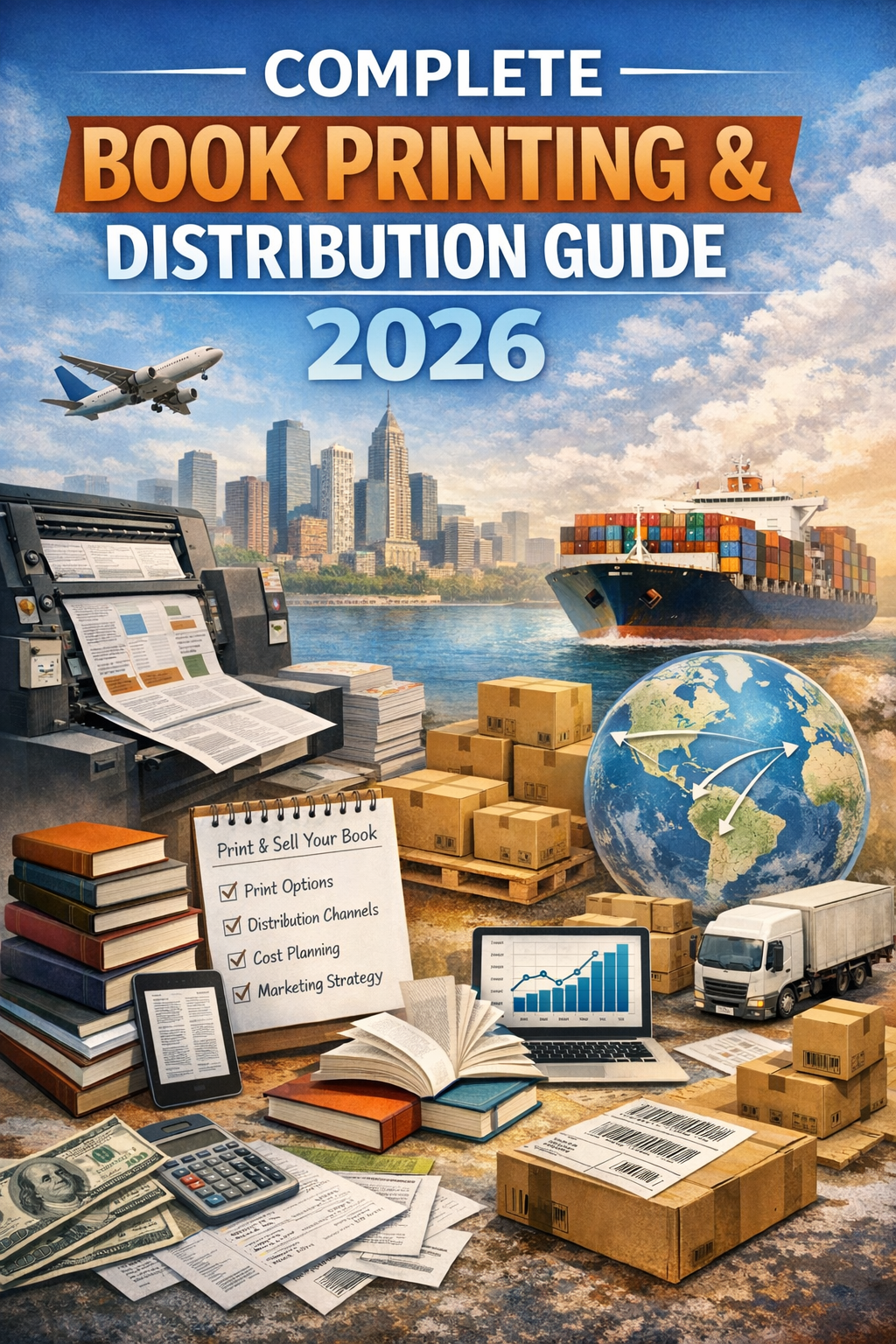
Complete Book Printing and Distribution Guide 2026
Introduction: Why Book Printing and Distribution Matter
Many authors finish writing a book but struggle with the next step—getting it printed and delivered to readers. A great manuscript means little if printing quality is poor or distribution is limited. Readers expect professional design, fast delivery, and easy availability.
That’s where a strong book printing and distribution strategy helps. With the right plan, your book can reach global markets, appear in stores, and arrive quickly in readers’ hands. This guide explains every stage clearly, from choosing printing methods to managing shipping and sales channels.
Step-by-Step Book Printing and Distribution Process
Step 1: Decide Your Printing Method
Before distribution begins, you must choose how your book will be printed. There are two main options.
Print on Demand (POD)
Books are printed only when someone orders them.
Best for:
-
New authors
-
Small budgets
-
Testing demand
Advantages:
-
No inventory storage
-
Low upfront cost
-
Automatic fulfillment
Limitations:
-
Higher cost per copy
-
Fewer paper and binding options
Offset Printing
Books are printed in bulk before selling.
Best for:
-
Established authors
-
Large print runs
-
Lower cost per unit
Advantages:
-
Professional quality
-
Lower per-book cost
-
Custom finishes available
Limitations:
-
High upfront cost
-
Storage required
Step 2: Choose Book Specifications
Printing quality affects how readers judge your book. Decide the following carefully:
-
Trim size (5x8, 6x9, etc.)
-
Paper type
-
Binding style (paperback, hardcover, spiral)
-
Cover finish (matte or glossy)
-
Color or black-and-white interior
Tip: Match specifications to your genre. For example, novels usually use cream paper and matte covers, while photography books need glossy paper.
Step 3: Calculate Printing Costs
Cost planning prevents financial surprises. Estimate:
-
Printing price per copy
-
Shipping fees
-
Packaging cost
-
Taxes
-
Distributor commission
Create a simple formula:
Retail price – (print cost + distribution fee) = profit per book
If profit is too low, adjust price or print quantity.
Step 4: Prepare Print-Ready Files
Printers require properly formatted files. Common requirements include:
-
PDF format
-
Embedded fonts
-
Correct margins and bleed
-
High-resolution images (300 dpi)
Always review a proof copy before final approval. This step prevents costly errors.
Step 5: Select Distribution Channels
Once printed, your book needs a path to readers. You can use one or multiple distribution methods.
Online Retailers
Most authors start here.
Benefits:
-
Global reach
-
Automatic shipping
-
Easy listing process
Bookstores
Physical stores still matter, especially for local authors.
Requirements:
-
ISBN barcode
-
Trade discount (usually 40–55%)
-
Return policy
Direct Sales
Selling through your website or events gives higher profit per copy.
Best for:
-
Speaking engagements
-
Workshops
-
Signed copies
Step 6: Set Distribution Pricing Strategy
Retail pricing affects both sales and profit. Consider:
-
Competitor pricing
-
Print cost
-
Distributor commission
-
Target audience budget
A common mistake is pricing too low. Cheap pricing can reduce perceived value and limit earnings.
Step 7: Manage Shipping and Logistics
Efficient shipping improves customer satisfaction. Plan:
-
Packaging quality
-
Delivery time
-
Tracking system
-
Return handling
If you use POD platforms, shipping is usually automated. If you handle orders yourself, partner with reliable couriers.
Step 8: Track Sales and Inventory
Monitoring performance helps you improve your book printing and distribution strategy.
Track:
-
Sales by channel
-
Best-selling regions
-
Return rates
-
Customer feedback
Use this data to decide reprints, pricing changes, or marketing adjustments.
Benefits of a Strong Book Printing and Distribution Strategy
Wider Reach
A structured system allows your book to be available worldwide instead of only locally.
Professional Reputation
High printing quality builds credibility and trust among readers and retailers.
Higher Profit Potential
Strategic pricing and distribution maximize earnings while keeping costs manageable.
Scalability
When demand grows, you can quickly increase print quantity or add sales channels.
Best Practices for Book Printing and Distribution
Plan Before Printing
Never print thousands of copies without confirmed demand. Start small unless preorders justify a large run.
Always Order Proof Copies
A proof lets you check:
-
Color accuracy
-
Alignment
-
Typos
-
Paper quality
Skipping this step often leads to expensive reprints.
Use Multiple Distribution Channels
Relying on only one platform limits your audience. Combine:
-
Online stores
-
Bookshops
-
Direct sales
Optimize Packaging
Damaged books lead to refunds and poor reviews. Use sturdy packaging and moisture protection.
Register ISBN Correctly
An ISBN ensures your book is recognized globally. It is essential for bookstore and library distribution.
Common Mistakes to Avoid
Printing Too Many Copies
Large print runs seem cheaper per unit but can create storage and cash-flow problems.
Ignoring Distribution Terms
Retailers may require specific discounts or return policies. Not understanding these rules can block listings.
Poor File Formatting
Incorrect margins or low-resolution images result in blurry printing or cut-off text.
Choosing the Cheapest Printer
Low cost often means lower quality. Readers notice thin paper, faded ink, or weak binding.
No Shipping Plan
Late deliveries damage your reputation. Always calculate realistic delivery times.
Print Formats and Their Impact on Distribution
Paperback
Most popular and affordable format.
Best for: fiction, memoirs, self-help
Distribution: easiest to ship and stock
Hardcover
Premium option with higher perceived value.
Best for: collectors, gifts, special editions
Distribution: higher shipping cost
Special Editions
Includes spiral-bound, large print, or illustrated versions.
Best for: workbooks, manuals, art books
Distribution: limited but targeted audience
Local vs Global Book Distribution
Local Distribution
Selling within your country reduces shipping cost and delivery time.
Advantages:
-
Faster delivery
-
Easier returns
-
Lower logistics cost
Global Distribution
Expands audience beyond borders.
Advantages:
-
Larger market
-
International recognition
-
More sales potential
Best strategy: start local, then expand globally once demand grows.
Why Choose Professional Book Printing and Distribution Services
Working with professionals simplifies the process and improves results.
Expertise
Professionals understand:
-
Print specifications
-
Industry standards
-
Retail requirements
Time Savings
Handling printing, shipping, and inventory alone takes weeks. A service provider manages these tasks so you can focus on writing and marketing.
Quality Assurance
Professional printers maintain:
-
Color accuracy
-
Durable binding
-
Clean trimming
Distribution Networks
Established services already connect with retailers, wholesalers, and libraries. This expands your reach instantly.
Cost Efficiency
Although services charge fees, they often negotiate bulk printing and shipping discounts, saving money overall.
Advanced Strategies for 2026 Publishing Success
Combine Print and Digital Formats
Offer ebook and audiobook versions alongside print editions to reach different reader preferences.
Use Regional Printing
Printing books closer to buyers reduces shipping time and cost.
Offer Limited Editions
Special covers or signed copies increase demand and allow premium pricing.
Monitor Market Trends
Publishing trends change quickly. Stay updated on:
-
Paper pricing
-
Shipping rates
-
Retail policies
Build Distributor Relationships
Strong communication with distributors helps with restocking, promotions, and problem resolution.
Checklist: Book Printing and Distribution Readiness
Before launching your book, confirm the following:
-
Final manuscript edited and formatted
-
Print specifications chosen
-
ISBN assigned
-
Proof copy approved
-
Pricing calculated
-
Distribution channels selected
-
Shipping plan ready
-
Marketing launch scheduled
If all boxes are checked, your book is ready for release.