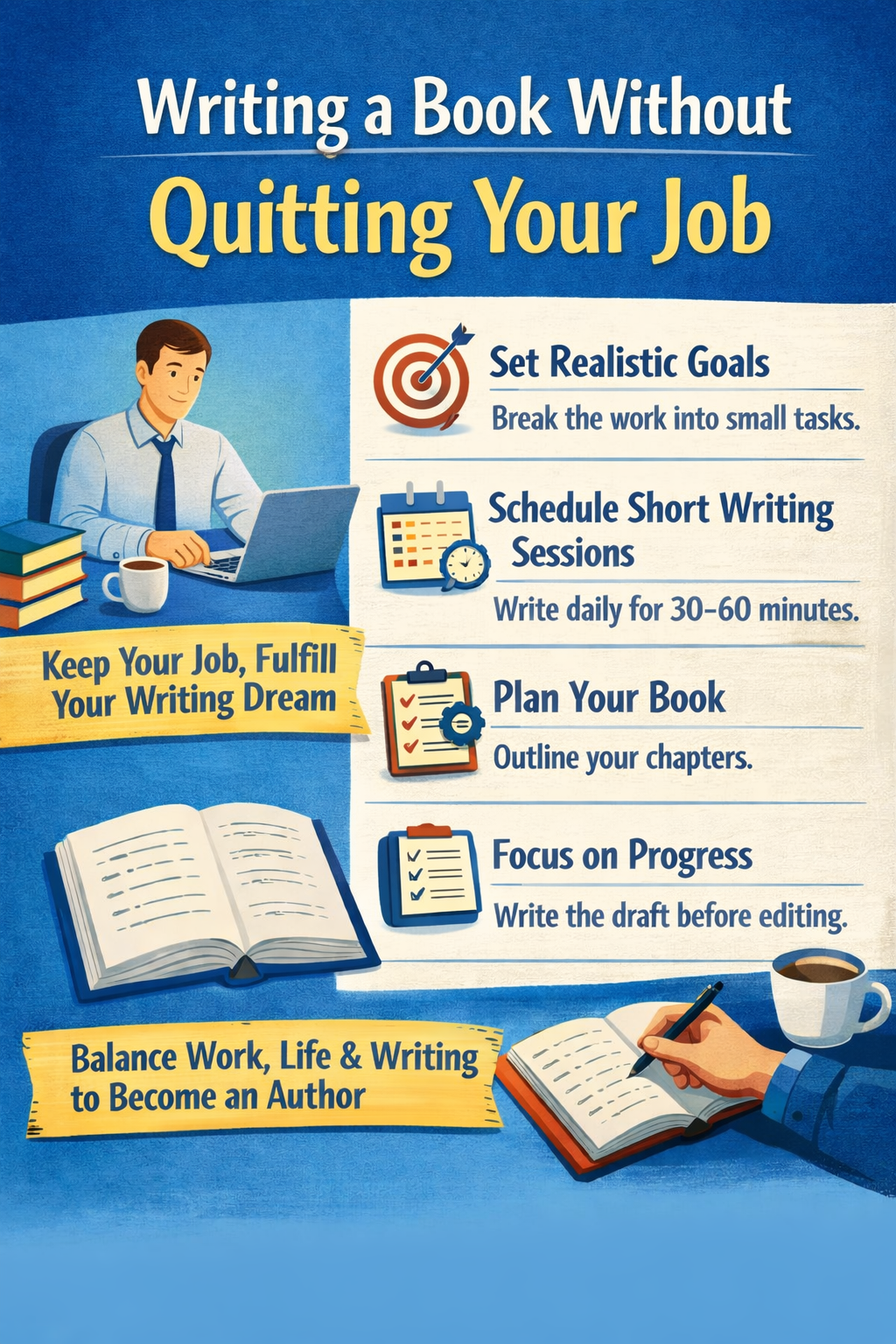
Daily Writing Routine for Busy Professionals Guide
Introduction: Why Busy Professionals Struggle to Write
Many professionals dream of writing a book. You may want to share your expertise, build authority, or tell your story. However, busy schedules make writing difficult.
Meetings, deadlines, family responsibilities, and daily stress leave little time for creative work. As a result, writing often gets postponed.
The biggest challenge is not lack of ideas. It is lack of a proper system.
The solution is simple. You need a daily writing routine for busy professionals that fits your lifestyle. With the right routine, you can make steady progress without sacrificing your career or personal life.
This guide will show you exactly how to create and follow a writing routine that works.
Why You Need a Daily Writing Routine for Busy Professionals
Writing without a routine leads to inconsistency. You may write once a week, then stop for months.
A routine solves this problem.
Benefits of a daily writing routine include:
-
Builds consistency
-
Reduces procrastination
-
Improves writing quality
-
Helps complete your manuscript faster
-
Reduces stress and overwhelm
Most successful authors follow a routine. They do not wait for motivation. They rely on discipline and habit.
Step 1: Set a Clear Writing Goal
Before creating a routine, define your goal.
Ask yourself:
-
Are you writing a book?
-
Are you writing daily content?
-
Are you writing for publishing?
Now break your goal into smaller targets.
Example:
Instead of saying:
"I will write a book"
Say:
"I will write 500 words daily"
Small goals feel achievable. They help you stay consistent.
Step 2: Choose Your Best Writing Time
Busy professionals must use their most productive hours.
Everyone has different energy levels.
Common writing times include:
Early Morning
-
Quiet environment
-
Fresh mind
-
No distractions
Late Night
-
Peaceful time
-
No work interruptions
Lunch Break
-
Good for short writing sessions
Choose the time that works best for you.
Consistency matters more than duration.
Step 3: Start with Short Writing Sessions
Many beginners make a mistake. They try to write for hours.
This leads to burnout.
Instead, start small.
Recommended writing duration:
-
20 minutes per day
-
30 minutes per day
-
500 words per day
Even small progress adds up.
In 3 months, you can write thousands of words.
Step 4: Create a Dedicated Writing Space
Your environment affects productivity.
Choose a space where you can focus.
It can be:
-
A desk at home
-
A quiet room
-
A library
-
A workspace corner
Your brain will associate this place with writing.
This improves focus and efficiency.
Step 5: Plan Your Writing Before You Start
Never start writing without knowing what to write.
This wastes time.
Instead, prepare in advance.
Before your writing session:
-
Decide your topic
-
Outline your points
-
Set a word goal
This helps you write faster.
Planning saves energy.
Step 6: Remove Distractions During Writing Time
Distractions reduce productivity.
Common distractions include:
-
Mobile phones
-
Social media
-
Emails
-
Notifications
During writing time:
-
Turn off notifications
-
Keep phone away
-
Focus fully
Even 30 minutes of focused writing is powerful.
Step 7: Focus on Progress, Not Perfection
Perfection slows progress.
Many professionals stop writing because they want perfect sentences.
This is a mistake.
Your first draft does not need to be perfect.
Focus on:
-
Writing ideas
-
Completing sections
-
Maintaining flow
Editing can be done later.
Completion is more important.
Step 8: Use Weekends for Deep Writing
Weekdays are busy. Weekends offer more time.
Use weekends for:
-
Writing longer chapters
-
Editing
-
Reviewing your work
-
Planning next week
This accelerates your progress.
Weekend writing is highly effective.
Step 9: Track Your Writing Progress
Tracking builds motivation.
You can track:
-
Words written
-
Time spent
-
Chapters completed
Tracking shows progress.
Progress increases confidence.
Step 10: Make Writing a Habit
Habits remove resistance.
At first, writing feels difficult.
But after a few weeks, it becomes natural.
Consistency creates habit.
Habit creates success.
Sample Daily Writing Routine for Busy Professionals
Here is a simple example:
Morning
-
6:30 AM – Write for 30 minutes
Workday
-
Think about ideas
Evening
-
Review or plan next session
Weekend
-
Write for 1–2 hours
This routine is realistic and effective.
Benefits of a Daily Writing Routine for Busy Professionals
Following a routine provides powerful benefits.
1. Helps You Finish Your Book Faster
Consistent writing leads to faster completion.
Even 500 words daily equals:
15,000 words in one month
2. Reduces Mental Stress
A routine removes confusion.
You know when to write.
This reduces stress.
3. Improves Writing Quality
Regular writing improves skill.
Practice builds confidence.
4. Builds Professional Authority
Writing a book increases credibility.
It helps career growth.
5. Creates New Opportunities
Authors can earn through:
-
Book publishing
-
Speaking
-
Consulting
Writing opens doors.
Best Practices for Busy Professionals
Follow these proven practices.
Keep Your Routine Simple
Avoid complex plans.
Simple routines work best.
Write Even When You Feel Unmotivated
Discipline matters more than motivation.
Prepare Ideas in Advance
Preparation saves time.
Stay Patient
Writing takes time.
Success comes slowly.
Protect Your Writing Time
Treat writing as an important appointment.
Common Mistakes to Avoid
Avoid these mistakes.
Waiting for Free Time
Free time never comes.
You must create time.
Writing Without a Plan
This causes confusion.
Trying to Write Too Much
This causes burnout.
Editing While Writing
This slows progress.
Giving Up Too Early
Consistency brings results.
Time Management Tips for Busy Professionals
Good time management makes writing possible.
Use Small Time Blocks
Even 15 minutes helps.
Wake Up Earlier
Morning writing is powerful.
Reduce Social Media Time
Save time for writing.
Use Weekends Wisely
Write more when free.
Why Choose a Professional Publishing Service
Writing is only the first step.
Publishing requires expertise.
Professional publishing companies help with:
Editing
Improves manuscript quality.
Formatting
Prepares manuscript for publishing.
Cover Design
Creates professional book cover.
Publishing Guidance
Helps avoid mistakes.
Marketing Support
Helps reach readers.
Professional support saves time.
It increases success.
How Long Does It Take to Finish a Book with a Daily Routine
With 500 words daily:
-
15,000 words per month
-
60,000 words in 4 months
This is a full book.
Consistency makes it possible.
How to Stay Motivated
Motivation decreases sometimes.
Here is how to stay motivated:
-
Remember your goal
-
Celebrate progress
-
Track results
-
Stay consistent
Progress creates motivation.
Daily Writing Routine is the Secret of Successful Authors
Successful authors do not depend on free time.
They follow routines.
They write daily.
They stay consistent.
Routine creates success.