Fiction vs Nonfiction: Which Should You Write First?
Introduction: Why Choosing Between Fiction and Nonfiction Is Difficult
Many beginner writers struggle with one important decision: should they start with fiction or nonfiction?
They may have creative story ideas. At the same time, they may also have knowledge or life experiences worth sharing.
This creates confusion.
Choosing the wrong type can slow your progress. It can make writing harder and reduce motivation.
However, understanding fiction vs nonfiction writing makes this decision easier.
Each type has its own benefits, challenges, and purpose.
This guide will help you understand both options and choose the right one for your first book.
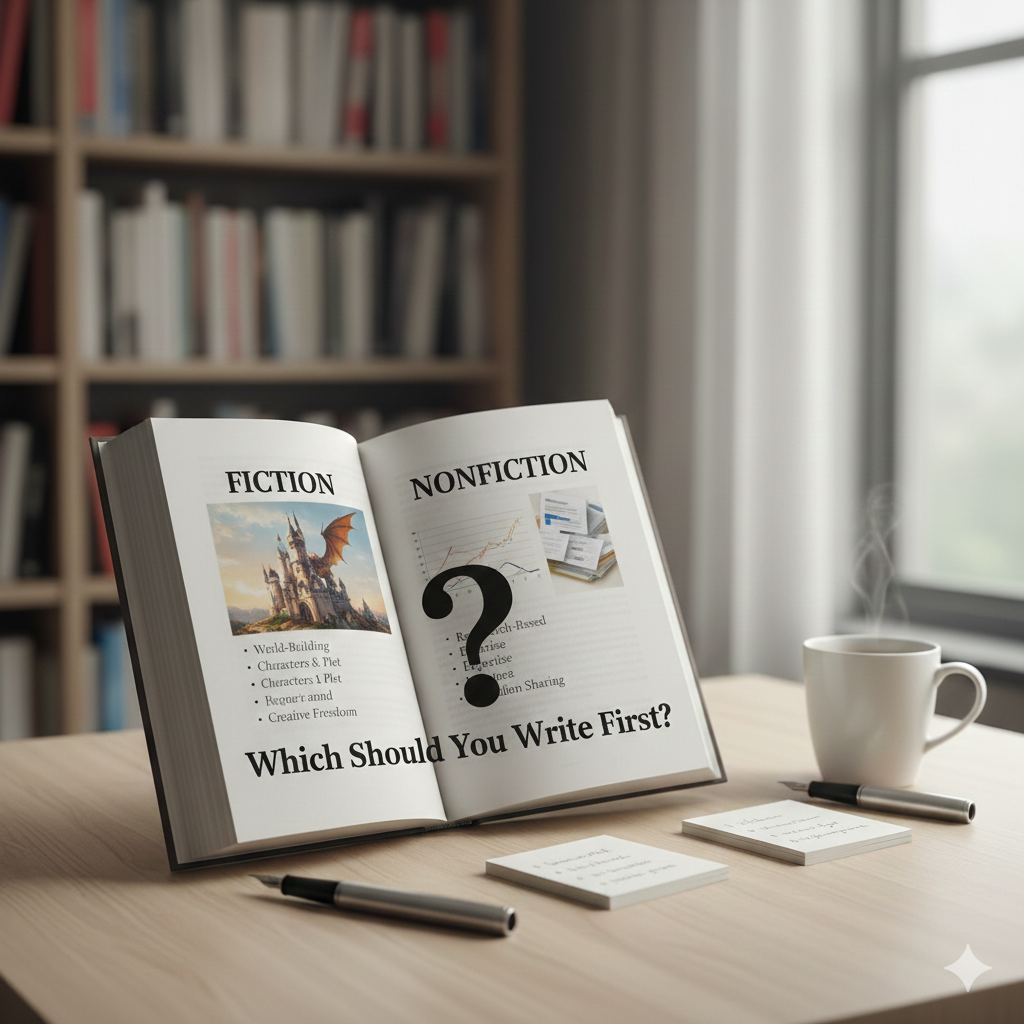
What Is Fiction vs Nonfiction Writing?
Before choosing, you must understand the difference.
What Is Fiction Writing?
Fiction writing involves imaginary stories.
These stories come from the writer’s creativity.
Examples include:
-
Novels
-
Short stories
-
Fantasy
-
Romance
-
Mystery
Fiction focuses on:
-
Characters
-
Plot
-
Conflict
-
Emotions
The goal is to entertain readers.
What Is Nonfiction Writing?
Nonfiction writing is based on facts and real information.
It focuses on teaching, informing, or sharing real experiences.
Examples include:
-
Self-help books
-
Biographies
-
Business books
-
Educational books
The goal is to provide value and knowledge.
Key Differences Between Fiction vs Nonfiction Writing
Understanding these differences helps you decide.
Creativity vs Information
-
Fiction uses imagination
-
Nonfiction uses facts and real knowledge
Purpose
-
Fiction entertains
-
Nonfiction teaches or informs
Structure
-
Fiction follows story structure
-
Nonfiction follows logical structure
Research Requirement
-
Fiction needs less research
-
Nonfiction often requires research
Writing Style
-
Fiction focuses on storytelling
-
Nonfiction focuses on clarity
Which Is Easier for Beginners?
This depends on your strengths.
Fiction Is Easier If:
-
You have strong imagination
-
You enjoy storytelling
-
You like creating characters
Nonfiction Is Easier If:
-
You have knowledge to share
-
You enjoy teaching
-
You prefer logical writing
Choose based on your natural ability.
Step-by-Step Guide to Choosing Between Fiction vs Nonfiction Writing
Follow these steps to decide.
Step 1: Identify Your Purpose
Ask yourself:
Why do you want to write?
Possible reasons:
-
Share knowledge
-
Tell stories
-
Help others
-
Entertain readers
If you want to teach, choose nonfiction.
If you want to entertain, choose fiction.
Step 2: Evaluate Your Strengths
Think about your skills.
Are you better at:
-
Storytelling?
-
Explaining ideas?
Choose your strength.
Writing becomes easier.
Step 3: Consider Your Experience
Nonfiction requires experience or knowledge.
If you have expertise, nonfiction is easier.
If not, fiction may be better.
Step 4: Think About Your Goals
Your goals matter.
If your goal is:
-
Build authority → Choose nonfiction
-
Express creativity → Choose fiction
Step 5: Consider Writing Difficulty
Fiction challenges include:
-
Creating plot
-
Building characters
Nonfiction challenges include:
-
Organizing information
-
Explaining clearly
Choose what feels comfortable.
Benefits of Fiction vs Nonfiction Writing
Both offer advantages.
Benefits of Fiction Writing
Creative Freedom
You can create anything.
There are no limits.
Emotional Expression
You express feelings through stories.
Entertainment Value
Readers enjoy stories.
Personal Satisfaction
Creative writing feels rewarding.
Benefits of Nonfiction Writing
Easier to Organize
Based on real knowledge.
Structure is clear.
Builds Authority
You become an expert.
Faster to Write
Less creative pressure.
Higher Market Demand
Many readers want to learn.
Which Type Helps You Finish Your First Book Faster?
For most beginners:
Nonfiction is easier to finish.
Why?
Because:
-
Ideas come from real knowledge
-
Less creative struggle
-
Clear structure
However, if you love storytelling, fiction may feel easier.
Passion matters most.
Best Practices for Fiction vs Nonfiction Writing
Follow these best practices.
Best Practices for Fiction Writing
Plan Your Story
Create outline first.
Develop Strong Characters
Characters drive the story.
Focus on Conflict
Conflict creates interest.
Write Consistently
Daily writing improves progress.
Best Practices for Nonfiction Writing
Choose Clear Topic
Focus on one subject.
Create Chapter Outline
Planning improves clarity.
Provide Value
Help readers solve problems.
Use Simple Language
Clarity improves readability.
Common Mistakes to Avoid in Fiction vs Nonfiction Writing
Avoid these mistakes.
Fiction Writing Mistakes
Weak Plot
Story becomes boring.
Poor Character Development
Readers lose interest.
No Structure
Story feels confusing.
Nonfiction Writing Mistakes
Too Much Information
Readers feel overwhelmed.
Poor Organization
Structure becomes unclear.
Lack of Value
Readers expect useful information.
How Your Personality Affects Fiction vs Nonfiction Writing Choice
Your personality matters.
Choose Fiction If You Are:
-
Creative
-
Emotional
-
Imaginative
Choose Nonfiction If You Are:
-
Analytical
-
Logical
-
Informative
Choose what matches your thinking style.
Can You Write Both Fiction and Nonfiction?
Yes.
Many authors write both.
However, beginners should start with one.
Focus improves success.
After gaining experience, try both.
Which Is Better for Publishing Success?
Both can succeed.
However, nonfiction offers advantages:
-
Faster to write
-
Easier to market
-
Builds authority
Fiction requires more time.
But fiction offers creative satisfaction.
How Professional Publishing Services Help You Decide
Professional publishing companies help you choose the right path.
They provide expert guidance.
Manuscript Evaluation
Experts review your idea.
They suggest best option.
Book Planning Support
They help create structure.
Professional Editing
Editors improve quality.
Publishing Guidance
They prepare your book professionally.
Save Time and Effort
Expert help improves success rate.
Questions to Ask Before Choosing Fiction vs Nonfiction Writing
Ask yourself:
-
What am I passionate about?
-
What is easier for me?
-
What is my goal?
-
Who is my audience?
Answers provide clarity.
Why Starting Is More Important Than Choosing Perfectly
Many writers delay writing.
They wait for perfect decision.
This slows progress.
The truth is:
Starting matters more.
You can always write another book later.
Action creates success.
Example: Beginner Author Decision
Example:
If a business professional writes:
Nonfiction is easier.
If a creative thinker writes:
Fiction is easier.
Choose what fits you.
How Fiction vs Nonfiction Writing Affects Your Writing Journey
Your choice affects:
-
Writing speed
-
Motivation
-
Confidence
Choose wisely.
It improves success.