How to Overcome Writer’s Block Quickly and Easily
Introduction: Why Writer’s Block Happens and How to Fix It
Every writer faces writer’s block at some point. You sit down to write, but nothing comes to mind. The ideas stop flowing, and frustration grows.
This situation can feel stressful, especially when you have deadlines or want to finish your manuscript.
The truth is, writer’s block is normal. It does not mean you are a bad writer. It simply means your mind needs the right approach to restart.
The good news is that you can overcome writer’s block quickly using proven techniques. With the right steps, you can regain your creativity and continue writing with confidence.
This guide will help you understand why writer’s block happens and how to overcome it effectively.
What Is Writer’s Block?
Writer’s block is a condition where a writer cannot produce new content or struggles to continue writing.
It can last for:
-
Minutes
-
Days
-
Weeks
-
Or even months
This delay slows your progress and reduces motivation.
However, writer’s block is temporary. It can be solved with the right strategy.
Common Causes of Writer’s Block
Before you learn how to overcome writer’s block quickly, you must understand its causes.
Fear of Imperfection
Many writers want their work to be perfect.
This fear stops progress.
Lack of Ideas
Sometimes, writers feel they have nothing new to say.
This leads to mental blocks.
Overthinking
Thinking too much slows writing.
It creates confusion.
Stress and Mental Fatigue
Busy schedules reduce creativity.
Mental exhaustion affects writing ability.
Distractions
Phones, social media, and noise reduce focus.
This makes writing difficult.
Step-by-Step Guide to Overcome Writer’s Block Quickly
These proven steps will help you restart your writing immediately.
Step 1: Stop Trying to Write Perfectly
Perfection is the biggest enemy of progress.
Your first draft does not need to be perfect.
Focus on:
-
Writing freely
-
Expressing ideas
-
Making progress
Editing can be done later.
Progress builds momentum.
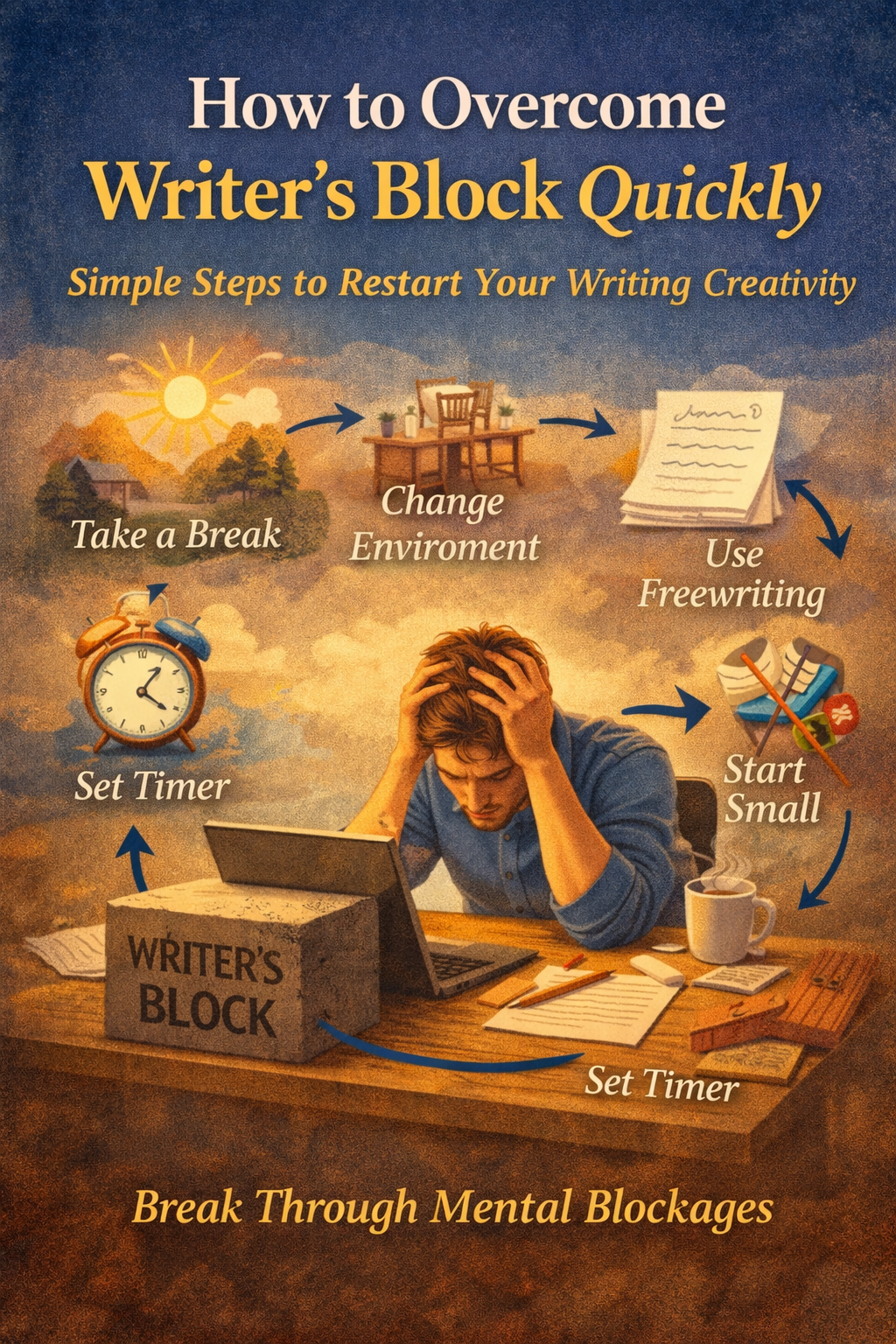
Step 2: Take a Short Break
Sometimes, your brain needs rest.
Take a break for:
-
10 minutes
-
30 minutes
-
A short walk
Breaks refresh your mind.
Fresh thinking improves creativity.
Step 3: Change Your Writing Environment
Your surroundings affect your productivity.
Try writing in a new place:
-
Library
-
Café
-
Quiet room
A new environment stimulates creativity.
Step 4: Start with Small Writing Tasks
Do not try to write everything at once.
Start small.
For example:
-
Write one paragraph
-
Write 100 words
-
Write one idea
Small wins build confidence.
Confidence removes writer’s block.
Step 5: Use Freewriting Technique
Freewriting means writing continuously without stopping.
Do not worry about grammar or mistakes.
Write whatever comes to mind.
This removes mental pressure.
It helps generate ideas.
Step 6: Review Your Previous Work
Reading your earlier writing helps restart your thinking.
It reminds you of:
-
Your ideas
-
Your direction
-
Your purpose
This makes continuation easier.
Step 7: Set a Timer
Use time limits.
Write for:
-
10 minutes
-
20 minutes
This removes pressure.
Short sessions improve focus.
Step 8: Remove All Distractions
Distractions slow progress.
During writing:
-
Turn off phone notifications
-
Avoid social media
-
Choose a quiet place
Focus improves writing speed.
Step 9: Talk About Your Ideas
Discuss your ideas with:
-
Friends
-
Other writers
-
Mentors
Talking improves clarity.
Clear thinking improves writing.
Step 10: Create a Daily Writing Habit
Consistency prevents writer’s block.
Write daily, even if small.
Habit builds momentum.
Momentum removes resistance.
Benefits of Learning to Overcome Writer’s Block Quickly
Learning these techniques provides many benefits.
Improves Writing Speed
You spend less time feeling stuck.
You write faster.
Increases Productivity
You complete your manuscript sooner.
Reduces Stress
You feel more confident.
Stress decreases.
Improves Creativity
Your ideas flow easily.
Builds Writing Confidence
You trust your abilities.
Confidence improves performance.
Best Practices to Prevent Writer’s Block
Prevention is better than cure.
Follow these best practices.
Create a Writing Schedule
Write at the same time daily.
Routine builds habit.
Plan Before Writing
Prepare ideas in advance.
Planning reduces confusion.
Take Care of Your Mental Health
Rest improves creativity.
Healthy mind writes better.
Avoid Multitasking
Focus on writing only.
Multitasking reduces quality.
Accept Imperfection
Perfection slows progress.
Completion matters more.
Common Mistakes to Avoid
Avoid these common mistakes.
Waiting for Motivation
Motivation is unreliable.
Discipline works better.
Editing While Writing
Editing slows progress.
Write first.
Edit later.
Comparing Yourself to Others
Every writer is unique.
Comparison reduces confidence.
Writing Without a Plan
Planning improves clarity.
Giving Up Too Soon
Persistence brings success.
How Professional Authors Handle Writer’s Block
Professional authors follow simple strategies.
They:
-
Write daily
-
Follow routines
-
Accept imperfect drafts
-
Focus on completion
They do not stop writing.
Consistency makes them successful.
Why Choose a Professional Publishing Service
Professional publishing companies help writers overcome challenges.
They provide expert support.
Professional Editing
Editors improve quality.
They refine your manuscript.
Writing Guidance
Experts guide your writing process.
They help improve structure.
Manuscript Development Support
They help complete your book faster.
Publishing Preparation
They prepare your manuscript for publishing.
Motivation and Accountability
Professional support keeps you on track.
How Long Does Writer’s Block Last?
Writer’s block duration varies.
It can last:
-
Few minutes
-
Few days
-
Few weeks
However, using the right techniques helps you overcome writer’s block quickly.
Action reduces delay.
Writer’s Block Is Normal
Every author experiences writer’s block.
Even successful authors face it.
The difference is they continue writing.
They do not stop.
They follow proven methods.
Simple Exercise to Overcome Writer’s Block Quickly
Try this now:
Set timer for 10 minutes.
Write anything.
Do not stop.
This exercise restarts creativity.
Action creates momentum.
Your Mind Needs Movement
Thinking alone does not help.
Writing creates ideas.
Start writing.
Ideas will follow.