How to Turn Expertise Into a Sellable Book Fast
Introduction: Your Expertise Is More Valuable Than You Think
Many professionals have valuable knowledge. They spend years learning, working, and solving problems. However, most never turn that knowledge into a book.
As a result, their expertise stays limited to their job or business.
At the same time, readers are actively searching for experts who can guide them. They want clear advice from someone who understands their challenges.
This creates a powerful opportunity.
When you turn your expertise into a sellable book, you do more than write. You create an asset that builds your authority, increases your visibility, and generates income.
The good news is that you don’t need to be a professional writer to do this.
You need the right strategy.
This guide will show you step by step how to transform your knowledge into a book readers want to buy.
Why Expertise-Based Books Sell So Well
Readers Trust Experts
People prefer learning from someone with real experience.
They trust authors who have solved the problems they face.
Your expertise gives your book credibility.
Expertise Books Solve Real Problems
Readers want practical solutions.
They don’t want theory alone.
They want:
-
Clear guidance
-
Proven methods
-
Real examples
This makes your sellable book valuable.
Expertise Books Build Authority
A book positions you as a leader.
It strengthens your personal brand.
It makes you stand out.
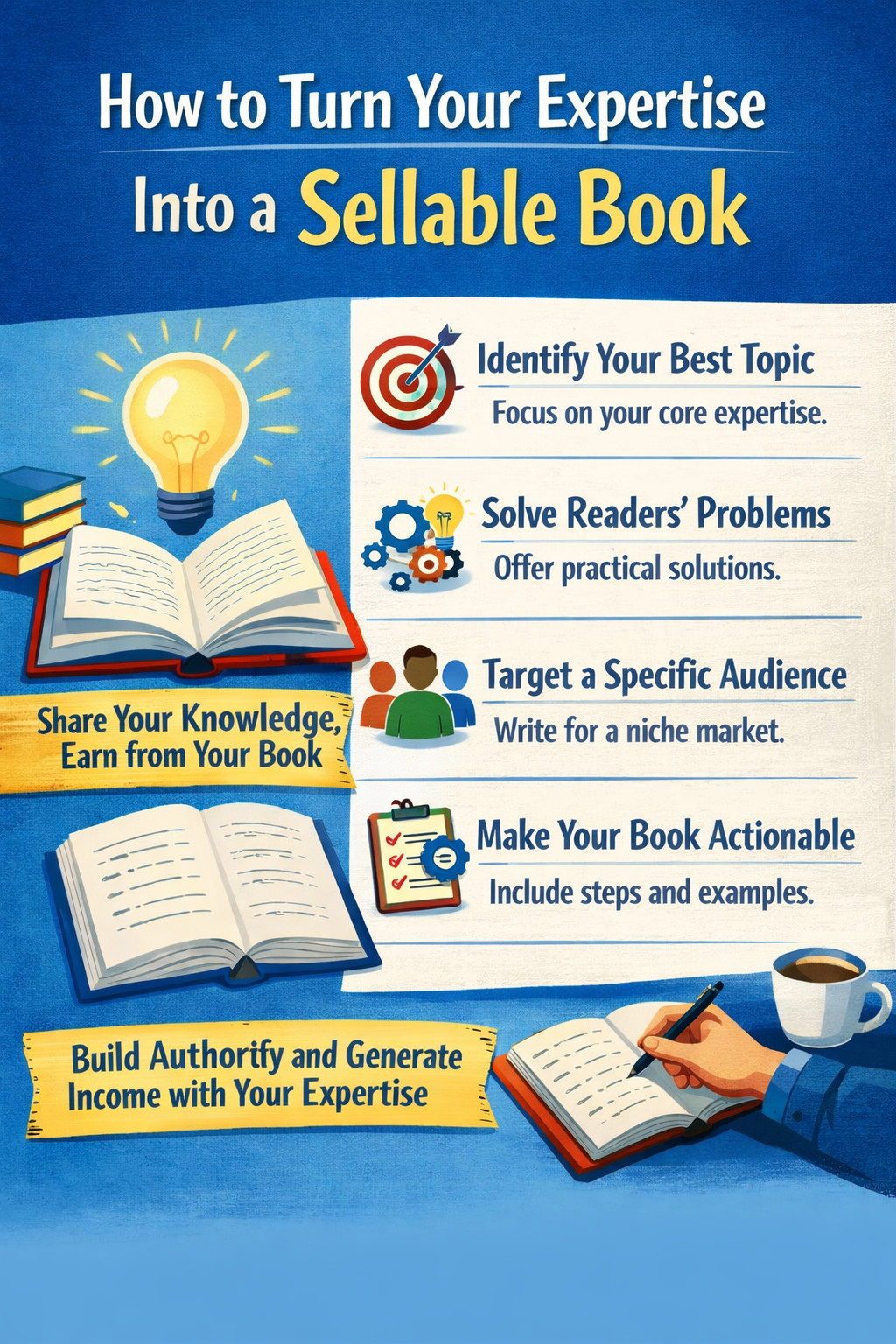
Step 1: Identify the Most Valuable Part of Your Expertise
Focus on One Core Topic
You may know many things. But your book should focus on one main area.
For example:
Instead of writing:
-
“Business Guide”
Write:
-
“How to Start a Small Online Business”
Specific topics attract the right readers.
Ask Yourself These Questions
To find your best topic, ask:
-
What do people ask me for help with?
-
What problems do I solve regularly?
-
What knowledge do I use daily?
These answers reveal your strongest expertise.
Step 2: Choose a Problem Readers Will Pay to Solve
Sellable Books Solve Painful Problems
People buy books to fix problems.
They invest in solutions.
Examples of strong problem-based topics:
-
Career growth
-
Business improvement
-
Writing skills
-
Financial improvement
-
Productivity
Your sellable book should help readers improve their situation.
Avoid Weak Topics
Avoid topics that are:
-
Too broad
-
Too general
-
Too unclear
Clarity improves sales.
Step 3: Define Your Target Reader Clearly
Your Book Is Not for Everyone
Trying to help everyone reduces your impact.
Instead, focus on a specific reader.
For example:
-
Beginner entrepreneurs
-
First-time authors
-
Students
-
Freelancers
Create a Reader Profile
Define:
-
Their goals
-
Their struggles
-
Their experience level
This makes your book more effective.
Step 4: Create a Strong Book Outline
Outline Makes Writing Faster
Many authors struggle because they don’t plan.
An outline gives direction.
It makes writing easier.
Example Structure
Introduction
Explain:
-
Who the book is for
-
What problem it solves
Main Chapters
Each chapter should:
-
Address one problem
-
Provide one solution
Conclusion
Summarize key lessons.
Encourage action.
Step 5: Turn Your Knowledge Into Practical Lessons
Don’t Just Share Information
Share solutions.
Readers want to know how to apply your expertise.
Use This Simple Formula
Each chapter should include:
The Problem
Explain the challenge.
The Solution
Explain how to fix it.
The Steps
Provide clear instructions.
The Example
Show real application.
This makes your sellable book more useful.
Step 6: Write in Simple and Clear Language
Simplicity Increases Impact
Avoid complex words.
Simple writing helps readers understand faster.
Use These Techniques
-
Short sentences
-
Bullet points
-
Examples
-
Clear explanations
This improves reader experience.
Step 7: Build Trust With Real Experience
Readers Value Authenticity
Share real experiences.
Talk about:
-
Your challenges
-
Your mistakes
-
Your solutions
This makes your book relatable.
Avoid Pretending to Be Perfect
Honesty builds trust.
Trust builds readers.
Step 8: Make Your Book Practical and Actionable
Actionable Books Sell Better
Readers prefer books they can use immediately.
Include:
-
Exercises
-
Checklists
-
Step-by-step guides
This makes your sellable book more effective.
Benefits of Turning Your Expertise Into a Sellable Book
1. Builds Authority
Your book proves your expertise.
People respect published authors.
2. Creates New Income Opportunities
Your book can generate:
-
Book sales
-
Speaking opportunities
-
Consulting opportunities
3. Expands Your Reach
Your knowledge reaches more people.
This increases your influence.
4. Strengthens Your Brand
Your book builds your reputation.
It improves your professional image.
5. Creates Long-Term Value
Your book remains useful for years.
It becomes a lasting asset.
Best Practices for Writing a Sellable Book
Focus on Results
Help readers achieve outcomes.
Results make your book valuable.
Keep Content Organized
Structure improves readability.
Clear structure improves understanding.
Solve Real Problems
Practical solutions increase demand.
Edit Carefully
Editing improves quality.
Quality improves credibility.
Think Like a Reader
Always focus on reader needs.
Common Mistakes to Avoid
Avoid these mistakes to improve success.
Mistake 1: Writing Without Clear Purpose
Your book needs a clear goal.
Without it, readers lose interest.
Mistake 2: Sharing Too Much Information
Too much information creates confusion.
Focus on key lessons.
Mistake 3: Being Too General
General advice reduces value.
Specific advice increases usefulness.
Mistake 4: Ignoring Reader Needs
Your book must help readers.
Not just express ideas.
Mistake 5: Poor Editing
Poor editing reduces professionalism.
Quality matters.
How to Position Your Book for Maximum Sales
Focus on Reader Benefits
Explain how your book helps readers.
Benefits attract buyers.
Use a Clear Title
Your title should communicate value.
Clarity improves interest.
Build Author Credibility
Show your expertise.
This increases trust.
Why Choose a Professional Publishing Service
Writing a book is only the first step.
Professional services improve your success.
Professional Editing Improves Quality
Editors improve:
-
Clarity
-
Flow
-
Professionalism
This makes your book stronger.
Professional Formatting Improves Readability
Good formatting improves reader experience.
It makes your book easier to read.
Professional Cover Design Increases Sales
A strong cover attracts attention.
It improves first impressions.
Publishing Guidance Saves Time
Professional guidance simplifies the process.
It helps avoid mistakes.
How Professional Support Helps First-Time Authors
Professional support helps you:
-
Avoid confusion
-
Improve quality
-
Publish faster
-
Reach more readers
This improves results.
How to Build Long-Term Success With Your Book
Your Book Is Just the Beginning
Your book opens new opportunities.
It helps you grow.
Continue Sharing Knowledge
Build your authority.
Help more readers.
Create More Content
Your first book can lead to more books.
This strengthens your author career.