How to Write a - Book That Solves Real Problem
Introduction: Why Readers Want Books That Solve Problems
Most readers don’t buy books just for entertainment. They buy books to find answers.
They want solutions to real problems. It could be improving their career, managing money, writing better, or living a healthier life. When your book helps them solve a problem, it becomes valuable.
This is why writing a problem-solving book is one of the most powerful ways to build authority and connect with readers.
However, many authors make a mistake. They write about what they want to say instead of what readers need.
The good news is that you can avoid this mistake. With the right strategy, you can write a book that truly helps people and builds your reputation as an expert.
This guide will show you exactly how to do it.
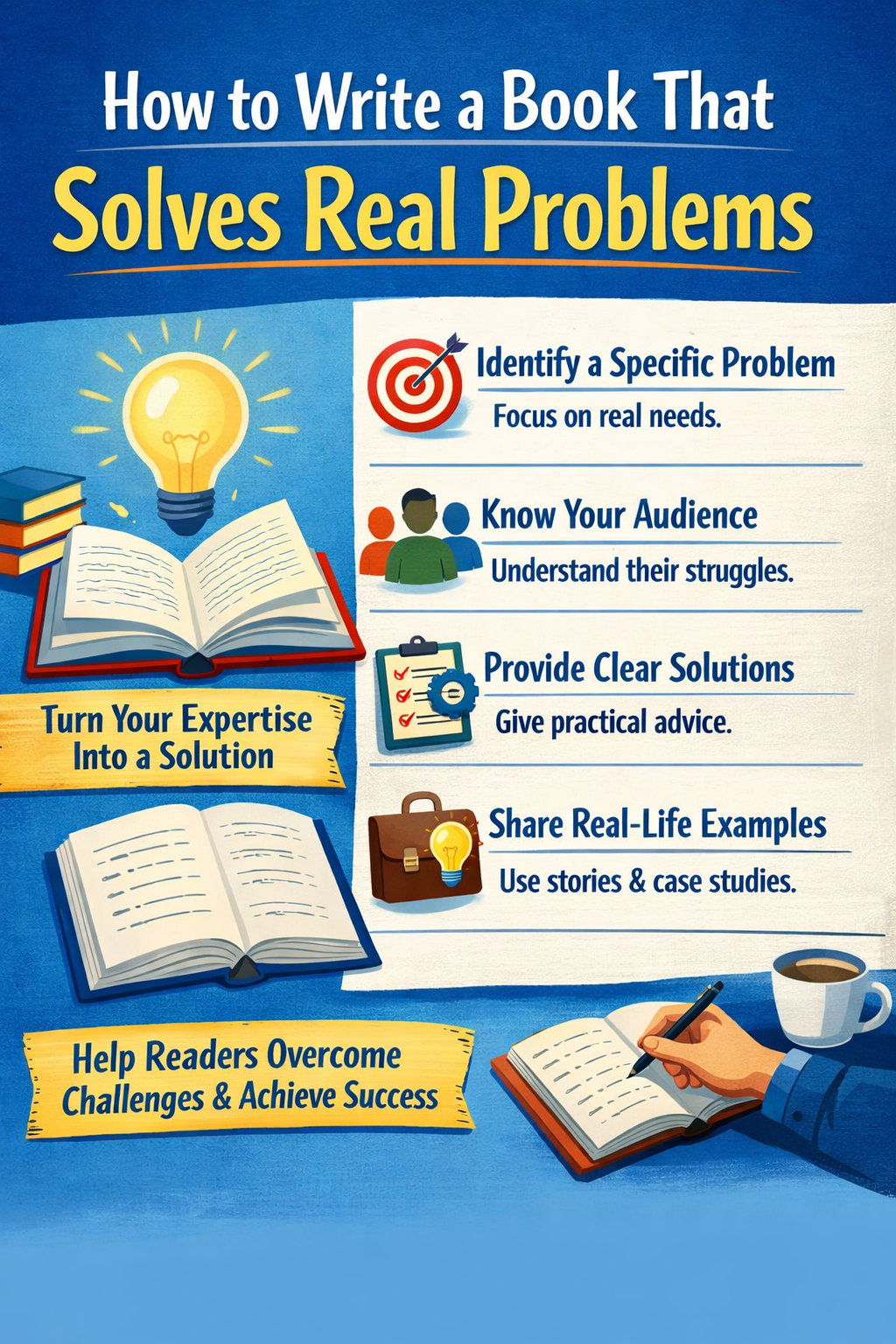
Step 1: Identify a Specific Problem to Solve
Why Specific Problems Create Successful Books
The biggest mistake authors make is choosing broad topics.
For example:
-
“How to be successful” is too broad
-
“How to get your first job after college” is specific
Specific problems attract specific readers.
And specific readers are more likely to buy your book.
How to Find Real Problems
Here are proven ways to find problems readers want solved:
Talk to Your Audience
Ask questions like:
-
What is your biggest challenge?
-
What are you struggling with right now?
-
What do you wish someone could teach you?
Look at Online Discussions
People openly share their problems online. Pay attention to:
-
Frequently asked questions
-
Common complaints
-
Repeated frustrations
Use Your Own Experience
Think about problems you have solved in your life or career.
Your experience can help others.
Step 2: Understand Your Ideal Reader Deeply
Why Knowing Your Reader Matters
You cannot write a helpful book if you don’t understand your reader.
Your book should feel like it was written just for them.
Create a Reader Profile
Answer these questions:
-
Who is your reader?
-
What is their age group?
-
What is their profession?
-
What problem do they face?
-
Why do they want to solve it?
For example:
Instead of writing for “everyone,” write for:
-
First-time authors
-
College students
-
Small business owners
This makes your problem-solving book more effective.
Step 3: Offer Practical and Clear Solutions
Readers Want Actionable Advice
Readers don’t want theory.
They want solutions they can apply immediately.
Your book should include:
-
Step-by-step instructions
-
Real examples
-
Simple explanations
Use This Structure for Every Chapter
Each chapter should include:
-
The problem
-
Why it happens
-
The solution
-
Steps to apply the solution
This makes your book easy to follow.
Step 4: Share Real Experiences and Examples
Why Examples Make Your Book Powerful
Examples make your book relatable.
They help readers understand and trust your advice.
You can share:
-
Personal stories
-
Case studies
-
Client experiences
-
Real-life situations
For example:
Instead of saying:
“Planning is important”
Say:
“When I started writing without a plan, I got stuck. But after creating an outline, I finished my book faster.”
This makes your message stronger.
Step 5: Organize Your Book for Easy Reading
Structure Improves Reader Experience
A well-organized problem-solving book is easier to read and understand.
Use this structure:
Introduction
Explain:
-
The problem
-
Why it matters
-
How your book helps
Main Chapters
Each chapter should solve one problem.
Conclusion
Summarize key lessons and motivate readers.
Step 6: Make Your Advice Simple and Clear
Simplicity Makes Your Book More Helpful
Avoid complex language.
Use simple words.
Short sentences are easier to understand.
Remember:
Your goal is to help readers, not impress them.
Use These Techniques
-
Bullet points
-
Examples
-
Step-by-step guides
-
Short paragraphs
This improves readability.
Step 7: Focus on Providing Real Value
Value Makes Your Book Successful
Readers recommend books that help them.
Your book should:
-
Save time
-
Reduce confusion
-
Provide clarity
-
Offer solutions
When your book solves real problems, readers trust you.
And they recommend your book to others.
Benefits of Writing a Problem-Solving Book
Writing a problem-solving book offers many benefits.
1. Builds Your Authority
You become seen as an expert.
People trust your knowledge.
2. Attracts the Right Audience
Your book attracts readers who need your help.
This builds a loyal audience.
3. Creates Career Opportunities
Your book can lead to:
-
Speaking opportunities
-
Consulting work
-
Teaching opportunities
4. Increases Book Sales
Books that solve problems sell better.
Readers see them as investments, not expenses.
5. Creates Long-Term Impact
Your book can help readers for years.
This builds your reputation.
Best Practices for Writing a Problem-Solving Book
Follow these best practices for success.
Focus on One Core Problem
Don’t try to solve everything.
Solve one main problem well.
Be Honest and Real
Readers connect with honesty.
Share real experiences.
Keep Chapters Action-Focused
Each chapter should help readers take action.
Edit Carefully
Editing improves clarity and quality.
Poor editing reduces trust.
Think Like a Reader
Always ask:
“How will this help my reader?”
Common Mistakes to Avoid
Avoid these mistakes when writing your book.
Mistake 1: Writing Without Research
This leads to irrelevant content.
Always understand reader needs first.
Mistake 2: Being Too General
General advice is less helpful.
Specific advice creates impact.
Mistake 3: Adding Too Much Theory
Readers want practical solutions.
Not academic lectures.
Mistake 4: Ignoring Structure
Poor structure confuses readers.
Use clear organization.
Mistake 5: Writing for Yourself Instead of Readers
Your book is for readers.
Focus on their needs.
How Professional Publishing Services Help You Succeed
Writing a book is only one part of success.
Professional services improve quality and reach.
Professional Editing Improves Clarity
Editors help:
-
Fix grammar
-
Improve readability
-
Strengthen your message
This makes your book more professional.
Professional Formatting Improves Reader Experience
Good formatting makes your book easy to read.
Poor formatting makes it look unprofessional.
Professional Cover Design Attracts Readers
Readers judge books by their covers.
A professional cover increases sales.
Publishing Guidance Saves Time
Professionals help with:
-
Publishing process
-
Distribution
-
Marketing preparation
This increases your chances of success.
How to Make Your Book Stand Out
Many books exist. Your book must be unique.
Provide Unique Insights
Share your personal perspective.
Be Clear and Direct
Avoid unnecessary content.
Focus on Results
Help readers achieve real outcomes.
Deliver Practical Value
Readers should see improvement.
How to Build Trust with Your Readers
Trust makes readers follow your advice.
Be Honest
Don’t exaggerate.
Provide Proof
Use examples and results.
Be Clear
Avoid confusing explanations.
Help Readers Take Action
Give clear steps.
How to Ensure Long-Term Success
Your book should stay relevant.
Focus on Timeless Problems
Avoid trends.
Focus on lasting problems.
Update When Necessary
Improve your book over time.
Build Your Author Brand
Your book builds your reputation.