Publishing Industry Trends Guide for Authors 2026
Introduction: The Publishing Challenge in 2026
The publishing world is changing fast. New technology, reader habits, and distribution platforms reshape how books are written, produced, and sold. Many authors feel overwhelmed because what worked five years ago may not work today.
However, understanding publishing industry trends can turn confusion into opportunity. When you follow the right trends, you position your book where readers are already looking. This guide explains the most important trends for 2026 and shows how to use them step by step to publish and market successfully.
What Are Publishing Industry Trends?
Publishing industry trends are shifts in reader behavior, technology, formats, and marketing strategies that influence how books succeed. These trends guide decisions such as:
-
Which format to publish in
-
How to price your book
-
Where to market
-
What readers expect
Authors who ignore trends often struggle with visibility. Authors who follow them gain a strong competitive edge.
Why Publishing Industry Trends Matter More Than Ever
Today’s book market is more crowded than ever. Thousands of titles release daily across platforms. Trends matter because they help you:
-
Reach the right audience faster
-
Save marketing costs
-
Choose profitable formats
-
Increase book sales
In short, trends reduce guesswork and replace it with strategy.
Step-by-Step Strategy Using Publishing Industry Trends
Step 1: Understand Reader Behavior Trends
Reader habits drive the entire publishing ecosystem. In 2026, readers prefer:
-
Shorter chapters
-
Fast-paced openings
-
Mobile-friendly formats
-
Personalized recommendations
Action Tip:
Study bestseller lists and reader reviews in your genre. Notice common themes, pacing styles, and cover designs.
Step 2: Choose the Right Book Format
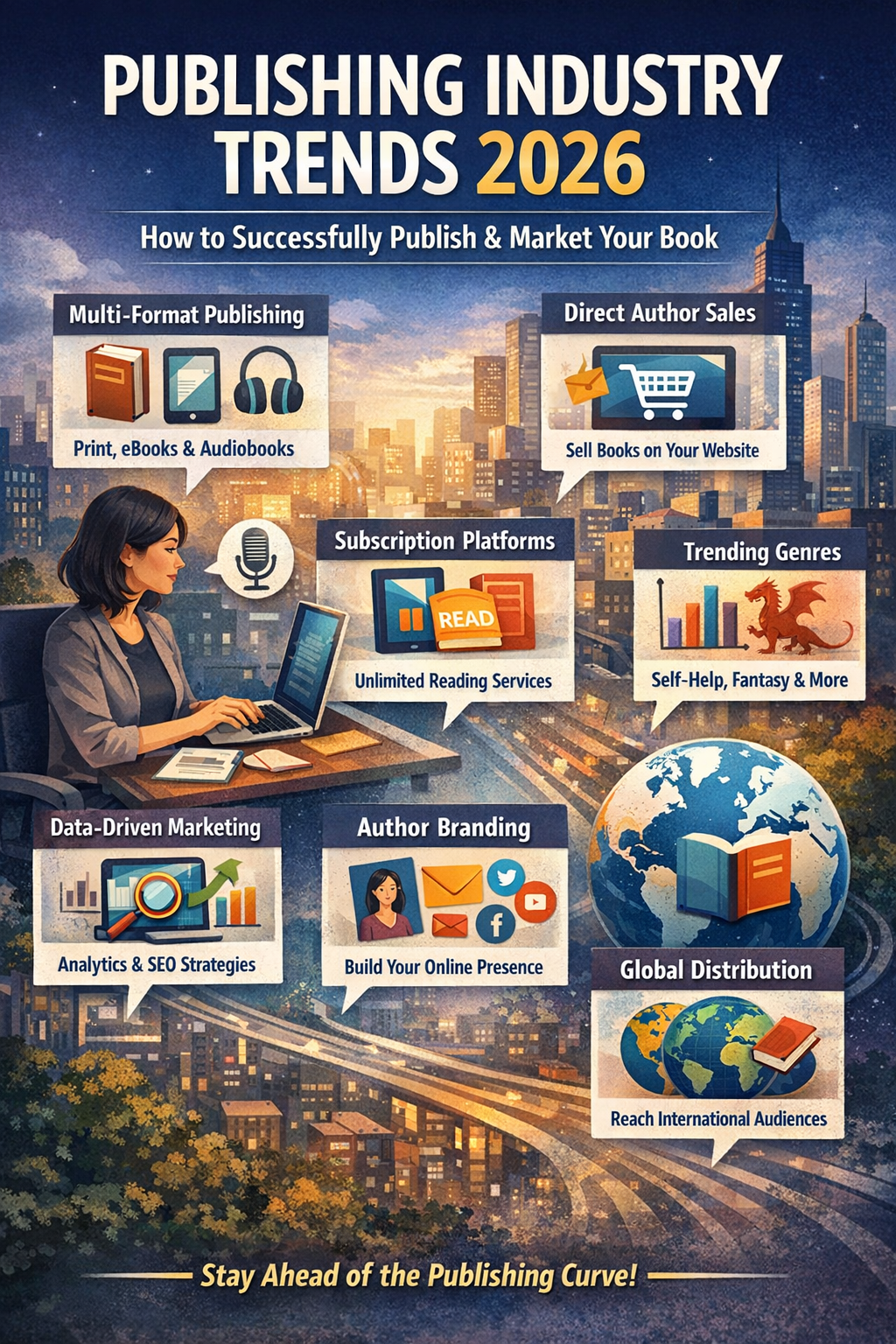
Formats now matter as much as content. The biggest format trends include:
Print Books Still Dominate
Physical books remain popular for collectors, libraries, and gift buyers. Many readers still prefer the tactile experience.
eBooks Continue Growing
Digital books sell well because they are instant, portable, and affordable.
Audiobooks Are the Fastest Growing Segment
Audio content is expanding rapidly due to multitasking lifestyles. People listen while commuting, exercising, or working.
Strategy:
Publish in multiple formats instead of choosing only one.
Step 3: Follow Genre Trends
Certain genres gain popularity based on cultural shifts. Current high-demand categories include:
-
Self-help and personal growth
-
Financial literacy
-
Fantasy and speculative fiction
-
Short nonfiction guides
-
Skill-based learning books
Tip:
You don’t need to change your niche. Instead, align your topic angle with reader demand.
Step 4: Use Modern Publishing Technology
Technology is transforming publishing workflows. Leading authors now use:
-
Automated formatting tools
-
AI-assisted editing software
-
Data-driven marketing dashboards
-
Print-on-demand services
These tools reduce cost and speed up production. Faster publishing means quicker entry into the market.
Step 5: Adapt to New Distribution Models
Traditional bookstores are no longer the only sales channel. Successful authors distribute through:
-
Online marketplaces
-
Subscription reading platforms
-
Direct-to-reader websites
-
Author storefronts
Diversified distribution increases discoverability and protects you from platform dependency.
Step 6: Focus on Discoverability
Publishing a book is only half the job. The other half is helping readers find it. Discoverability trends include:
-
SEO-optimized book descriptions
-
Keyword-rich titles and subtitles
-
Category targeting
-
Metadata optimization
Books with optimized metadata often rank higher in search results.
Step 7: Build an Author Brand
Branding is no longer optional. Readers follow authors, not just books.
Branding trends for 2026:
-
Consistent visual identity
-
Professional author websites
-
Email newsletters
-
Social media presence
Authors who build strong brands sell more books over time because readers trust them.
Benefits of Following Publishing Industry Trends
Higher Sales Potential
Trend-aligned books match current reader demand, which increases purchase likelihood.
Faster Publishing Success
When you follow proven strategies, you avoid costly trial and error.
Better Marketing Results
Trend-driven marketing targets readers who are already interested.
Stronger Professional Image
Using modern methods signals credibility and professionalism.
Best Practices for Using Publishing Industry Trends
Research Before Publishing
Never rush to publish without analyzing the market. Study:
-
Top-selling titles
-
Reader reviews
-
Competitor pricing
-
Popular cover styles
Research prevents weak positioning.
Combine Trends With Originality
Trends show direction, not imitation. Successful books blend market demand with unique ideas.
Example:
Instead of copying a trending topic, present a fresh perspective or new solution.
Test Before Launch
Pre-launch testing improves performance. You can test:
-
Book covers
-
Titles
-
Pricing
-
Descriptions
Small tests reveal what readers respond to before release.
Monitor Performance After Publishing
Publishing is not a one-time event. Track metrics such as:
-
Sales trends
-
Conversion rates
-
Reader engagement
-
Review feedback
Adjust marketing strategies based on data.
Common Mistakes Authors Should Avoid
Ignoring Market Research
Many authors publish blindly and hope for success. This often leads to poor sales.
Following Outdated Advice
Publishing advice from ten years ago may no longer apply. Always verify that strategies match current publishing industry trends.
Overpricing Books
Pricing too high reduces conversions. Pricing too low may signal low value.
Neglecting Book Design
Covers and formatting strongly influence buying decisions. Amateur design reduces credibility.
Skipping Marketing
Even great books fail without promotion. Marketing must begin before launch, not after.
Key Publishing Industry Trends Shaping 2026
Rise of Direct Author Sales
More writers sell books directly from personal websites. This approach increases profit margins and builds reader relationships.
Subscription Reading Platforms
Subscription platforms allow readers unlimited access for a monthly fee. Authors gain exposure to new audiences.
Shorter Attention Spans
Readers increasingly prefer concise content. Short chapters and structured layouts improve readability.
Global Publishing Reach
Digital distribution makes it possible to sell books worldwide instantly. Localization and translation are growing opportunities.
Data-Driven Publishing Decisions
Analytics now guide publishing strategies. Authors can see what works and adjust quickly.
Why Choose a Professional Publishing Service
Many authors attempt to handle everything alone. While possible, it is often inefficient. Professional publishing services provide expertise that saves time and improves results.
Advantages of Professional Support
1. Industry Knowledge
Professionals understand publishing industry trends and apply proven methods.
2. High-Quality Production
Experts ensure professional editing, formatting, and design.
3. Faster Time to Market
Experienced teams streamline the publishing process.
4. Stronger Distribution
Professional networks open doors to wider sales channels.
5. Strategic Marketing
Specialists know how to position your book for visibility.
When You Should Consider Hiring Professionals
You should consider professional help if:
-
You want faster publishing
-
You lack technical skills
-
You want premium quality
-
You aim for wide distribution
For serious authors, professional assistance is often a smart investment rather than an expense.
Future Outlook: Where Publishing Is Headed
The publishing industry will continue evolving. Over the next few years, experts expect:
-
More personalized reading experiences
-
Growth in interactive digital books
-
Expansion of global reader markets
-
Increased demand for niche expertise books
Authors who adapt quickly will benefit the most from these changes.
Practical Checklist for Authors in 2026
Before publishing your book, confirm that you have:
-
Researched current publishing industry trends
-
Selected profitable formats
-
Optimized metadata
-
Designed a professional cover
-
Created a marketing plan
-
Built an author platform
Completing this checklist dramatically improves your chances of success.