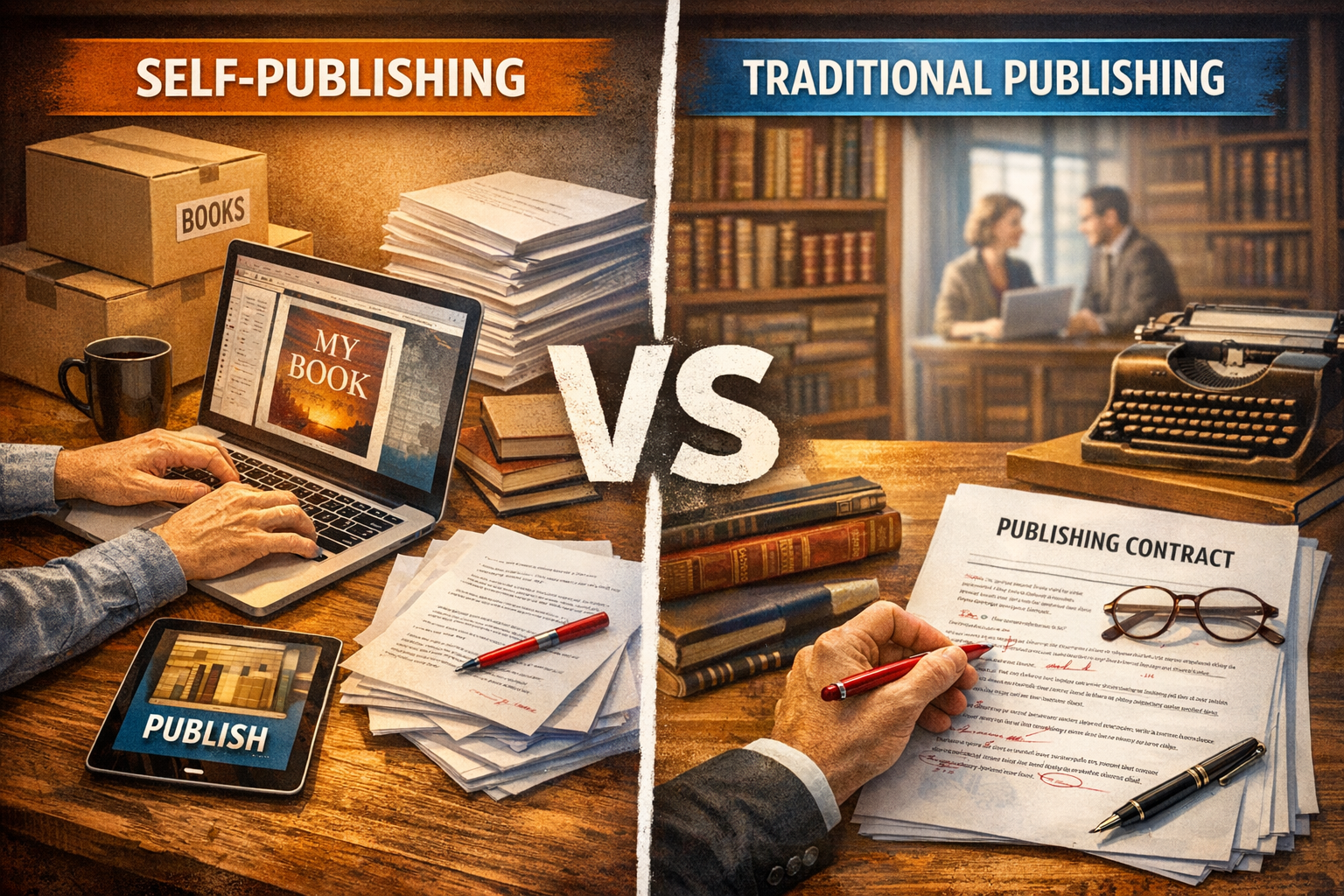
Self-Publishing vs Traditional Publishing: What Authors Must Know
Introduction: Choosing the Right Publishing Path
For many writers, finishing a manuscript feels like crossing the finish line.
In reality, it is just the beginning.
One of the biggest decisions an author must make is choosing between self-publishing vs traditional publishing. This choice affects everything—creative control, income, timelines, and long-term author growth.
Many authors feel confused because both options promise success, yet work in very different ways. Without clear guidance, writers often choose the wrong path, lose time, or miss opportunities.
This guide breaks down self-publishing vs traditional publishing step by step, so you can make a confident, informed decision based on your goals—not myths or assumptions.
Understanding the Publishing Landscape
Before comparing both models, it is important to understand what publishing actually involves.
Publishing is not just printing a book. It includes:
-
Editing and proofreading
-
Cover and interior design
-
ISBN and copyright registration
-
Printing and digital formatting
-
Distribution and sales channels
-
Marketing and author branding
The difference lies in who controls these steps and who pays for them.
What Is Traditional Publishing?
Traditional publishing is the classic route most people know.
How Traditional Publishing Works
In this model, an author submits a manuscript to a publisher, often through a literary agent.
If accepted:
-
The publisher acquires the rights
-
The publisher handles editing, design, and printing
-
The book is distributed through established channels
-
The author earns royalties per sale
Key Characteristics of Traditional Publishing
-
Publisher owns most publishing rights
-
Long approval and production timelines
-
Limited author control
-
No upfront cost to the author
-
Competitive and selective process
Traditional publishing favors authors with strong market appeal, established platforms, or prior success.
What Is Self-Publishing?
Self-publishing allows authors to publish their books independently or with professional service providers.
How Self-Publishing Works
In this model, the author acts as the publisher or hires experts to manage specific tasks.
The process usually looks like this:
-
Manuscript preparation and editing
-
Professional cover and interior design
-
ISBN and copyright setup
-
Upload to global distribution platforms
-
Author-led or assisted marketing
Key Characteristics of Self-Publishing
-
Author retains full rights
-
Faster publishing timelines
-
Higher royalty percentages
-
Complete creative control
-
Author manages quality and strategy
Self-publishing has grown rapidly because technology has removed traditional gatekeepers.
Step-by-Step Comparison: Self-Publishing vs Traditional Publishing
1. Publishing Timeline
Traditional Publishing
-
Submission and approval: 6–24 months
-
Production and release: 6–12 months
-
Total time: 1.5 to 3 years
Self-Publishing
-
Editing and design: 2–6 weeks
-
Publishing and distribution: days
-
Total time: 1–3 months
If speed matters, self-publishing clearly leads.
2. Creative Control
Traditional Publishing
-
Publisher decides cover design
-
Title and content may be edited for market fit
-
Limited say in pricing and positioning
Self-Publishing
-
Author controls title, cover, and content
-
Flexible pricing and updates
-
Full branding ownership
Authors who value autonomy often prefer self-publishing.
3. Financial Investment
Traditional Publishing
-
No upfront publishing cost
-
Publisher invests in production
-
Lower royalty percentages
Self-Publishing
-
Author invests in editing and design
-
Costs vary based on quality level
-
Higher long-term earning potential
Self-publishing is an investment, not an expense, when done professionally.
4. Royalties and Earnings
Traditional Publishing
-
Print royalties: typically 5–10%
-
Ebook royalties: around 25%
-
Payment cycles can be slow
Self-Publishing
-
Ebook royalties: up to 70%
-
Print-on-demand royalties: higher than traditional
-
Transparent and frequent payments
In the self-publishing vs traditional publishing debate, income control is a major differentiator.
5. Distribution Reach
Traditional Publishing
-
Strong bookstore and library presence
-
Industry relationships
-
Selective global reach
Self-Publishing
-
Worldwide digital distribution
-
Online stores and direct sales
-
Print-on-demand availability
While traditional publishers dominate physical retail, self-publishing excels in global digital markets.
Benefits of Self-Publishing
Self-publishing is no longer a fallback option. It is a strategic choice.
Major Advantages
-
Faster time to market
-
Full ownership of intellectual property
-
Scalable income over time
-
Ideal for niche and non-fiction books
-
Data-driven marketing insights
For business authors, educators, and thought leaders, self-publishing supports authority building.
Benefits of Traditional Publishing
Traditional publishing still holds value for certain authors.
Major Advantages
-
Industry validation and prestige
-
Access to established media networks
-
Professional editorial guidance
-
Potential bookstore visibility
For authors seeking mainstream exposure without upfront investment, traditional publishing may fit.
Best Practices for Choosing the Right Model
When deciding between self-publishing vs traditional publishing, clarity matters more than trends.
Ask Yourself These Questions
-
Do I want creative control or institutional support?
-
How fast do I want my book published?
-
Is this book part of a long-term brand?
-
Am I willing to invest in professional quality?
-
Do I want global reach or selective placement?
Your answers will point clearly toward the right path.
Common Mistakes Authors Must Avoid
1. Choosing Based on Myths
Many authors believe traditional publishing guarantees success.
In reality, marketing responsibility often still falls on the author.
2. Rushing Self-Publishing Without Quality Control
Publishing quickly without proper editing or design damages credibility.
Professional standards matter in both models.
3. Ignoring Long-Term Goals
A book is not just a product.
It is a brand asset.
Choosing the wrong publishing path can limit future opportunities.
4. Underestimating Marketing Effort
Regardless of the model, books do not sell themselves.
Authors must plan visibility, positioning, and audience engagement.
Why Choose a Professional Publishing Company
Many authors fail not because of talent, but because of poor execution.
A professional publishing company bridges the gap between quality and strategy.
What a Professional Service Provides
-
Industry-standard editing and proofreading
-
Market-aligned cover and interior design
-
ISBN, copyright, and compliance support
-
Global distribution setup
-
Marketing and author branding guidance
This approach combines the control of self-publishing with the polish of traditional publishing.
Self-Publishing vs Traditional Publishing for Different Author Types
First-Time Authors
Self-publishing offers faster learning, feedback, and visibility.
Academic and Professional Authors
Self-publishing allows content authority without gatekeeping delays.
Fiction Writers Seeking Mass Markets
Traditional publishing may help with physical bookstore presence.
Business and Thought Leaders
Self-publishing supports credibility, speaking, and consulting opportunities.
The Future of Publishing
The publishing industry is no longer one-size-fits-all.
Hybrid models, assisted publishing, and author-led brands are shaping the future.
Understanding self-publishing vs traditional publishing is not about choosing sides—it is about choosing strategy.