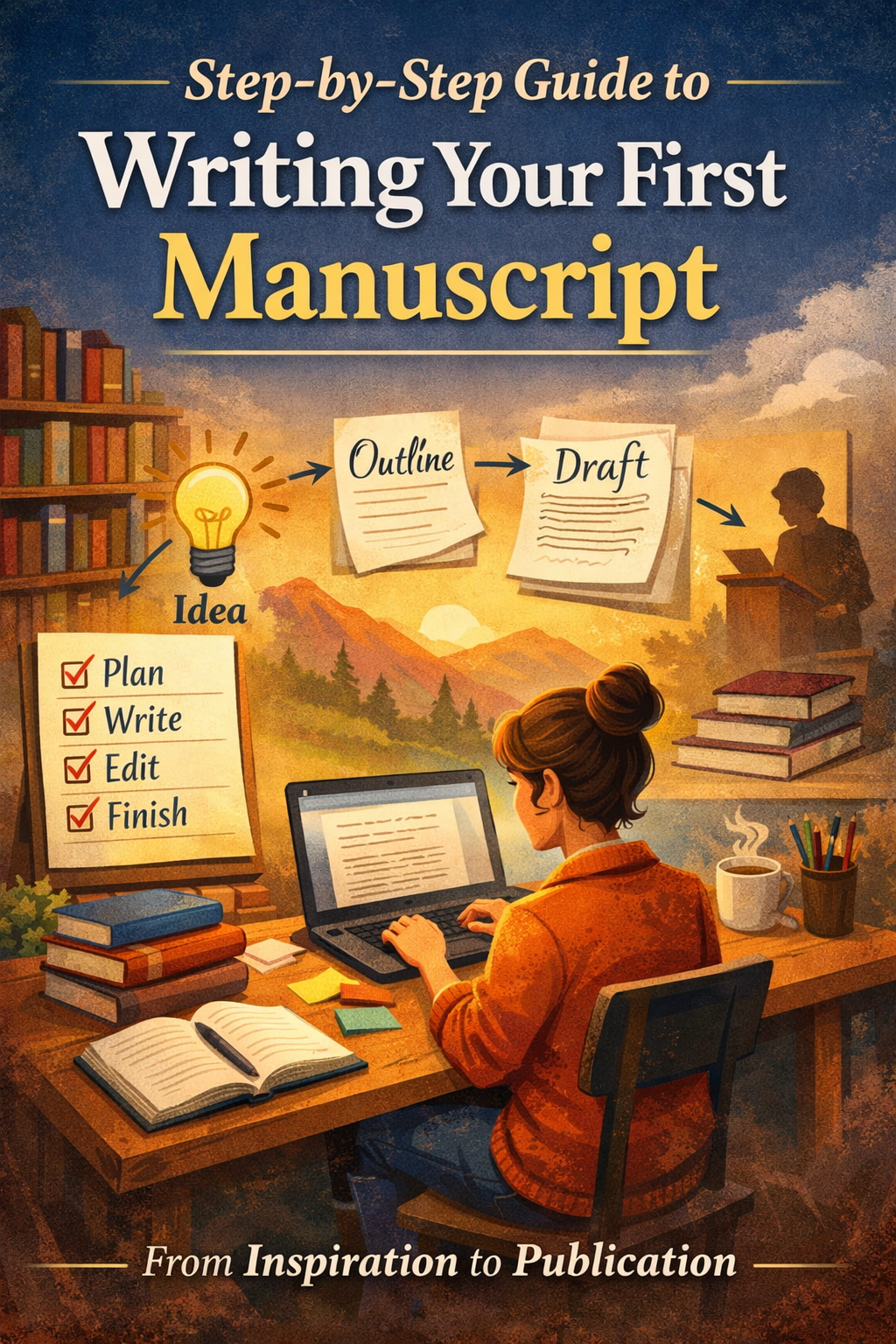
Step-by-Step Guide to Writing Your First Manuscript
Introduction: Turning Your Book Idea Into Reality
Many people dream of writing a book. You may have a powerful story, helpful knowledge, or a creative idea. However, when it comes to writing your first manuscript, most beginners feel confused and overwhelmed.
Questions like “Where do I start?”, “How do I organize my ideas?”, and “What if I never finish?” are common.
The good news is that writing your first manuscript is not about talent alone. It is about following the right process, step by step.
This guide will help you understand exactly how to plan, write, and complete your manuscript. By the end, you will feel confident and ready to begin your journey as an author.
Why Writing Your First Manuscript Feels Difficult
Before starting, it is important to understand why many writers struggle.
Common challenges include:
-
Lack of clear planning
-
Fear of making mistakes
-
Poor time management
-
Losing motivation
-
Not knowing the correct structure
Without a roadmap, writing becomes stressful. However, when you follow a clear step-by-step method, the process becomes easier and enjoyable.
Step 1: Define Your Book Idea Clearly
Every manuscript begins with an idea. But a vague idea is not enough. You need clarity.
Ask yourself:
-
What is my book about?
-
Who is my target reader?
-
What problem does my book solve?
-
Why is this book important?
For example:
Instead of saying:
"I want to write about success"
Say:
"I want to write a book that teaches college students how to build discipline and achieve career success."
This clarity will guide your entire manuscript.
Create a One-Sentence Book Summary
This is called a book premise.
Example:
"This book teaches beginners how to build confidence through simple daily habits."
This sentence will keep your writing focused.
Step 2: Choose Your Book Type and Genre
Your writing approach depends on your genre.
Common genres include:
Non-fiction
-
Self-help
-
Business
-
Educational
-
Biography
Fiction
-
Novel
-
Romance
-
Thriller
-
Fantasy
Each genre has a different structure. Knowing your genre helps you plan better.
Step 3: Create a Manuscript Outline
An outline is the blueprint of your book.
It helps you:
-
Stay organized
-
Avoid confusion
-
Write faster
-
Stay motivated
Simple Outline Example:
Introduction
-
Introduce topic
Chapter 1
-
Main point
Chapter 2
-
Supporting idea
Chapter 3
-
Solution or conclusion
You do not need a perfect outline. A simple structure is enough to start.
Step 4: Set a Realistic Writing Schedule
Consistency is more important than speed.
Instead of writing 5,000 words in one day, aim for small daily goals.
For example:
-
500 words per day
-
1 hour per day
-
5 days per week
In just 3 months, you can complete a full manuscript.
Tips to stay consistent:
-
Write at the same time every day
-
Choose a quiet place
-
Avoid distractions
-
Track your progress
Small progress leads to big results.
Step 5: Start Writing Your First Draft
This is the most important step.
Many writers get stuck because they want perfection.
Remember this rule:
Your first draft does not need to be perfect. It only needs to be finished.
Focus on:
-
Writing freely
-
Expressing your ideas
-
Completing chapters
Avoid:
-
Editing too early
-
Overthinking
-
Comparing with other authors
Your goal is completion, not perfection.
Step 6: Focus on One Chapter at a Time
Thinking about the entire book can feel overwhelming.
Instead, break it into smaller parts.
Focus on:
-
One chapter
-
One section
-
One idea
This makes writing easier and faster.
Each completed chapter builds confidence.
Step 7: Take Breaks to Improve Creativity
Writing continuously without breaks leads to burnout.
Taking breaks helps:
-
Refresh your mind
-
Improve ideas
-
Increase productivity
You can:
-
Take short daily breaks
-
Rest after finishing chapters
-
Review your work later with fresh eyes
Distance improves clarity.
Step 8: Edit and Revise Your Manuscript
After finishing your first draft, editing is essential.
This step improves quality.
Check for:
-
Grammar mistakes
-
Clarity
-
Flow
-
Structure
-
Repetition
Editing usually happens in stages:
Stage 1: Self-Editing
Improve obvious mistakes.
Stage 2: Professional Editing
Experts improve quality further.
Editing transforms your manuscript into a professional book.
Step 9: Get Feedback From Others
Feedback helps you improve.
You can ask:
-
Friends
-
Writers
-
Editors
-
Beta readers
Ask questions like:
-
Is the content clear?
-
Is it interesting?
-
Is anything confusing?
Constructive feedback strengthens your manuscript.
Step 10: Prepare Your Final Manuscript
Before publishing, make sure your manuscript is ready.
Final checklist:
-
Complete editing
-
Correct formatting
-
Clear chapter structure
-
Error-free content
A polished manuscript increases your chances of success.
Benefits of Writing Your First Manuscript
Writing your manuscript offers many personal and professional benefits.
1. Establishes Your Authority
You become recognized as an expert.
2. Builds Your Confidence
Completing a book is a major achievement.
3. Creates Career Opportunities
Authors can earn through:
-
Book sales
-
Speaking
-
Coaching
4. Shares Your Knowledge
You help others through your experience.
5. Creates a Lasting Legacy
Your book can inspire future generations.
Best Practices for Writing Your First Manuscript
Follow these proven tips:
Stay Consistent
Write regularly.
Avoid Perfectionism
Focus on progress.
Stay Organized
Follow your outline.
Read Other Books
Learn from successful authors.
Stay Patient
Writing takes time.
Success comes through consistency.
Common Mistakes to Avoid
Many first-time writers make similar mistakes.
Avoid these errors:
1. Starting Without a Plan
This leads to confusion.
2. Editing Too Early
This slows progress.
3. Losing Focus
Stick to your main idea.
4. Comparing Yourself to Others
Every writer has their own journey.
5. Giving Up Too Soon
Persistence is key.
Finishing your manuscript should be your main goal.
Why Choose a Professional Publishing Service
Professional support makes the process easier and faster.
Publishing companies help with:
Professional Editing
Improves quality.
Manuscript Formatting
Makes your book ready for publishing.
Cover Design
Creates a professional appearance.
Publishing Guidance
Helps you avoid costly mistakes.
Marketing Support
Helps reach readers.
Professional services increase your chances of success.
How Long Does Writing Your First Manuscript Take?
The timeline depends on:
-
Book length
-
Writing speed
-
Schedule
Average time:
-
3 to 6 months for first draft
-
1 to 3 months for editing
Consistency reduces time.
How to Stay Motivated During Writing
Motivation can decrease over time.
Here are simple ways to stay motivated:
-
Set small goals
-
Celebrate progress
-
Track word count
-
Remember your purpose
Focus on completion.