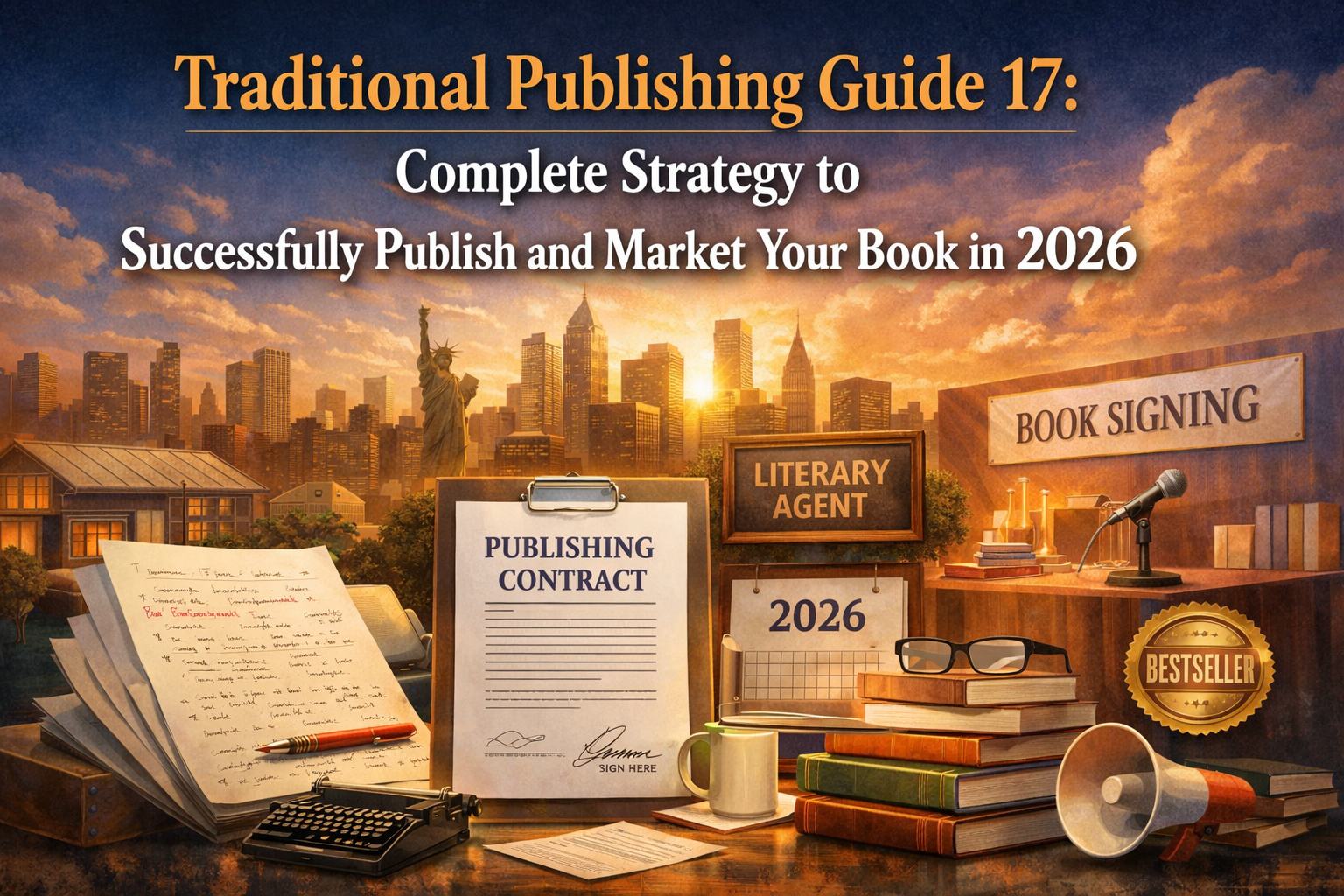
Traditional Publishing Guide 17: Complete Strategy to Successfully Publish and Market Your Book in 2026
Introduction: Why Authors Struggle and How to Win
Many writers dream of signing a traditional publishing deal. Yet most manuscripts never make it past submissions. Rejections, unanswered queries, and unclear processes leave authors frustrated.
The solution is simple: follow a proven Traditional Publishing Strategy 2026 that matches how the industry actually works today. Publishing is more competitive than ever, but it is also more structured. When you understand the system, your chances improve significantly.
This guide breaks down the entire process step by step. You will learn how to prepare your manuscript, pitch to agents, secure a deal, and market your book successfully.
What Is Traditional Publishing?
Traditional publishing is when a publishing house acquires your book rights, edits your manuscript, prints copies, distributes them, and pays you royalties. Unlike self-publishing, you do not pay upfront costs.
Instead, the publisher invests in your book and earns revenue from sales.
Key Features
-
Advance payment against royalties
-
Professional editing and design
-
Distribution to bookstores
-
Marketing support
-
Industry credibility
Because publishers invest money, they only accept manuscripts with strong commercial potential. That is why strategy matters.
Why You Need a Traditional Publishing Strategy 2026
Publishing standards evolve every year. What worked five years ago may fail today. In 2026, publishers expect authors to understand:
-
Market positioning
-
Audience targeting
-
Platform building
-
Genre trends
-
Comparable titles
A modern strategy ensures your manuscript fits industry expectations before submission. Without it, even good writing may be rejected.
Step-by-Step Traditional Publishing Process
Step 1: Finish and Polish Your Manuscript
Your manuscript must be complete and professionally edited before submission. Publishers rarely accept rough drafts.
Focus on:
-
Strong opening chapters
-
Clear story structure
-
Consistent tone
-
Clean grammar
Consider beta readers or professional editors. Feedback helps identify weak spots before agents see them.
Step 2: Research Your Genre Market
Every genre has trends and expectations. Study recently published books similar to yours.
Look for:
-
Word count ranges
-
Popular themes
-
Cover styles
-
Target audience
This research helps position your book correctly. Publishers want manuscripts that fit current demand while offering something fresh.
Step 3: Prepare Submission Materials
Agents and publishers require standard documents. These usually include:
Query Letter
A one-page pitch summarizing your book and credentials.
Synopsis
A full plot summary, including the ending.
Sample Chapters
Typically the first 3 chapters or 30 pages.
Each document must be concise, professional, and engaging.
Step 4: Find Literary Agents
Most traditional publishers only accept submissions through literary agents. Agents act as gatekeepers and negotiators.
Research agents who represent your genre. Study their submission guidelines carefully. Sending the wrong material or genre leads to instant rejection.
Step 5: Send Query Letters
Querying is a numbers game. Even strong manuscripts may require dozens of submissions.
Best practices:
-
Personalize each query
-
Mention why you chose that agent
-
Keep your pitch clear and brief
-
Follow formatting rules
Patience is essential. Responses may take weeks or months.
Step 6: Secure Representation
If an agent is interested, they may request:
-
Partial manuscript
-
Full manuscript
-
Revision notes
If they offer representation, review the contract carefully. A good agent improves your manuscript and pitches it to publishers.
Step 7: Publisher Submission
Your agent sends your book to publishing houses. Editors review it internally and discuss it in acquisition meetings.
Possible outcomes:
-
Offer from one publisher
-
Multiple offers (auction)
-
Rejection with feedback
If accepted, you sign a publishing contract and receive an advance.
Step 8: Editing and Production
After signing, your manuscript enters professional production:
-
Developmental editing
-
Copyediting
-
Proofreading
-
Cover design
-
Layout formatting
This stage can take several months but ensures a polished final book.
Step 9: Marketing and Launch
Publishers handle major marketing tasks, but authors are still expected to promote their book.
Typical activities include:
-
Author interviews
-
Social media promotion
-
Book events
-
Blog features
-
Review campaigns
Marketing support often depends on your platform size. Authors with an audience usually receive stronger promotional backing.
Benefits of Following a Traditional Publishing Strategy 2026
A structured strategy offers clear advantages.
Higher Acceptance Chances
Publishers prefer authors who understand industry standards.
Professional Quality
Your manuscript meets technical and commercial expectations.
Stronger Negotiation Power
Prepared authors secure better contracts and royalties.
Faster Progress
Instead of guessing, you follow a proven roadmap.
Best Practices for Success
To stand out in a competitive market, apply these proven techniques.
Build an Author Platform Early
Publishers favor writers who already have readers. Build your presence through:
-
Blogging
-
Email newsletters
-
Social media
-
Public speaking
Even a small but engaged audience adds value.
Study Comparable Titles
Comp titles show publishers where your book fits. Choose recent books similar in:
-
Theme
-
Audience
-
Tone
Avoid mega-bestsellers as comparisons. Mid-list titles work better.
Follow Submission Guidelines Exactly
Agents reject submissions that ignore instructions. Always check:
-
File format
-
Word limits
-
Subject lines
-
Attachment rules
Attention to detail signals professionalism.
Be Open to Revisions
Editors and agents often suggest changes. Flexibility increases your chances of success. Publishing is collaborative, not solo.
Common Mistakes to Avoid
Many authors fail not because their writing is bad, but because they make preventable mistakes.
Submitting Too Early
Sending an unfinished or unedited manuscript harms your reputation. Always polish before querying.
Querying the Wrong Agents
Submitting romance to a nonfiction agent wastes time. Research carefully before sending.
Ignoring Market Trends
A book that does not match reader demand is harder to sell. Understand what publishers currently want.
Writing a Weak Query Letter
A strong manuscript can be rejected because of a poor pitch. Treat your query like a sales letter.
Expecting Instant Results
Traditional publishing is slow. From submission to publication can take 1–3 years. Patience is part of the process.
Why Choose a Professional Publishing Service
Many authors try to handle everything alone. However, professional guidance can dramatically improve results.
Expert Manuscript Evaluation
Professionals identify issues that authors often miss, such as pacing problems or market mismatch.
Industry Knowledge
Publishing consultants understand what agents and editors look for. Their insights help you align your book with market demand.
Submission Preparation
Services can refine:
-
Query letters
-
Synopses
-
Book proposals
Well-prepared submissions stand out instantly.
Time Efficiency
Instead of trial and error, you follow a structured plan. This saves months or even years.
Career Planning
Professional support helps you think long term, not just about one book but your entire writing career.
Advanced Traditional Publishing Strategy 2026 Tactics
Serious authors go beyond basics. They treat publishing like a business.
Position Yourself as a Brand
Publishers invest more in authors with clear identities. Define:
-
Your niche
-
Your message
-
Your audience
Consistency builds recognition.
Network Within the Industry
Attend:
-
Writing conferences
-
Literary festivals
-
Workshops
Connections often lead to opportunities. Many publishing deals start through networking.
Develop a Long-Term Catalog Plan
Publishers prefer authors who can write more than one book. Plan future titles in the same genre or theme.
Understand Publishing Contracts
Learn key terms such as:
-
Royalty percentages
-
Rights ownership
-
Advance structure
-
Reversion clauses
Knowledge protects your interests during negotiations.
Traditional vs Other Publishing Paths
Understanding alternatives helps you confirm that traditional publishing is right for you.
Traditional Publishing
-
No upfront cost
-
Lower royalties
-
High prestige
-
Slower timeline
Self-Publishing
-
Full control
-
Higher royalties
-
Requires investment
-
Faster release
Hybrid Publishing
-
Shared cost and profit
-
Mixed control levels
Each path suits different goals. The best choice depends on your priorities.
Timeline Expectations in Traditional Publishing
Realistic timelines prevent frustration.
Typical schedule:
-
Querying agents: 3–12 months
-
Agent submissions: 2–6 months
-
Contract to publication: 9–24 months
Delays are normal. Publishing operates on long production cycles.
Signs You’re Ready for Traditional Publishing
You may be ready if:
-
Your manuscript has been professionally edited
-
Beta readers give strong feedback
-
Your genre research is complete
-
Your query materials are polished
-
You are prepared for rejection and revision
If any of these are missing, focus on preparation first.