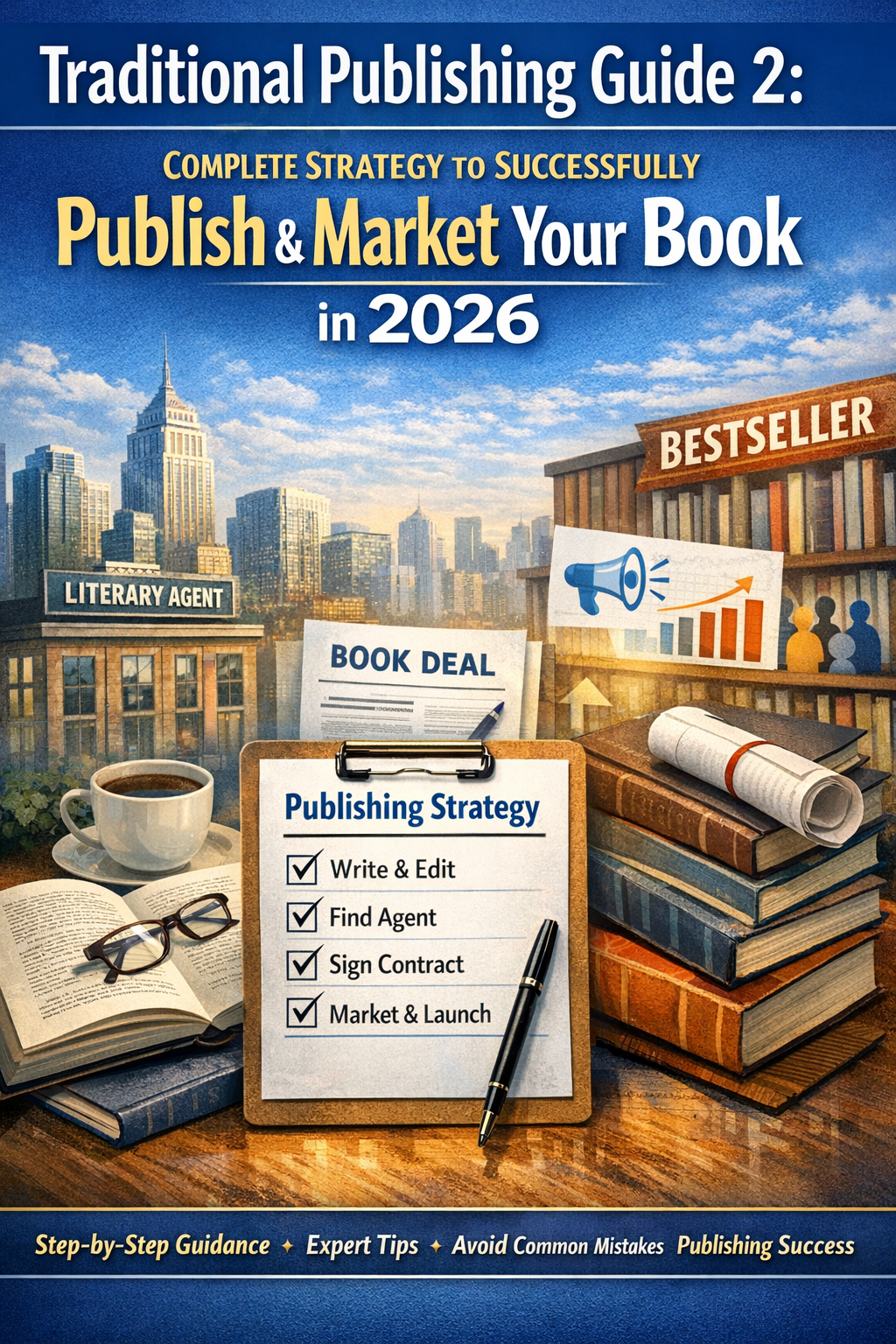
Traditional Publishing Guide 2: Complete Strategy to Successfully Publish and Market Your Book in 2026
Introduction: Why Most Authors Fail — and How You Can Succeed
Many writers dream of landing a traditional book deal. Yet most manuscripts never reach bookstore shelves. The reason is simple: they rely on talent alone and ignore strategy.
Publishing is no longer just about writing a good book. Today, publishers look for authors who understand market trends, reader demand, and promotion tactics. Without a clear traditional publishing strategy, even strong manuscripts get rejected.
The good news is that success is predictable when you follow a proven process. This guide explains exactly how traditional publishing works in 2026 and what steps you must take to secure a deal and market your book effectively.
What Is a Traditional Publishing Strategy?
A traditional publishing strategy is a structured plan that helps authors:
-
Prepare a publishable manuscript
-
Approach the right agents or publishers
-
Secure a book deal
-
Launch and promote successfully
It combines writing quality, market positioning, branding, and promotion.
In short, it turns your manuscript into a product publishers want to invest in.
Step-by-Step Traditional Publishing Strategy for 2026
Step 1: Write for the Market, Not Just Yourself
Many writers start with passion. That’s good. But publishers start with market demand.
Before writing or revising your book, research:
-
Current bestselling genres
-
Popular themes
-
Reader demographics
-
Competitive titles
Ask yourself:
Who will buy this book and why?
If you can’t answer that clearly, publishers won’t either.
Step 2: Polish Your Manuscript Professionally
Editors and agents can spot amateur writing instantly. Even strong stories fail if the manuscript looks unprofessional.
Essential polishing steps:
-
Structural editing for plot or flow
-
Line editing for clarity
-
Proofreading for grammar
A clean manuscript signals professionalism. It shows that you respect the publisher’s time.
Step 3: Prepare a Winning Book Proposal
For nonfiction, a proposal is often more important than the manuscript. For fiction, it strengthens your pitch.
A strong proposal includes:
-
Book overview
-
Target audience
-
Unique selling point
-
Author bio
-
Marketing plan
-
Competitive analysis
Think of it as a business plan for your book.
Step 4: Research the Right Agents and Publishers
Not all publishers accept all genres. Sending your manuscript randomly wastes months.
Instead, build a targeted list:
-
Agents representing your genre
-
Publishers accepting similar titles
-
Imprints specializing in your category
This improves acceptance chances dramatically.
Step 5: Craft a Powerful Query Letter
Your query letter is your first impression. It must be short, clear, and compelling.
Include:
-
Hook (1–2 sentences)
-
Brief book summary
-
Genre and word count
-
Author credibility
Avoid long descriptions. Agents receive hundreds of queries weekly. Clear and concise wins.
Step 6: Submit Strategically
Do not send submissions to everyone at once.
Best approach:
-
Submit to 5–10 agents first
-
Track responses
-
Improve pitch if rejected
This method lets you refine your approach instead of wasting opportunities.
Step 7: Understand the Publishing Deal
If accepted, you’ll receive a contract. Never sign without understanding key terms:
-
Advance payment
-
Royalty percentage
-
Rights ownership
-
Marketing support
If possible, consult a publishing professional or literary attorney before signing.
Step 8: Collaborate During Editing and Production
After acceptance, your publisher will guide you through:
-
Developmental edits
-
Copy edits
-
Cover design
-
Formatting
-
Printing schedule
Authors who cooperate professionally build strong industry relationships and get invited for future projects.
Step 9: Launch with a Marketing Plan
Many authors assume publishers handle promotion. In reality, successful books come from joint effort.
Your marketing strategy should include:
-
Social media promotion
-
Author website
-
Email list
-
Book launch event
-
Advance review copies
The earlier you start building your audience, the better your launch results.
Step 10: Continue Promotion After Release
The biggest mistake authors make is stopping promotion after launch week.
Long-term marketing ideas:
-
Podcast interviews
-
Guest articles
-
Book clubs
-
Speaking events
-
Seasonal campaigns
Books succeed through consistent visibility.
Benefits of Using a Strong Traditional Publishing Strategy
A structured approach offers clear advantages:
Higher acceptance rates
Publishers prefer authors who understand the business side.
Better contracts
Prepared authors negotiate stronger deals.
Professional reputation
Industry professionals recommend reliable writers.
Stronger book sales
Strategic promotion leads to long-term revenue.
Best Practices Successful Authors Follow
Professional authors treat publishing like a career, not a hobby. Here are proven best practices:
-
Write daily or on a consistent schedule
-
Study industry trends regularly
-
Build an audience before publication
-
Network with editors and agents
-
Keep improving writing skills
Consistency matters more than talent alone.
Common Mistakes to Avoid
Many manuscripts fail not because they are bad, but because authors make preventable errors.
1. Submitting Too Early
Unedited manuscripts rarely succeed.
2. Ignoring Submission Guidelines
Each publisher has specific rules. Ignoring them signals unprofessionalism.
3. Overwriting Query Letters
Long queries reduce response rates.
4. Choosing the Wrong Genre Category
Mislabeling your book confuses agents.
5. Relying Only on Publishers for Marketing
Publishers expect author involvement.
Avoiding these mistakes can drastically improve your success chances.
Why Traditional Publishing Still Matters in 2026
Self-publishing has grown, but traditional publishing still offers unmatched advantages:
-
Professional editing and design
-
Industry distribution
-
Bookstore placement
-
Media credibility
-
Award eligibility
For authors seeking prestige, visibility, and wide reach, traditional publishing remains the gold standard.
Why Choose a Professional Publishing Service or Company
Even talented writers benefit from expert guidance. Professional publishing services help you:
-
Refine manuscripts
-
Prepare submissions
-
Design proposals
-
Position your brand
-
Plan marketing campaigns
Working with professionals saves time and prevents costly mistakes.
More importantly, it increases your chances of securing a publishing deal.
Advanced Strategies for 2026 Publishing Success
Publishing trends evolve every year. To stay competitive in 2026, authors must adapt.
Build a Personal Author Brand
Publishers prefer authors with recognizable identities. Build your brand through:
-
Consistent social media voice
-
Author website
-
Signature writing style
Use Data-Driven Market Insights
Study:
-
Bestseller charts
-
Reader reviews
-
Industry reports
This helps you create books readers already want.
Focus on Long-Term Career Planning
Publishers invest more in authors who plan multiple books rather than a single title.
Traditional Publishing Timeline Expectations
Understanding timelines prevents frustration.
Typical process duration:
| Stage | Time Estimate |
|---|---|
| Writing | 6–12 months |
| Querying | 3–6 months |
| Contract | 1–3 months |
| Production | 6–12 months |
Traditional publishing is slower than self-publishing, but the long-term rewards are often greater.
Signs You’re Ready for Traditional Publishing
You may be ready if:
-
Your manuscript has been professionally edited
-
Beta readers gave strong feedback
-
You can explain your audience clearly
-
You understand publishing basics
-
You’re prepared for revisions
If you meet these criteria, you’re ready to submit confidently.