How to Write a Book Without Quitting Your Job Today
Introduction: You Don’t Need to Quit Your Job to Become an Author
Many people dream of writing a book. They have ideas, knowledge, and stories to share. However, they believe they must quit their job to make it happen.
This belief stops them from starting.
The truth is different.
You can successfully write a book without quitting your job. Thousands of authors have done it while working full-time.
The key is not having more time. The key is using your time wisely.
With the right plan, discipline, and strategy, you can turn your book idea into reality without risking your income.
This guide will show you exactly how to do it.
Why You Can Write a Book Without Leaving Your Job
Writing a Book Does Not Require Full-Time Hours
Many people think writing requires 8 hours daily. This is not true.
Even writing for:
-
30 minutes per day
-
1 hour per day
Can help you finish a book.
Consistency matters more than long hours.
Small Progress Creates Big Results
If you write:
-
500 words per day
-
You can finish a 50,000-word book in 100 days
This is achievable even with a full-time job.
Your Job Provides Stability
Keeping your job removes financial stress.
This allows you to write with confidence.
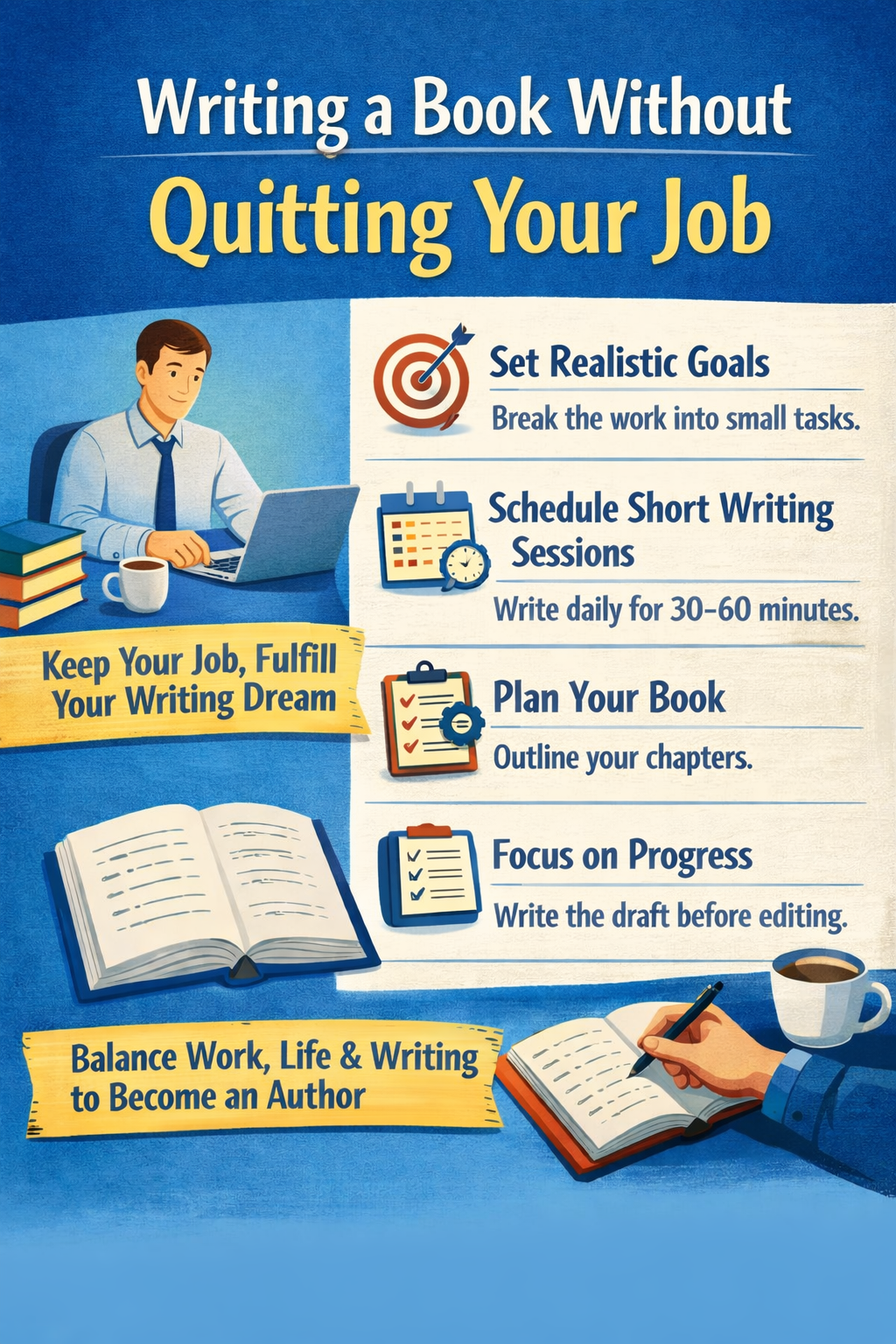
Step 1: Set a Clear and Realistic Writing Goal
Clear Goals Increase Success
Without a goal, writing becomes difficult.
Set a specific target.
Examples:
-
Write 500 words daily
-
Write 5 days per week
-
Finish first draft in 6 months
This gives direction.
Break Big Goals Into Small Tasks
Small tasks feel easier.
For example:
-
Write one section
-
Write one page
-
Write one idea
This makes writing manageable.
Step 2: Create a Daily Writing Schedule
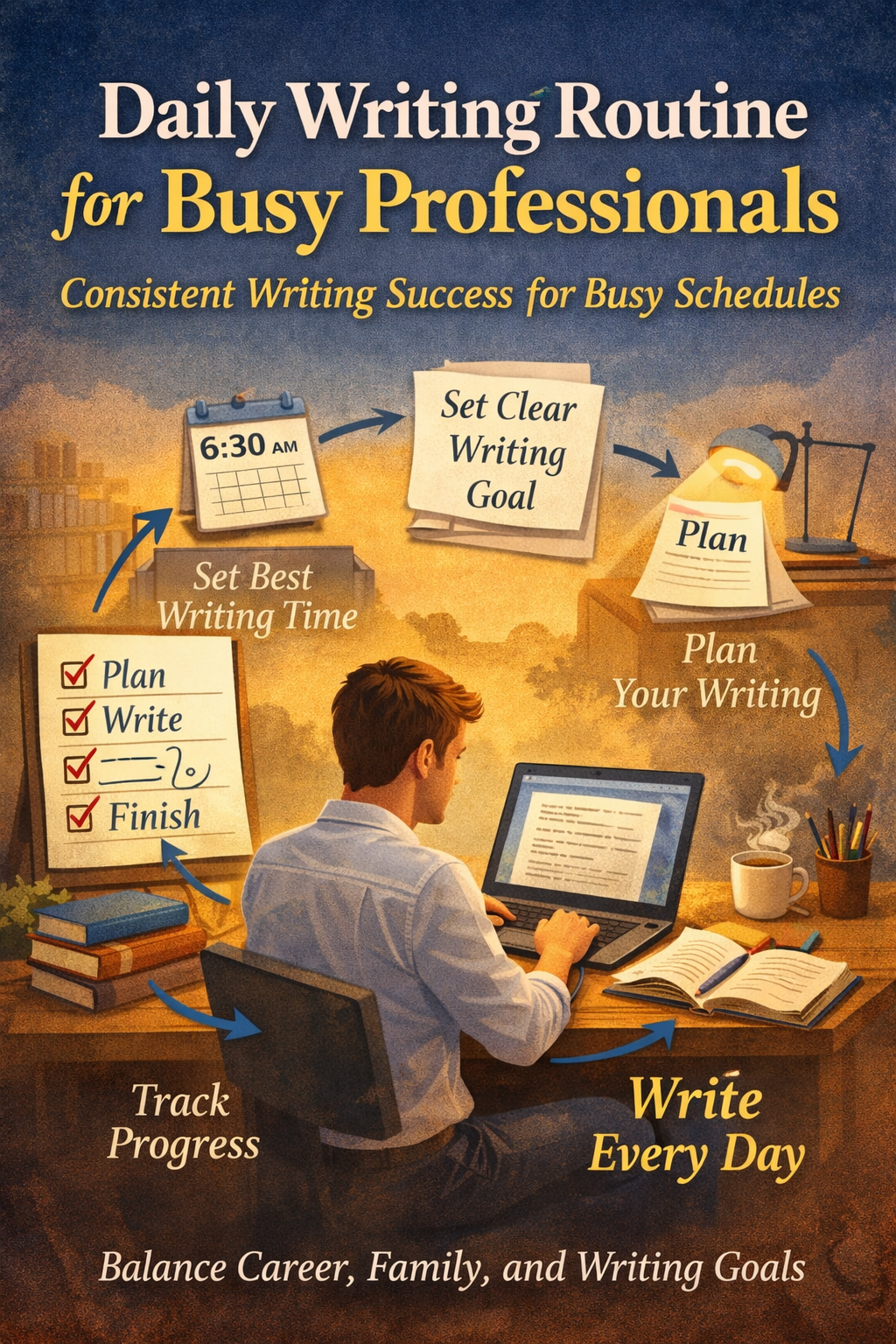
Schedule Writing Like an Important Task
If you don’t schedule writing, it won’t happen.
Treat it seriously.
Choose a fixed time.
Examples:
-
Early morning
-
Evening
-
Lunch break
Choose what works best.
Best Time Is When Your Mind Is Fresh
Morning is ideal for many people.
But choose your most productive time.
Consistency is more important.
Step 3: Use Small Time Blocks Effectively
You Don’t Need Long Hours
Use small time blocks.
Even 30 minutes is enough.
Examples:
-
Before work
-
After dinner
-
Weekends
These small sessions add up.
Avoid Waiting for Perfect Time
Perfect time rarely comes.
Start with available time.
Step 4: Plan Your Book Before Writing
Planning Saves Time
Without planning, writing becomes slow.
Create an outline.
Simple Book Outline Structure
Introduction
Explain your purpose.
Main Chapters
Each chapter should cover one topic.
Conclusion
Summarize key ideas.
Planning helps you write a book without quitting your job faster.
Step 5: Focus on Progress, Not Perfection
First Draft Does Not Need to Be Perfect
Many writers stop because they want perfection.
Perfection slows progress.
Focus on finishing first draft.
You can edit later.
Writing First, Editing Later Is Faster
Separate writing and editing.
This improves productivity.
Step 6: Remove Common Distractions
Distractions Reduce Productivity
Common distractions include:
-
Social media
-
Mobile phone
-
Television
Reduce distractions during writing.
Create a Focused Environment
Choose a quiet place.
This improves concentration.
Step 7: Use Weekends to Accelerate Progress
Weekends Provide Extra Time
Use weekends for longer writing sessions.
Examples:
-
2–3 hours on Saturday
-
2–3 hours on Sunday
This increases progress.
Review and Improve Content
Weekends are also good for editing.
Step 8: Stay Motivated Throughout the Process
Motivation Is Important
Writing takes time.
Stay focused on your goal.
Remember Your Purpose
Ask yourself:
-
Why are you writing this book?
-
Who will it help?
This keeps you motivated.
Benefits of Writing a Book Without Quitting Your Job
1. Financial Security
You keep your income.
This reduces pressure.
2. Low Risk
You don’t depend on book income.
This makes writing safer.
3. Builds Your Future
Your book can create new opportunities.
4. Improves Your Skills
Writing improves thinking and communication.
5. Creates Additional Income Source
Your book can generate extra income.
Best Practices to Write a Book While Working Full-Time
Follow these proven practices.
Write Consistently
Consistency builds progress.
Write regularly.
Set Weekly Targets
Weekly goals improve focus.
Keep Your Outline Ready
Outline reduces confusion.
Track Your Progress
Tracking increases motivation.
Stay Patient
Writing takes time.
Common Mistakes to Avoid
Avoid these mistakes to succeed.
Mistake 1: Waiting for Free Time
Free time rarely comes.
Create writing time.
Mistake 2: Trying to Write Too Much
Small progress works better.
Avoid burnout.
Mistake 3: Lack of Planning
Planning improves speed.
Mistake 4: Giving Up Too Early
Stay consistent.
Success takes time.
Mistake 5: Editing Too Early
Editing early slows writing.
Finish draft first.
How to Balance Job, Life, and Writing
Prioritize Your Time
Identify unnecessary activities.
Reduce them.
Use Early Morning or Night
Choose suitable time.
Avoid Overloading Yourself
Balance is important.
How Professional Publishing Services Help Busy Authors
Writing is only part of the process.
Professional support makes publishing easier.
Professional Editing Saves Time
Editors improve your manuscript.
This improves quality.
Professional Formatting Improves Presentation
Formatting improves readability.
It creates professional appearance.
Professional Cover Design Increases Sales
Cover attracts readers.
Professional design improves sales.
Publishing Guidance Simplifies Process
Experts help you publish easily.
This saves effort.
Why Professional Support Is Valuable for Working Authors
Working authors have limited time.
Professional help makes process easier.
It helps you:
-
Avoid mistakes
-
Save time
-
Improve quality
-
Publish faster
How to Build Long-Term Success as a Part-Time Author
Your First Book Is the Beginning
It opens new opportunities.
Continue Writing
Writing more books increases growth.
Build Your Author Identity
Your book builds your reputation.