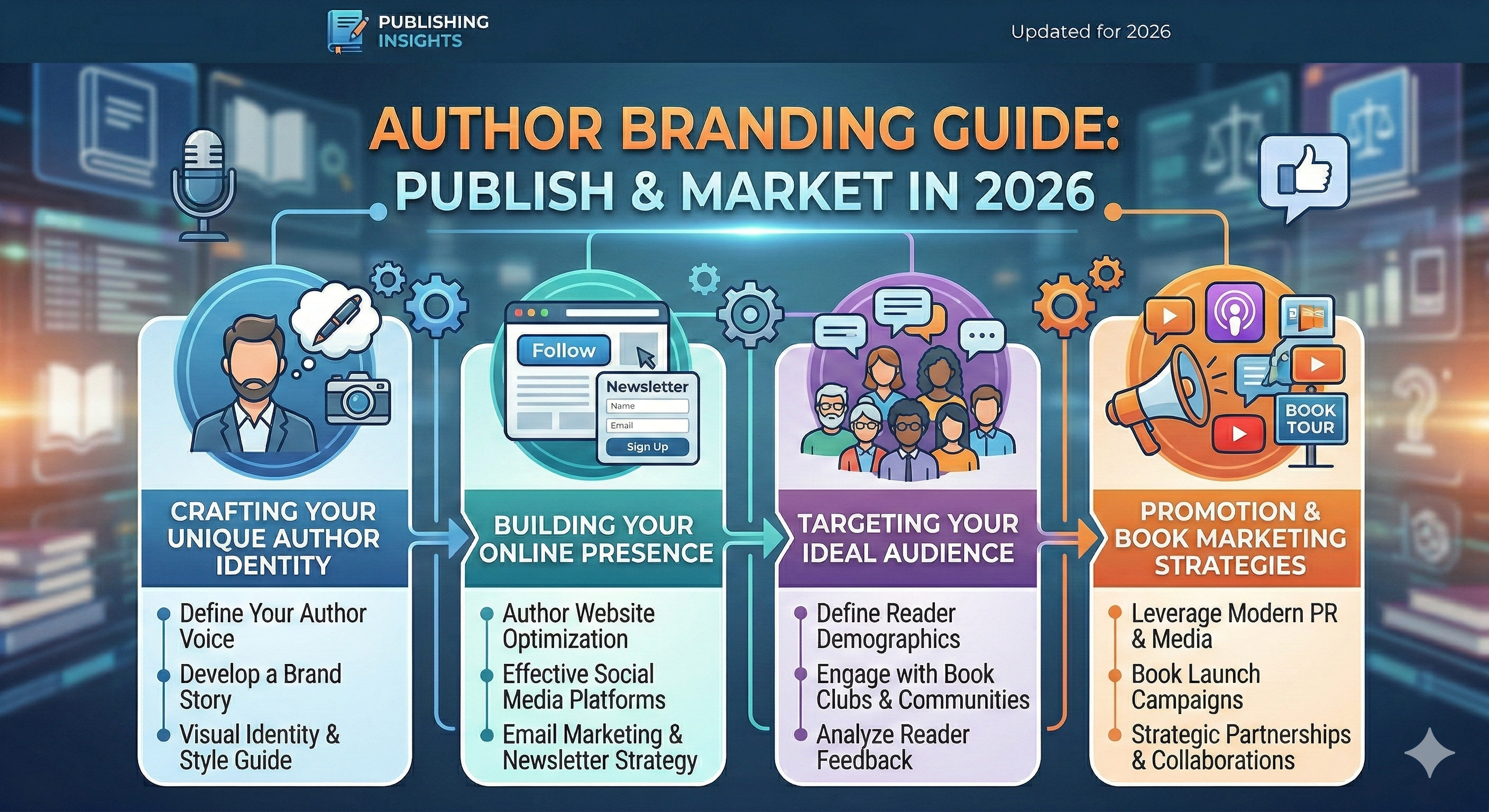
Author Branding Guide: Publish & Market in 2026
Introduction: Why Author Branding Matters More Than Ever
Publishing a book in 2026 is easier than ever. Standing out is not.
Thousands of new titles appear every day. Readers are overwhelmed with choices. If you rely only on your book cover or a launch week promotion, your book may disappear quickly.
This is where a strong Author Branding Guide becomes essential.
Your brand is not just your logo or website. It is your voice, your message, your promise to readers, and the feeling people get when they see your name. When done right, branding helps you:
-
Attract loyal readers
-
Build trust before your book launches
-
Sell more books consistently
-
Create long-term career growth
This guide will walk you step by step through building a powerful author brand that supports both publishing and marketing success in 2026.
What Is Author Branding?
Author branding is the clear identity you present to the world as a writer.
It answers important questions:
-
What do you write?
-
Who do you write for?
-
What makes you different?
-
Why should readers trust you?
In simple terms, your brand is your reputation and promise combined.
In 2026, readers do not just buy books. They follow authors. They join communities. They subscribe to newsletters. They listen to podcasts and watch videos.
Your brand connects all of these pieces into one consistent experience.
Step-by-Step Author Branding Guide for 2026
Step 1: Define Your Core Message
Before designing anything, get clarity.
Ask yourself:
-
What themes appear in my writing?
-
What transformation do I offer readers?
-
What emotions do I want readers to feel?
For example:
-
A thriller writer may focus on suspense and psychological tension.
-
A self-help author may focus on clarity, growth, and confidence.
-
A romance author may promise emotional connection and hope.
Write a one-sentence brand statement.
Example:
“I help busy professionals build confidence through practical mindset strategies.”
This statement guides everything else.
Step 2: Identify Your Target Audience
Your brand becomes stronger when it speaks to one specific group.
Instead of saying “I write for everyone,” define:
-
Age range
-
Interests
-
Reading habits
-
Problems they face
-
Where they spend time online
The clearer your audience, the easier it becomes to:
-
Create content they love
-
Design effective marketing campaigns
-
Choose the right publishing path
Author branding and book marketing strategy must always align.
Step 3: Create a Visual Identity
Visual branding makes you recognizable.
Your visual identity includes:
-
Author logo (optional but powerful)
-
Consistent color palette
-
Professional author photo
-
Website design
-
Social media graphics
Your website should look clean, modern, and aligned with your genre.
For example:
-
Dark tones for thrillers
-
Soft pastels for romance
-
Bold, minimal style for business books
Consistency builds trust. When readers see your posts, website, and book covers, everything should feel connected.
Step 4: Build a Professional Author Website
In 2026, a website is not optional. It is your online home.
Your website should include:
-
A compelling author bio
-
A clear brand message
-
Book pages with descriptions
-
Email newsletter signup
-
Contact information
Most importantly, your website should focus on conversion.
Encourage visitors to:
-
Join your mailing list
-
Download a free chapter
-
Follow you on social media
Your website supports both traditional publishing and self-publishing strategies.
Step 5: Develop Your Author Voice
Your brand voice is how you communicate.
Ask yourself:
-
Are you formal or conversational?
-
Inspirational or practical?
-
Bold or gentle?
Your tone should stay consistent across:
-
Blog posts
-
Emails
-
Social media
-
Interviews
When readers recognize your voice instantly, your brand is working.
Step 6: Build Your Author Platform
Your platform is your audience reach.
It includes:
-
Email subscribers
-
Social media followers
-
Podcast listeners
-
Blog readers
In 2026, email marketing remains one of the strongest tools for authors.
Focus on:
-
Weekly or bi-weekly newsletters
-
Behind-the-scenes updates
-
Valuable tips related to your niche
Avoid constant selling. Instead, build relationships.
Over time, your platform becomes your most valuable marketing asset.
Step 7: Align Branding With Publishing Strategy
Your branding decisions should influence how you publish.
If you choose traditional publishing:
-
Your brand helps attract literary agents.
-
It shows market clarity.
-
It proves audience demand.
If you choose self-publishing:
-
Your brand drives direct sales.
-
It strengthens Amazon positioning.
-
It improves ad performance.
If you choose hybrid publishing:
-
Your professional brand increases negotiation power.
-
It attracts collaboration opportunities.
No matter the path, your Author Branding Guide must connect to your long-term publishing goals.
Benefits of Strong Author Branding
When you invest in branding early, the rewards multiply.
1. Higher Book Sales
Readers buy from authors they trust.
If they loved one book, a strong brand makes them eager to buy the next one.
2. Faster Audience Growth
Clear branding attracts the right readers faster.
Instead of random followers, you build a focused community.
3. Better Media Opportunities
Podcasts, event organizers, and interview hosts prefer authors with:
-
Clear positioning
-
Professional presence
-
Defined expertise
Your brand makes you easier to promote.
4. Long-Term Career Stability
A single book can fade.
A strong brand builds a career.
With branding, you are not dependent on one launch. You create momentum that carries across multiple books.
Best Practices for Author Branding in 2026
To stay competitive, follow these proven practices:
Stay Consistent
Use the same:
-
Profile photos
-
Taglines
-
Tone
-
Core message
Consistency builds recognition.
Focus on Value-Driven Content
Share content that helps your audience.
Examples:
-
Writing tips
-
Mindset advice
-
Genre-specific insights
-
Behind-the-scenes publishing experiences
Valuable content builds authority naturally.
Use Storytelling
Readers connect emotionally with stories.
Share:
-
Your journey
-
Challenges you faced
-
Lessons you learned
Authenticity strengthens trust.
Invest in Professional Design
Poor design can weaken even strong writing.
Professional services can help with:
-
Website development
-
Branding kits
-
Author photography
-
Book cover design
Quality presentation reflects quality content.
Common Author Branding Mistakes to Avoid
Even talented writers make branding mistakes. Avoid these common errors:
1. Changing Direction Too Often
Switching genres or messaging constantly confuses readers.
If you must pivot, do it strategically.
2. Ignoring Your Website
Relying only on social media is risky.
Platforms change. Algorithms shift.
Your website is the only platform you fully control.
3. Copying Other Authors
It is fine to study successful authors.
However, copying their style weakens your authenticity.
Find your unique voice.
4. Selling Too Aggressively
If every post says “Buy my book,” followers will tune out.
Balance promotion with value.
5. Skipping Professional Editing and Presentation
Your brand includes your book quality.
Editing, formatting, and design must match your professional image.
Why Choose a Professional Publishing & Branding Service?
Many authors try to manage branding alone.
While possible, it often leads to:
-
Inconsistent messaging
-
Weak visual identity
-
Missed marketing opportunities
A professional publishing company can provide:
Strategic Brand Positioning
Experts help define:
-
Your niche
-
Your unique selling proposition
-
Your long-term publishing roadmap
Cohesive Design and Messaging
Professionals ensure:
-
Website aligns with book covers
-
Marketing materials match your genre
-
Messaging speaks directly to your audience
Integrated Marketing Support
Branding works best when connected to:
-
Launch campaigns
-
Email funnels
-
Social media ads
-
Amazon optimization
An experienced team saves time and reduces costly mistakes.
Most importantly, professional guidance allows you to focus on what you do best—writing.
Author Branding Trends for 2026
To stay ahead, pay attention to emerging trends:
-
Personal storytelling over corporate messaging
-
Community-driven reader groups
-
Short-form video content for discoverability
-
Direct-to-reader sales through email
-
Author-led online workshops and webinars
Readers want connection.
Your brand must feel human, clear, and relatable.