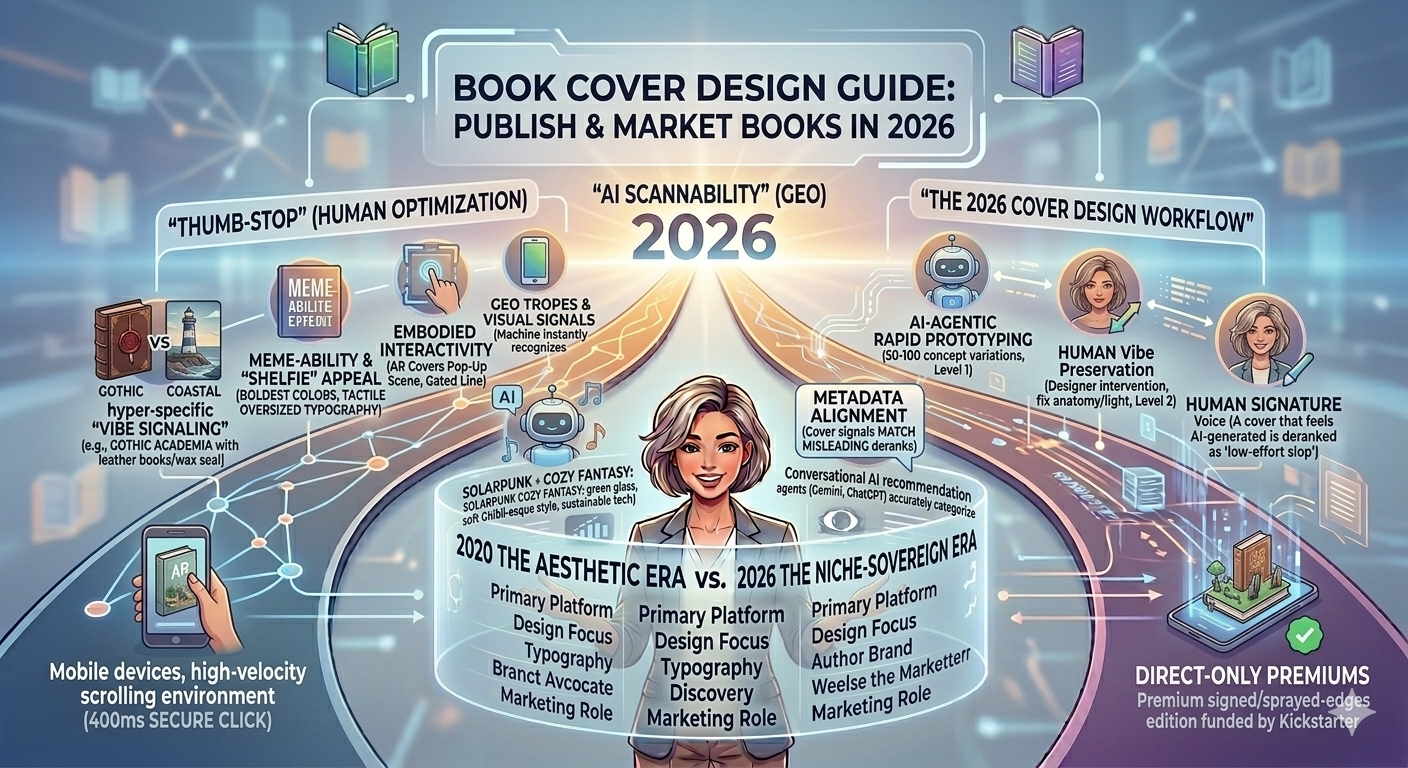
Book Cover Design Guide 95: Complete Strategy to Successfully Publish and Market Your Book in 2026
Introduction: Why Book Cover Design Matters More Than Ever
In 2026, the book market is more competitive than at any time before. Thousands of new titles are published every day across print and digital platforms. Readers make decisions fast, often within seconds. In that short moment, your book cover design does the talking.
Many authors struggle with low visibility, poor sales, or weak branding. The problem is rarely the content alone. In most cases, it is an ineffective book cover design that fails to attract the right audience.
This guide explains how to approach book cover design strategically. You will learn how to design covers that meet reader expectations, support marketing goals, and improve sales performance in 2026.
What Is Book Cover Design and Why It Drives Sales
Book cover design is the visual presentation of your book’s front cover, spine, and back cover. It includes typography, colors, imagery, layout, and branding elements.
A strong cover design does three important things:
-
Grabs attention instantly
-
Communicates genre and tone clearly
-
Builds trust and professionalism
Readers often judge a book before reading the description. If the cover looks amateur or confusing, the book is ignored.
In 2026, with mobile browsing and online bookstores dominating sales, effective book cover design is no longer optional. It is a core marketing asset.
Step-by-Step Book Cover Design Strategy for 2026
Step 1: Define Your Book’s Market and Audience
Before any design work begins, clarity is essential.
Ask these questions:
-
Who is the ideal reader?
-
What age group and reading level?
-
What emotions should the book trigger?
-
Is it fiction or non-fiction?
Book cover design must speak directly to a specific audience. A mismatch between cover and content leads to poor reviews and low conversions.
Step 2: Study Genre-Specific Cover Trends
Each genre has visual rules. Readers subconsciously expect certain design patterns.
Examples include:
-
Romance: bold typography, emotional imagery
-
Business: clean layouts, strong contrast, minimal graphics
-
Fantasy: illustrated scenes, dramatic colors
-
Self-help: simple visuals, readable fonts
Ignoring genre conventions confuses readers. In 2026, following trends while adding originality is the safest strategy.
Step 3: Choose the Right Cover Design Style
There are three common book cover design styles:
1. Typographic Covers
Best for business, memoirs, and non-fiction. These rely on strong fonts and color contrast.
2. Image-Based Covers
Used widely in fiction. Photography or illustrations set the mood and genre.
3. Illustrated Covers
Popular in children’s books, fantasy, and young adult genres.
Your choice should align with reader expectations and platform requirements.
Step 4: Focus on Typography and Readability
Typography is one of the most overlooked parts of book cover design.
Key rules include:
-
Title must be readable at thumbnail size
-
Limit font styles to two or three
-
Avoid decorative fonts for long titles
-
Maintain strong contrast between text and background
In online stores, unreadable covers fail instantly.
Step 5: Design for Both Print and Digital Formats
In 2026, books are sold across multiple platforms. Your cover must work everywhere.
Consider:
-
Thumbnail visibility on mobile screens
-
Print bleed and trim sizes
-
Spine width based on page count
-
Back cover layout for descriptions and barcodes
A professional book cover design adapts seamlessly to all formats.
Best Practices for High-Impact Book Cover Design
Keep the Design Simple and Focused
Complex designs reduce clarity. One strong visual idea is better than multiple weak elements.
A clean design helps readers understand the book faster.
Use Color Psychology Strategically
Colors trigger emotions and expectations.
Examples:
-
Blue: trust, authority, calm
-
Red: urgency, passion, drama
-
Black: power, mystery, sophistication
-
Yellow: optimism, clarity, attention
Choosing the right color palette strengthens marketing impact.
Maintain Brand Consistency
If you publish multiple books, consistency matters.
Use:
-
Similar font styles
-
Repeated layout patterns
-
Recognizable visual elements
Strong branding improves recall and long-term sales.
Test the Cover Before Publishing
Testing is a major advantage in 2026.
You can:
-
Share mockups with target readers
-
Compare versions side by side
-
Check visibility on different devices
Small changes often lead to significant performance improvements.
Common Book Cover Design Mistakes to Avoid
Using Low-Quality Images
Poor image resolution destroys credibility. Blurry or stretched visuals signal amateur work.
Always use high-resolution, licensed images or original illustrations.
Ignoring Genre Expectations
Creative freedom is important, but breaking genre rules harms discoverability.
Readers rely on visual cues to choose books quickly.
Overloading the Cover with Text
Too much text reduces impact.
Avoid:
-
Long subtitles on the front
-
Multiple taglines
-
Excessive author credentials
Clarity beats complexity every time.
Designing Without Marketing in Mind
A cover is not just art. It is a sales tool.
Ignoring platform requirements, audience behavior, and trends leads to weak results.
How Book Cover Design Supports Book Marketing in 2026
Book cover design directly affects:
-
Click-through rates on online stores
-
Social media promotions
-
Advertising performance
-
Email campaign conversions
A strong cover reduces marketing costs and improves organic visibility.
In competitive marketplaces, the cover often decides whether marketing efforts succeed or fail.
DIY vs Professional Book Cover Design
DIY Design: Pros and Limits
DIY tools offer affordability and speed. They work for testing ideas or early drafts.
However, limitations include:
-
Generic templates
-
Limited typography control
-
Lack of market insight
For serious publishing goals, DIY rarely delivers long-term results.
Why Choose a Professional Book Cover Design Service
Professional designers bring:
-
Deep genre knowledge
-
Marketing-focused design decisions
-
Print and digital technical expertise
-
Brand consistency across titles
They design with sales, not just appearance, in mind.
In 2026, professional book cover design is an investment, not an expense.
How to Select the Right Book Cover Design Partner
When choosing a design service, look for:
-
Proven experience in your genre
-
Clear design process
-
Strong portfolio with real books
-
Understanding of publishing platforms
Avoid services that rely only on templates or rush the design process.
Book Cover Design Checklist for Authors
Before finalizing your cover, confirm:
-
Title is readable at small sizes
-
Genre is instantly recognizable
-
Design works in color and grayscale
-
Fonts are licensed and consistent
-
Cover aligns with marketing strategy
This checklist prevents costly revisions after publication.
The Future of Book Cover Design in 2026
Trends shaping book cover design include:
-
Minimalist layouts with bold typography
-
High-contrast color schemes
-
Illustrated elements blended with typography
-
Mobile-first design thinking
Staying updated with trends helps your book remain competitive without chasing fads.
Final Thoughts: Book Cover Design as a Publishing Strategy
Book cover design is not decoration. It is a strategic tool that connects your book to the right readers.
In 2026, successful authors treat cover design as part of publishing and marketing planning, not a last step. A well-designed cover increases visibility, builds trust, and drives sales across all platforms.
By following this book cover design guide, you position your book for long-term success in a crowded market. Invest wisely, design with purpose, and let your cover work as your strongest marketing asset.