Editing & Proofreading Guide 139: Complete Strategy to Successfully Publish and Market Your Book in 2026
Introduction
Many authors finish writing their manuscript and believe the hardest work is done. However, publishing a book without proper editing and proofreading can damage credibility and reduce reader trust.
Even the best ideas lose impact when a book contains grammar mistakes, unclear sentences, or inconsistent formatting. Readers expect polished, professional writing. If they encounter too many errors, they may stop reading or leave negative reviews.
This is where book editing and proofreading become essential. These processes transform a rough manuscript into a professional book ready for publication and marketing.
In this guide, you will learn how editing and proofreading work, why they matter in 2026’s competitive publishing market, and how to prepare your manuscript for success.
Understanding Book Editing and Proofreading
What Is Book Editing?
Book editing focuses on improving the quality, clarity, and structure of a manuscript.
An editor looks at the writing from a big-picture perspective. They help refine the story, improve flow, and ensure the message is clear.
Book editing often includes:
-
Improving sentence clarity
-
Fixing grammar and style
-
Strengthening structure
-
Enhancing readability
-
Removing repetition
-
Ensuring consistent tone
Editing helps transform a rough draft into a well-structured and engaging book.
What Is Proofreading?
Proofreading is the final step before publishing. It focuses on identifying small errors that remain after editing.
Proofreading typically includes:
-
Spelling corrections
-
Grammar fixes
-
Punctuation adjustments
-
Formatting checks
-
Consistency verification
While editing improves the manuscript, proofreading ensures the final version is error-free and ready for readers.
Why Book Editing and Proofreading Matter in 2026
The publishing industry is more competitive than ever. Thousands of books are released daily across multiple platforms.
Without strong editing and proofreading, a book can struggle to stand out.
Here are key reasons why book editing and proofreading are essential today.
1. First Impressions Matter
Readers often judge a book within the first few pages.
Poor grammar or awkward sentences can immediately create a negative impression.
A professionally edited book shows quality and professionalism.
2. Better Reader Experience
Readers want smooth, engaging content that is easy to follow.
Editing improves:
-
Flow between chapters
-
Sentence readability
-
Narrative clarity
A better reading experience leads to positive reviews and stronger recommendations.
3. Higher Publishing Standards
Modern publishing platforms and readers expect high-quality writing.
Professional editing ensures your book meets industry standards.
4. Stronger Book Marketing
Marketing a book becomes easier when the content is polished.
A well-edited book:
-
Builds credibility
-
Encourages reader trust
-
Improves long-term sales potential
Types of Book Editing Authors Should Know
Editing is not a single process. It includes multiple stages that improve different aspects of the manuscript.
Developmental Editing
Developmental editing focuses on the overall structure and concept of the book.
Editors examine:
-
Story structure
-
Plot development
-
Character arcs
-
Chapter organization
-
Theme clarity
This stage is especially important for novels, memoirs, and complex nonfiction.
Line Editing
Line editing improves writing quality at the sentence level.
Editors work on:
-
Sentence clarity
-
Word choice
-
Tone consistency
-
Paragraph flow
Line editing makes writing smoother and more engaging.
Copy Editing
Copy editing focuses on technical accuracy.
Editors check:
-
Grammar
-
Spelling
-
Punctuation
-
Consistency
-
Style guidelines
This stage ensures the manuscript meets professional writing standards.
Proofreading
Proofreading is the final quality check before publishing.
Proofreaders identify:
-
Typos
-
Minor grammar mistakes
-
Layout issues
-
Formatting errors
It is the last opportunity to fix mistakes before readers see the book.
Step-by-Step Book Editing and Proofreading Process
Understanding the editing workflow helps authors prepare their manuscripts more effectively.
Step 1: Finish the First Draft
Before editing begins, complete the entire manuscript.
Do not edit every paragraph while writing. Focus on finishing the story first.
Step 2: Take a Break Before Editing
After completing the draft, step away from the manuscript for a few days or weeks.
This break helps you return with fresh perspective.
You will notice mistakes more easily.
Step 3: Self-Editing
Self-editing is the first stage of improving your manuscript.
Focus on:
-
Removing unnecessary words
-
Improving sentence clarity
-
Fixing obvious grammar errors
-
Strengthening weak sections
Self-editing prepares the manuscript for professional review.
Step 4: Professional Editing
A professional editor reviews the manuscript in detail.
They provide:
-
Structural suggestions
-
Writing improvements
-
Language corrections
-
Style consistency
Professional editing significantly improves manuscript quality.
Step 5: Proofreading
After editing revisions are complete, proofreading begins.
This stage ensures the book is clean and error-free before publication.
Proofreading typically occurs after formatting.
Benefits of Professional Book Editing and Proofreading
Many authors wonder if professional editing is necessary.
While self-editing helps, professional editing offers significant advantages.
Improved Manuscript Quality
Editors bring experience and objectivity. They identify issues authors often overlook.
Professional editing improves:
-
Clarity
-
Structure
-
Writing flow
-
Grammar accuracy
Stronger Reader Engagement
Readers stay engaged when writing is clear and well-structured.
Editing helps remove distractions caused by errors or awkward sentences.
Higher Publishing Success
A polished book has a better chance of:
-
Receiving positive reviews
-
Building author credibility
-
Achieving long-term sales
Quality editing increases the likelihood of publishing success.
Professional Reputation
Authors build their reputation through the quality of their work.
Books filled with mistakes can damage credibility.
Professional editing helps maintain a strong author brand.
Best Practices for Book Editing and Proofreading
Following the right practices makes the editing process more effective.
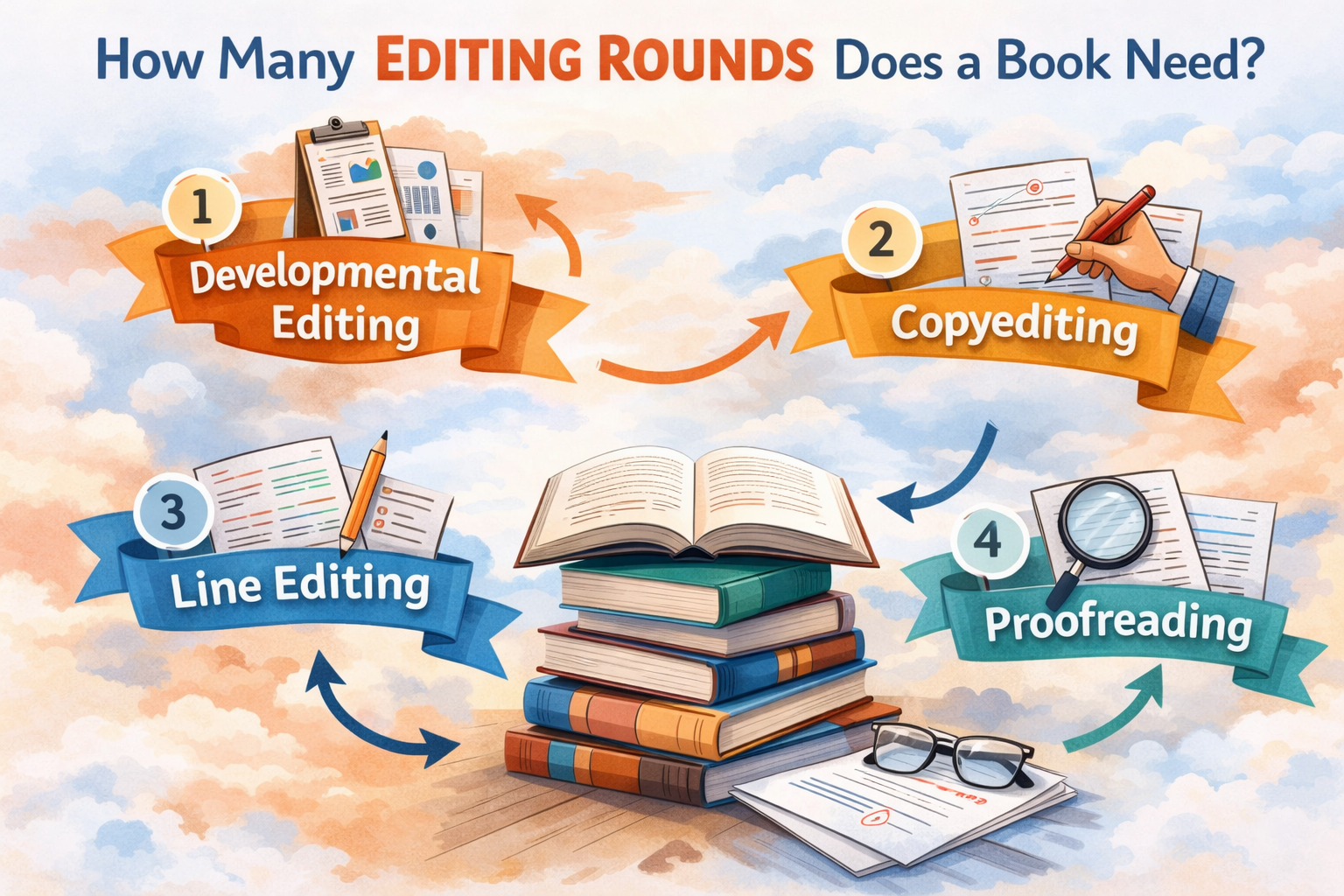
Edit in Multiple Stages
Editing works best when done step by step.
Typical stages include:
-
Developmental editing
-
Line editing
-
Copy editing
-
Proofreading
Each stage improves a different part of the manuscript.
Read the Manuscript Aloud
Reading aloud helps identify:
-
Awkward phrasing
-
Long sentences
-
Missing words
This technique improves clarity and flow.
Print the Manuscript
Many authors notice errors more easily on paper than on a screen.
Printing the manuscript can help spot formatting and spacing issues.
Focus on One Problem at a Time
Editing becomes easier when you focus on a single task.
For example:
-
One round for grammar
-
Another for sentence clarity
-
Another for consistency
This method improves editing accuracy.
Common Editing and Proofreading Mistakes Authors Make
Even experienced writers sometimes make mistakes during the editing process.
Avoid these common problems.
Skipping Professional Editing
Some authors skip professional editing to save money.
However, this often leads to lower-quality books and negative reviews.
Editing Too Early
Editing before completing the manuscript slows progress.
Finish the full draft before starting detailed editing.
Relying Only on Spell Check
Spell-check tools cannot identify every mistake.
They miss issues such as:
-
Incorrect word usage
-
Context errors
-
Sentence flow problems
Human editing remains essential.
Ignoring Formatting Issues
Formatting mistakes can affect readability.
Proofreading should always include:
-
Paragraph spacing
-
Chapter headings
-
Page consistency
Why Authors Should Choose Professional Editing Services
Professional editing services offer expertise and efficiency.
Working with experienced editors provides many benefits.
Expert Feedback
Professional editors understand publishing standards and reader expectations.
They provide constructive feedback that improves the manuscript.
Time Efficiency
Editing a full manuscript takes significant time.
Professional services help authors move through the publishing process faster.
Publishing Readiness
Editors ensure the manuscript is ready for:
-
Formatting
-
Printing
-
Digital publishing
This reduces delays during publication.
Market Competitiveness
In today’s publishing industry, professionally edited books perform better.
High-quality editing helps authors compete with established publishers.
Preparing Your Manuscript for Editing
Authors can improve editing results by preparing their manuscripts properly.
Before sending your manuscript for editing:
-
Complete a full self-edit
-
Organize chapters clearly
-
Remove obvious errors
-
Ensure consistent formatting
-
Include clear chapter titles
These steps allow editors to focus on deeper improvements.
How Editing Supports Book Marketing
Many authors overlook the connection between editing and marketing.
However, editing directly impacts how readers perceive a book.
Well-edited books generate:
-
Positive reviews
-
Reader recommendations
-
Stronger author reputation
Readers are more likely to promote books that feel polished and professional.
In contrast, poorly edited books often receive negative feedback, which hurts marketing efforts.