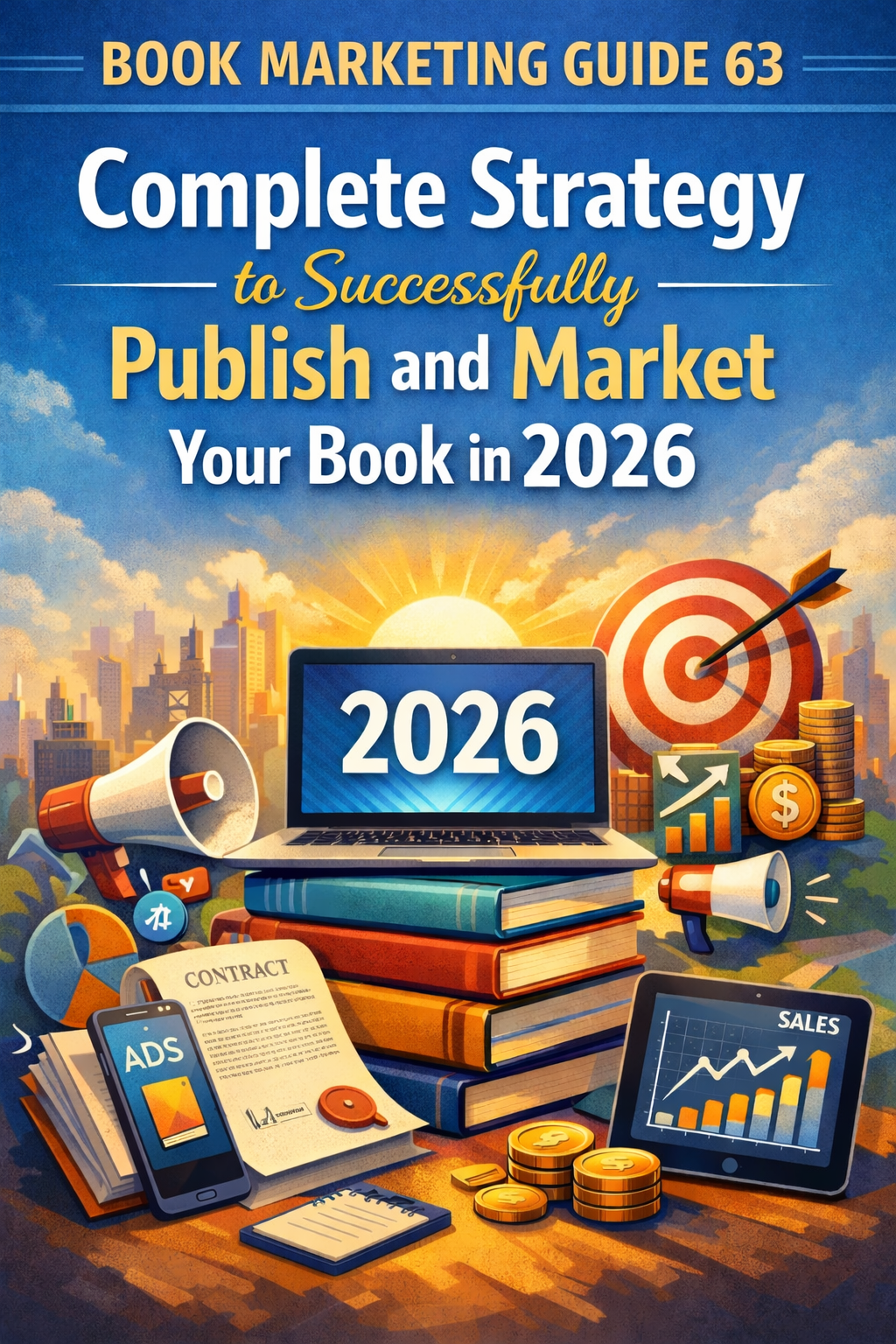
Book Marketing Guide 2026: Complete Strategy to Successfully Publish and Market Your Book
Introduction: Why Most Books Fail — And How to Avoid It
Publishing a book is easier than ever. Selling it is not.
Every year, thousands of new titles enter the market. Many are well-written, professionally edited, and beautifully designed. Yet most never reach readers. The reason is simple: authors focus on writing but ignore marketing.
A strong marketing plan is what turns a manuscript into a successful book. Without it, even great books disappear in crowded marketplaces.
This Book Marketing Guide 2026 gives you a clear, step-by-step strategy to publish, promote, and sell your book effectively. Whether you're self-publishing or working with a publisher, these methods will help you reach your audience and grow your author brand.
Step-by-Step Book Marketing Strategy for 2026
Step 1: Define Your Target Audience
Marketing begins with clarity. You must know who your book is for before you try to promote it.
Ask yourself:
-
Who will benefit most from this book?
-
What age group is my reader?
-
What problems does my book solve?
-
What other books do they read?
Create a reader profile that includes:
-
Age range
-
Interests
-
Reading habits
-
Preferred platforms
When you know your audience, every marketing decision becomes easier.
Step 2: Build Your Author Platform Early
Start building your presence before publishing. A strong platform gives you readers ready to buy on launch day.
Key platform elements:
Website
Your website acts as your online headquarters. Include:
-
Author bio
-
Book details
-
Email signup form
-
Media kit
-
Contact page
Email List
Email marketing is one of the most effective promotion tools. Offer a free chapter, checklist, or bonus content to encourage signups.
Social Media Presence
Choose platforms your audience uses most. Focus on 1–2 channels instead of trying to be everywhere.
Consistency matters more than frequency.
Step 3: Optimize Your Book Metadata
Metadata determines whether readers find your book online.
Important elements:
-
Title and subtitle
-
Keywords
-
Categories
-
Book description
-
Author name
Tips for optimization:
-
Use keywords readers actually search
-
Choose categories with strong demand but less competition
-
Write a clear, benefit-driven description
Good metadata improves discoverability and increases sales potential.
Step 4: Create a Professional Book Cover
Readers judge books by covers. A weak cover signals low quality, even if the content is excellent.
Effective covers:
-
Match genre expectations
-
Use readable typography
-
Look good as thumbnails
-
Communicate tone instantly
Investing in professional design is one of the smartest marketing decisions you can make.
Step 5: Plan a Strategic Book Launch
Your launch period is the most important marketing window. A strong launch can boost rankings, visibility, and reviews.
A simple launch timeline:
60 days before launch
-
Build anticipation
-
Share previews
-
Recruit reviewers
30 days before launch
-
Open preorders
-
Schedule interviews
-
Announce bonuses
Launch week
-
Send email campaign
-
Post daily updates
-
Run promotions
30 days after launch
-
Continue ads
-
Share testimonials
-
Promote reviews
Consistency during this phase creates momentum.
Step 6: Use Content Marketing
Content marketing builds trust and authority. It positions you as an expert rather than just a seller.
Examples:
-
Blog posts
-
Short videos
-
Educational posts
-
Behind-the-scenes content
-
Writing tips
Helpful content attracts readers naturally and keeps them engaged long-term.
Step 7: Leverage Reviews and Social Proof
Reviews strongly influence buying decisions. Many readers will not purchase a book with zero reviews.
Ways to get reviews:
-
Advance reader copies
-
Reviewer outreach
-
Reader communities
-
Book bloggers
-
Early supporters
Encourage honest reviews, not forced ones. Authentic feedback builds credibility.
Step 8: Run Paid Advertising Strategically
Ads can boost visibility quickly when used correctly.
Popular ad platforms:
-
Online bookstores
-
Social media platforms
-
Search engines
Best practices:
-
Start with a small budget
-
Test different ad creatives
-
Track performance
-
Scale winning campaigns
Paid ads work best when combined with strong organic marketing.
Step 9: Build Partnerships and Collaborations
Collaboration expands your reach faster than solo promotion.
Partnership ideas:
-
Podcast interviews
-
Guest articles
-
Joint webinars
-
Cross promotions
-
Influencer features
Choose partners who share your audience but are not direct competitors.
Step 10: Track Results and Adjust Strategy
Marketing is not guesswork. You must track data to know what works.
Monitor:
-
Sales trends
-
Website traffic
-
Email open rates
-
Ad performance
-
Social engagement
Then improve based on results. Small adjustments can lead to big improvements.
Benefits of Following a Structured Book Marketing Plan
A clear marketing strategy offers major advantages.
Higher Visibility
Planned promotion ensures your book appears where readers search. Visibility increases discovery and sales.
Strong Author Brand
Consistent marketing builds recognition. Over time, readers begin to trust your name.
Better Sales Performance
Books with active marketing campaigns outperform those without them. Promotion drives momentum.
Long-Term Reader Growth
Marketing is not just about one book. It builds an audience for future releases.
Best Practices for Book Promotion in 2026
The publishing landscape evolves constantly. These modern practices help authors stay competitive.
Focus on value, not hype
Readers respond better to useful content than aggressive sales messages.
Prioritize quality platforms
It is better to master one platform than perform poorly on five.
Use storytelling marketing
Share your journey, challenges, and inspiration. Stories create emotional connection.
Engage with readers
Reply to comments, answer questions, and thank supporters. Interaction builds loyalty.
Think long-term
Marketing is a marathon, not a sprint. Sustainable strategies outperform quick tactics.
Common Book Marketing Mistakes to Avoid
Many authors sabotage their own success by making preventable errors.
Launching Without an Audience
Publishing before building a platform leads to weak sales. Start audience building early.
Ignoring Professional Editing and Design
Poor production quality damages credibility and reviews.
Over-promoting Instead of Helping
Constant sales posts push readers away. Provide value first.
Not Using Analytics
Without data, you cannot improve your strategy.
Giving Up Too Early
Most books gain traction slowly. Consistency is essential.
Why Hiring a Professional Publishing Service Helps
Many authors try to handle everything alone. While possible, it often slows progress and reduces results.
Professional publishing services provide:
Industry Expertise
They understand market trends, reader behavior, and distribution channels.
Professional Production
Editing, formatting, and design are handled by specialists.
Marketing Strategy
Experts create tailored promotional plans based on your genre and goals.
Distribution Support
They ensure your book reaches major retailers and platforms.
Time Savings
Instead of managing every detail, you can focus on writing your next book.
Working with professionals often leads to stronger launches and better long-term performance.
Advanced Marketing Strategies for Serious Authors
Once you master the basics, advanced tactics can expand your reach.
Build a Reader Community
Create a private reader group or newsletter club. Offer:
-
Exclusive content
-
Early access
-
Discounts
-
Q&A sessions
Communities turn readers into loyal fans.
Use Series Marketing
Books in a series often sell better than standalone titles. Each book promotes the others.
Benefits:
-
Higher lifetime reader value
-
Increased read-through rate
-
Stronger brand identity
Repurpose Your Book Content
Turn one book into multiple assets:
-
Blog posts
-
Courses
-
Workshops
-
Audiobooks
-
Speaking material
Repurposing multiplies visibility without creating new content from scratch.
Build Media Presence
Media exposure boosts credibility quickly.
Approaches:
-
Press releases
-
Interviews
-
Expert commentary
-
Guest appearances
Media features position you as an authority.
Long-Term Book Marketing Mindset
Successful authors think beyond one launch. They treat writing as a career, not a single event.
Adopt these habits:
-
Maintain consistent posting
-
Grow your email list weekly
-
Publish regularly
-
Engage with readers
-
Test new strategies
Small daily actions compound into long-term success.
Quick Checklist: Book Marketing Action Plan
Use this checklist to stay on track:
-
Identify target audience
-
Build author website
-
Grow email list
-
Optimize metadata
-
Design professional cover
-
Plan launch campaign
-
Collect reviews
-
Run test ads
-
Track results
-
Adjust strategy
Following this plan ensures nothing important is missed.