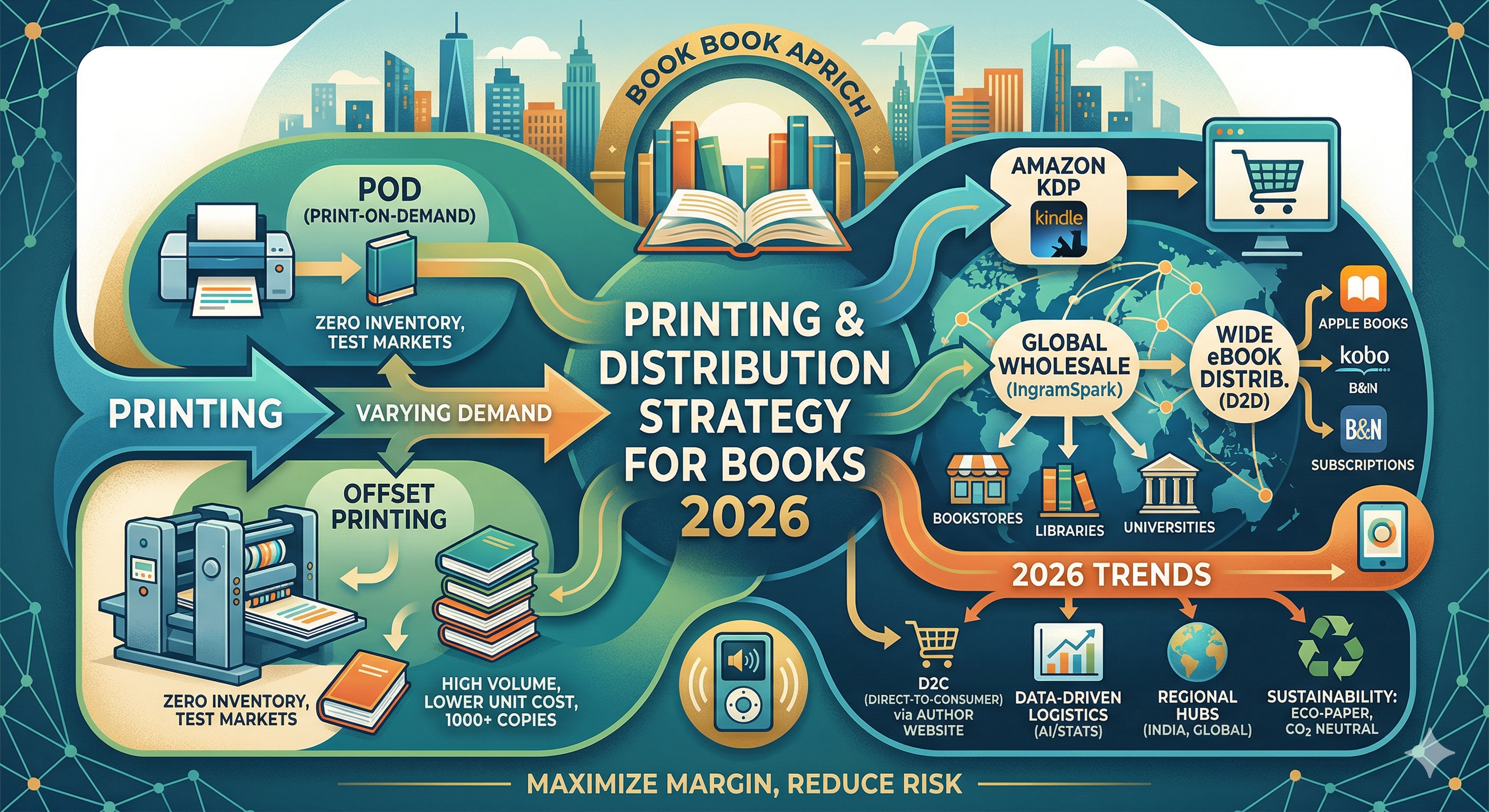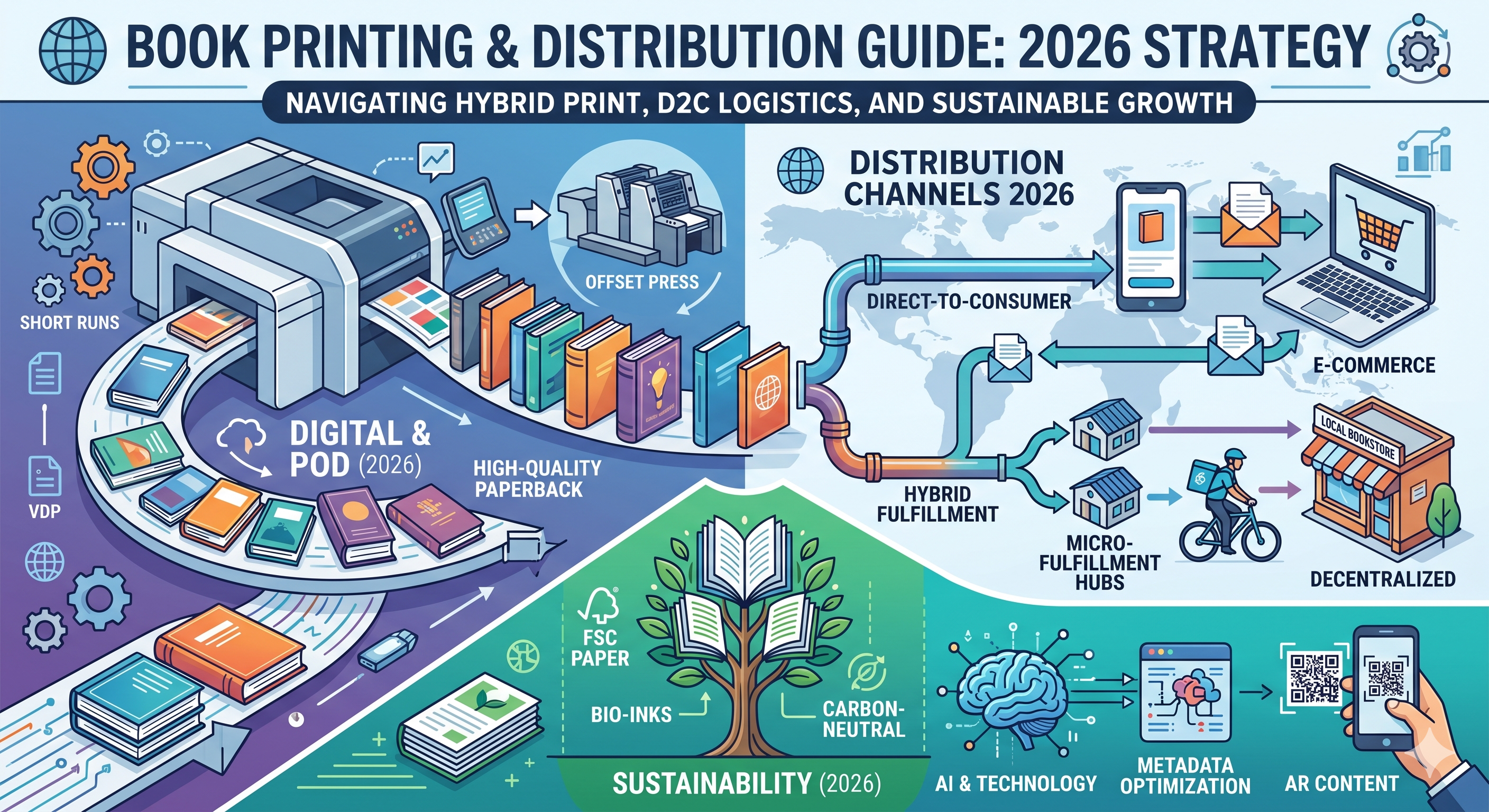
Book Printing and Distribution Guide 2026 Strategy
Introduction
Publishing a book is no longer the hardest part—getting it printed and into readers’ hands is where most authors struggle. Many books fail not because of poor content, but due to weak printing choices and poor distribution strategy.
This Book Printing and Distribution Guide 2026 solves that problem. It breaks down exactly how to print your book professionally and distribute it effectively across multiple channels. Whether you're self-publishing or working with a publisher, this guide will help you avoid costly mistakes and maximize your reach.
Understanding Book Printing in 2026
Before you distribute your book, you need to decide how it will be printed. The right printing method impacts cost, quality, and scalability.
Traditional Offset Printing
Offset printing is best for large print runs.
Best for:
- Established authors
- Bulk printing (500+ copies)
- Lower cost per unit at scale
Pros:
- High-quality output
- Lower cost per copy in bulk
Cons:
- High upfront cost
- Requires storage space
Print-on-Demand (POD)
Print-on-demand is now the most popular choice in 2026.
Best for:
- New authors
- Testing the market
- Low-budget publishing
Pros:
- No inventory needed
- Pay per copy
- Easy updates
Cons:
- Higher cost per unit
- Limited customization
Digital Printing
Digital printing sits between offset and POD.
Best for:
- Medium print runs (50–500 copies)
Pros:
- Faster turnaround
- Good quality
Cons:
- Slightly higher cost than offset in bulk
Step-by-Step Book Printing Strategy
Step 1: Finalize Your Manuscript
Ensure your manuscript is:
- Fully edited
- Proofread
- Properly formatted
Errors at this stage can become expensive later.
Step 2: Choose the Right Book Size and Format
Common sizes include:
- 5" x 8"
- 6" x 9"
- A4 for academic books
Also decide:
- Paperback vs hardcover
- Black & white vs color printing
Step 3: Design a Professional Cover
Your cover directly impacts sales.
Key elements:
- Clear title and subtitle
- Author name
- Strong visual design
- Spine and back cover formatting
Step 4: Select Paper and Binding Quality
Choices affect reader experience.
Options include:
- Cream paper (novels)
- White paper (academic/non-fiction)
- Matte vs glossy cover
Binding types:
- Perfect binding (standard)
- Case binding (hardcover)
Step 5: Get ISBN and Barcode
An ISBN is essential for distribution.
It allows:
- Retail tracking
- Library listing
- Global sales
Step 6: Print Sample Copies
Never skip this step.
Check:
- Print quality
- Color accuracy
- Alignment and margins
Fix issues before full production.
Understanding Book Distribution in 2026
Printing your book is only half the job. Distribution determines how many people can actually buy it.
Online Distribution Channels
Online sales dominate the book market.
Key platforms:
- E-commerce marketplaces
- Author websites
- Digital bookstores
Benefits:
- Global reach
- Easy setup
- Scalable
Offline Distribution Channels
Offline presence builds credibility.
Channels include:
- Bookstores
- Libraries
- Events and book fairs
Challenges:
- Requires logistics
- Lower margins
- Needs partnerships
Hybrid Distribution Strategy
The best approach combines both.
Example:
- Use POD for online sales
- Use offset printing for bookstore supply
This balances cost and reach.
Step-by-Step Distribution Strategy
Step 1: Choose Distribution Platforms
Select based on your audience.
For example:
- Online-first audience → focus on e-commerce
- Academic readers → include institutional distribution
Step 2: Set Pricing Strategy
Your pricing should consider:
- Printing cost
- Distribution fees
- Royalty margins
Avoid pricing too high or too low.
Step 3: Manage Inventory (if applicable)
If not using POD:
- Track stock carefully
- Avoid overprinting
- Plan storage
Step 4: Enable Global Distribution
Reach international readers by:
- Using global POD networks
- Listing on multiple marketplaces
Step 5: Optimize Listings
Your product page must include:
- Clear book description
- Keywords
- Categories
- Author bio
This improves discoverability.
Benefits of a Strong Printing and Distribution Strategy
A well-planned strategy delivers measurable results.
Key benefits:
- Wider audience reach
- Better profit margins
- Professional brand image
- Higher sales consistency
It also reduces risk and improves long-term success.
Best Practices for 2026
Focus on Print + Digital Integration
Even physical books benefit from digital promotion.
Combine:
- Printed books
- eBooks
- Audiobooks
Use Data to Make Decisions
Track:
- Sales trends
- Customer behavior
- Platform performance
Adjust your strategy accordingly.
Build Direct Sales Channels
Don’t rely only on marketplaces.
Create:
- Personal website
- Email list
- Direct purchase options
Invest in Quality
Low-quality printing hurts credibility.
Always prioritize:
- Good paper
- Clean formatting
- Professional design
Common Mistakes to Avoid
Printing Too Many Copies
Overestimating demand leads to wasted inventory.
Start small unless demand is proven.
Ignoring Distribution Strategy
Many authors focus only on printing.
Without distribution, your book won’t sell.
Poor Cover Design
A weak cover reduces:
- Click-through rate
- Sales conversions
Incorrect Pricing
Pricing too high reduces sales.
Pricing too low reduces profit.
Balance is key.
Skipping Proof Copies
This leads to:
- Printing errors
- Formatting issues
- Poor reader experience
Why Choose a Professional Publishing Service
While self-publishing is accessible, professional support adds significant value.
Expertise and Guidance
Professionals help with:
- Printing decisions
- Distribution planning
- Market positioning
Better Industry Connections
They provide access to:
- Retail networks
- Distribution channels
- Bulk printing services
Time and Cost Efficiency
Avoid trial-and-error.
A professional team helps you:
- Save time
- Reduce mistakes
- Optimize costs
Higher Quality Output
From cover design to print quality, professionals ensure your book meets industry standards.