Book Promotion Strategies 2026: Complete Blueprint
Introduction: Why Most Books Fail to Sell — And How to Fix It
Publishing a book is easier than ever. Selling it is not. Every year, millions of new titles enter the market, yet only a small percentage gain visibility. Many authors assume that once a book is published, readers will automatically find it. That rarely happens.
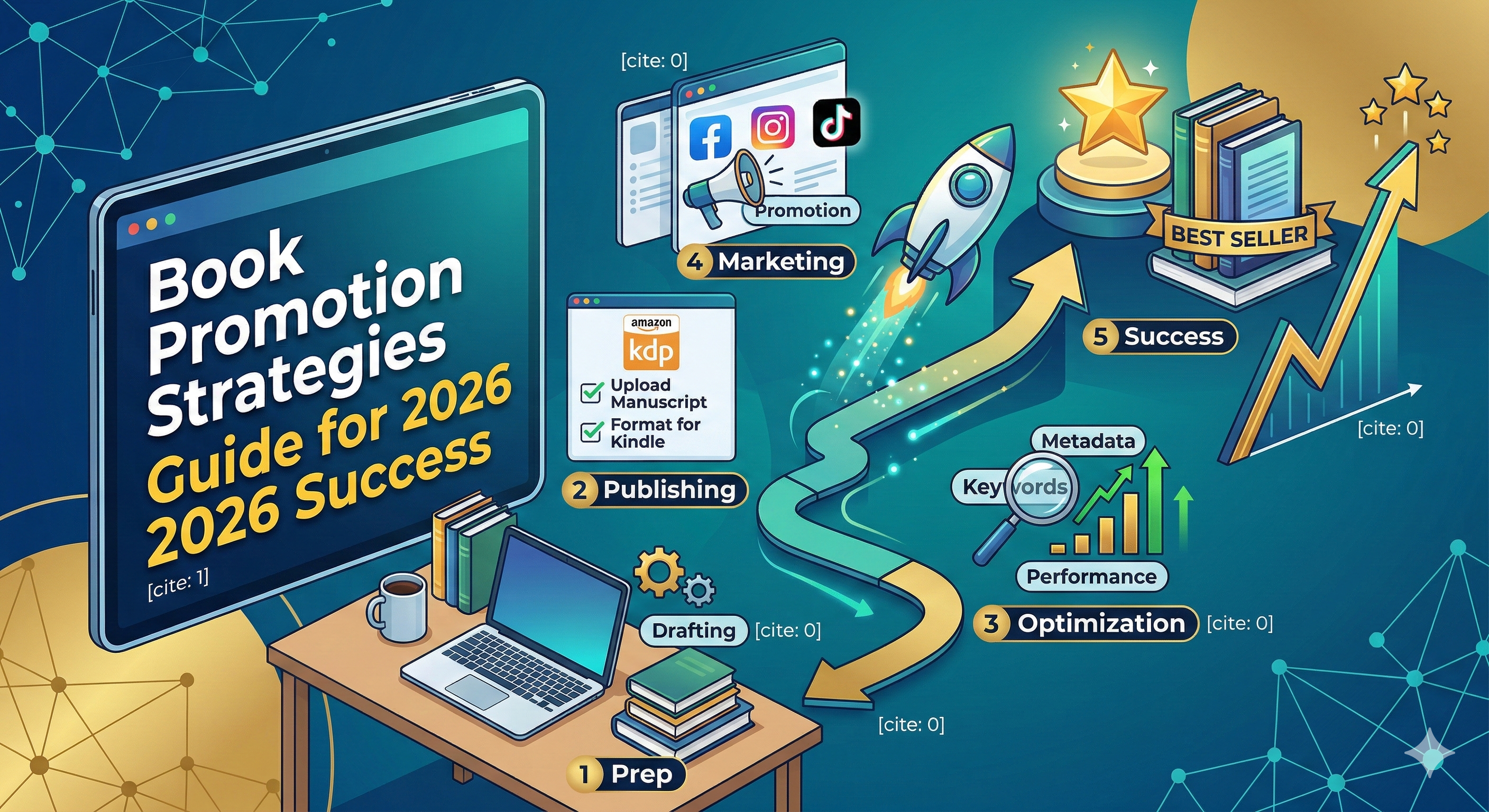
The truth is simple: success depends on effective Book Promotion Strategies 2026 that combine planning, branding, and consistent marketing. Promotion is not a single launch-day activity. It is a structured process that begins before publication and continues long after release.
This guide explains practical, step-by-step strategies that publishers and authors can use to promote books successfully in today’s competitive market.
Understanding Book Promotion Strategies 2026
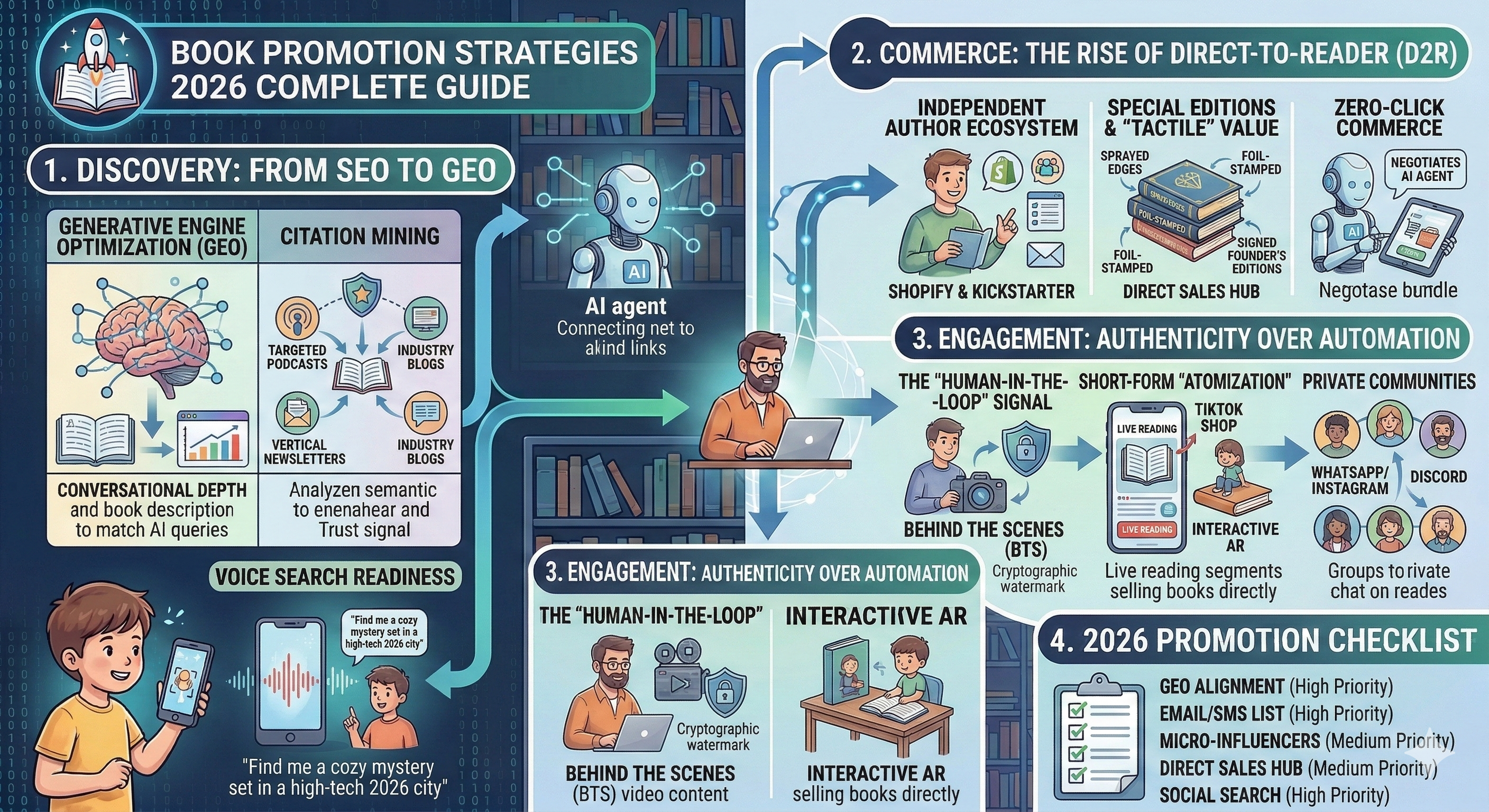
Modern promotion is data-driven, audience-focused, and platform-diverse. Traditional methods like bookstore signings still work, but they must be combined with digital visibility.
Effective promotion today involves:
-
Audience targeting
-
Platform selection
-
Consistent branding
-
Strategic content marketing
-
Measurable campaigns
In 2026, algorithms, reader communities, and personalized recommendations play a major role in book discovery. Therefore, promotion must be intentional and continuous.
Step-by-Step Book Promotion Strategies 2026
Step 1: Define Your Target Audience
Before marketing begins, identify who your readers are.
Ask:
-
What age group will read this book?
-
What problems does it solve?
-
Which genres do they usually read?
-
Where do they spend time online?
When you know your audience, promotion becomes focused instead of random. This improves conversion rates and reduces marketing costs.
Step 2: Build an Author Platform Early
An author platform is your online presence and credibility. It includes:
-
Website or landing page
-
Email list
-
Social media profiles
-
Blog or newsletter
Start building this platform months before publication. Early followers often become your first buyers and reviewers.
Step 3: Create a Strong Book Launch Plan
A launch without planning wastes potential visibility. Instead, create a structured timeline:
Pre-Launch (60–90 days before release)
-
Reveal cover
-
Share excerpts
-
Collect advance readers
Launch Week
-
Announce release across platforms
-
Run limited-time discounts
-
Host live sessions
Post-Launch
-
Share reviews
-
Run ads
-
Continue content marketing
A coordinated launch signals credibility and attracts attention from readers and retailers.
Step 4: Optimize Metadata for Discoverability
Metadata is how bookstores and online platforms understand your book.
Key elements include:
-
Title and subtitle
-
Keywords
-
Categories
-
Book description
-
Author bio
Well-optimized metadata helps your book appear in searches and recommendations. Poor metadata hides your book even if it is excellent.
Step 5: Use Content Marketing to Build Authority
Content marketing is one of the most reliable Book Promotion Strategies 2026 because it builds trust over time.
Examples:
-
Educational blog posts
-
Short videos explaining book concepts
-
Podcast interviews
-
Informative social posts
Helpful content positions you as an expert, not just a seller.
Step 6: Leverage Reviews and Social Proof
Readers trust other readers. Reviews increase credibility and conversion.
Ways to get reviews:
-
Send advance review copies
-
Ask early buyers politely
-
Work with book reviewers
-
Offer review incentives such as bonus content
Books with strong reviews often rank higher in search and recommendation systems.
Step 7: Run Targeted Advertising Campaigns
Paid ads work best when they are targeted and tested.
Start small. Measure results. Then scale.
Effective ad channels:
-
Online bookstores
-
Social platforms
-
Search engines
-
Reader communities
Track metrics like click-through rate, conversion rate, and cost per sale. Data should guide decisions.
Step 8: Partner With Influencers and Communities
Collaborations expand reach quickly.
Possible partners:
-
Book bloggers
-
Reviewers
-
Genre influencers
-
Online book clubs
-
Podcast hosts
Choose partners whose audience matches your target readers. Relevance matters more than follower count.
Step 9: Use Email Marketing for Long-Term Sales
Email remains one of the highest-converting marketing channels. Unlike social media, you own your email list.
Send:
-
Launch announcements
-
Exclusive bonuses
-
Behind-the-scenes updates
-
Discounts
Consistent email communication builds loyalty and repeat buyers.
Step 10: Continue Promotion After Launch
Many authors stop promoting after release week. This is a major mistake.
Books often gain traction months later if promotion continues.
Long-term promotion ideas:
-
Seasonal campaigns
-
Anniversary promotions
-
Updated editions
-
New format releases (audiobook, paperback)
Sustained promotion increases lifetime sales.
Benefits of Effective Book Promotion Strategies 2026
Strong promotion provides more than sales. It builds a long-term author career.
Key benefits include:
Higher Visibility
Consistent marketing keeps your book visible across platforms, making discovery easier for new readers.
Stronger Author Brand
Promotion helps readers recognize your name and associate it with quality content.
Increased Credibility
Professional campaigns signal seriousness, which attracts media, retailers, and collaborators.
Long-Term Revenue
Well-promoted books continue selling for years instead of fading after launch.
Better Publishing Opportunities
Authors with strong marketing performance are more attractive to publishers and agents.
Best Practices for Successful Promotion
Following proven best practices improves results and reduces wasted effort.
Plan Before Publishing
Promotion should start during writing, not after release.
Stay Consistent
Regular posting and updates maintain reader interest.
Focus on Value
Provide helpful or entertaining content rather than constant sales messages.
Track Results
Measure performance and adjust strategies.
Repurpose Content
Turn one blog post into multiple posts, videos, and emails.
Common Mistakes to Avoid
Even talented authors struggle when promotion is handled poorly. Avoid these frequent mistakes.
Promoting Without Strategy
Posting randomly on social media rarely produces results. Promotion must follow a structured plan.
Targeting Everyone
Trying to reach all readers usually reaches none. Narrow targeting performs better.
Ignoring Branding
Inconsistent visuals, tone, or messaging reduce recognition.
Stopping Too Early
Books need time to gain momentum. Ending promotion early limits sales.
Over-Spending on Ads
Ads without testing can waste money. Always start small and analyze performance.
Advanced Book Promotion Strategies 2026 for Competitive Markets
For crowded genres, basic promotion may not be enough. Advanced tactics can help your book stand out.
Data-Driven Campaigns
Use analytics tools to understand reader behavior, popular keywords, and conversion trends.
Multi-Format Publishing
Release your book in multiple formats:
-
Print
-
eBook
-
Audiobook
Different readers prefer different formats, and availability increases reach.
Personal Branding Content
Share your journey, writing process, and experiences. Readers connect with authors they feel they know.
Community Building
Create a private reader group or membership community. Dedicated fans often become promoters of your book.
Why Choose a Professional Publishing or Promotion Service
Many authors attempt to manage promotion alone. While possible, professional services offer clear advantages.
Expertise and Industry Knowledge
Professional teams understand market trends, platform algorithms, and reader behavior. Their experience prevents costly mistakes.
Time Efficiency
Promotion requires constant effort. Delegating tasks allows authors to focus on writing.
Access to Networks
Publishing companies have established connections with reviewers, media, and distributors.
Strategic Campaign Planning
Professionals create structured campaigns with measurable goals instead of guesswork.
Higher Return on Investment
Well-managed campaigns often generate more sales than self-managed promotion.
How a Professional Strategy Is Structured
A professional promotion campaign typically follows this framework:
-
Market research
-
Audience analysis
-
Brand positioning
-
Pre-launch campaign
-
Launch execution
-
Advertising optimization
-
Post-launch scaling
Each stage builds on the previous one, creating a cohesive marketing system.
Measuring Success: Key Metrics to Track
Promotion should always be measurable. Important metrics include:
-
Sales volume
-
Conversion rate
-
Ad performance
-
Email open rate
-
Website traffic
-
Reader engagement
Tracking these numbers reveals what works and what needs improvement.
Future Trends Shaping Book Promotion
Promotion methods evolve quickly. Staying updated ensures long-term success.
Emerging trends influencing Book Promotion Strategies 2026:
-
Personalized marketing recommendations
-
AI-driven book discovery algorithms
-
Short-form video promotion
-
Community-based marketing
-
Voice search optimization
Authors who adapt early gain a competitive advantage.
Practical Promotion Checklist
Use this checklist before launching your book:
-
Define target audience
-
Build author platform
-
Optimize metadata
-
Prepare launch plan
-
Collect advance reviews
-
Schedule content posts
-
Set ad budget
-
Prepare email campaign
Completing these steps significantly increases your chances of success.