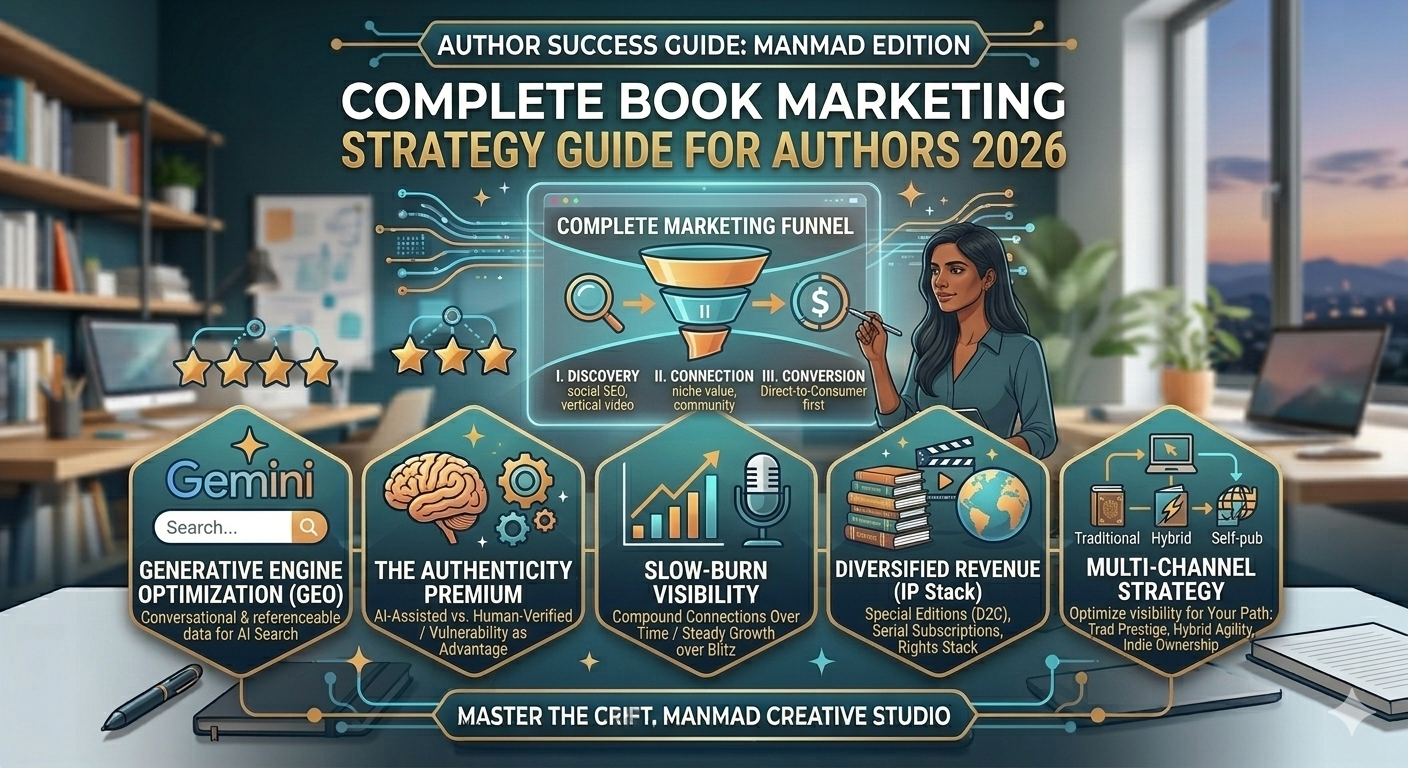
Complete Book Marketing Strategy Guide for Authors 2026
Introduction
Writing a book is a major achievement. However, many authors discover that finishing the manuscript is only half the journey. The real challenge begins after publication—getting readers to discover and buy the book.
Thousands of new titles are released every day. Without a clear plan, even a well-written book can disappear in the crowded marketplace. Many authors struggle with low visibility, weak sales, and limited audience reach.
This is where a strong book marketing strategy becomes essential.
A well-planned marketing approach helps authors build visibility, connect with readers, and create long-term success. In 2026, book promotion combines digital platforms, personal branding, reader communities, and professional marketing support.
This guide explains the complete step-by-step process to successfully publish and market your book.
Understanding a Modern Book Marketing Strategy
A book marketing strategy is a structured plan designed to promote a book before, during, and after its release. The goal is to attract readers, build awareness, and generate consistent sales.
Modern book marketing involves several key elements:
-
Author branding
-
Online visibility
-
Social media engagement
-
Email marketing
-
Book launch campaigns
-
Reader reviews and community building
Instead of relying on one method, successful authors use multiple channels to reach their audience.
The earlier you start planning your strategy, the stronger your results will be.
Step-by-Step Book Marketing Strategy for 2026
Step 1: Identify Your Target Audience
The foundation of every effective book marketing strategy is knowing who your readers are.
Different books attract different audiences. Understanding your readers allows you to create marketing messages that resonate with them.
Consider the following questions:
-
What age group will read your book?
-
What problems does your book solve?
-
What interests does your audience have?
-
Where do your readers spend time online?
For example:
-
Business books attract professionals and entrepreneurs
-
Fantasy novels attract young adults and fiction readers
-
Self-help books attract people seeking personal improvement
Clear audience identification makes marketing far more effective.
Step 2: Build Your Author Brand
Readers often connect with authors as much as they connect with books. Creating a strong personal brand helps readers remember you and trust your work.
Key elements of author branding include:
Professional Author Website
Your website should include:
-
Author biography
-
Book details
-
Blog or articles
-
Contact information
-
Media kit
-
Email subscription form
A website acts as the central hub for your marketing activities.
Consistent Author Identity
Use consistent elements across platforms:
-
Professional author photo
-
Clear author tagline
-
Consistent writing niche
-
Matching visual style
Strong branding builds recognition over time.
Step 3: Start Marketing Before Publishing
One of the biggest mistakes authors make is waiting until the book is released to start marketing.
Successful authors begin promotion months before launch.
Early marketing activities may include:
-
Sharing writing progress online
-
Building anticipation on social media
-
Collecting email subscribers
-
Posting sneak previews or excerpts
-
Creating cover reveal campaigns
Early engagement builds excitement and prepares your audience for the book launch.
Step 4: Develop a Book Launch Plan
The book launch is one of the most important moments in your book marketing strategy.
A successful launch can create early momentum and boost visibility in online stores.
A typical book launch plan may include:
Pre-Launch Promotion
Activities 4–6 weeks before release:
-
Announce the book cover
-
Share teaser content
-
Build a launch team
-
Offer advance reader copies (ARCs)
Launch Week Campaign
During launch week:
-
Announce the official release
-
Run promotional pricing
-
Host online events
-
Share reader reviews
-
Increase social media activity
Post-Launch Promotion
After launch:
-
Continue interviews and guest posts
-
Run promotional campaigns
-
Engage with reader feedback
The goal is to maintain excitement beyond release day.
Step 5: Use Social Media Marketing
Social media is one of the most powerful tools in a modern book marketing strategy.
It allows authors to directly connect with readers and build communities.
Popular platforms for authors include:
-
Instagram
-
Facebook
-
LinkedIn
-
TikTok
-
X (Twitter)
Effective social media strategies include:
-
Sharing writing insights
-
Posting behind-the-scenes content
-
Discussing themes from your book
-
Engaging with reader comments
-
Running giveaways and contests
Consistency is more important than posting frequently. Focus on building genuine conversations with readers.
Step 6: Build an Email Marketing List
Email marketing remains one of the most effective promotional channels for authors.
Unlike social media platforms, your email list belongs entirely to you.
Benefits of email marketing include:
-
Direct communication with readers
-
Higher engagement rates
-
Better control over promotions
-
Stronger reader relationships
Ways to grow your email list:
-
Offer free chapters or bonus content
-
Provide writing tips or insights
-
Share exclusive updates
-
Run special reader giveaways
Regular newsletters keep readers engaged and interested in future books.
Step 7: Encourage Book Reviews
Reviews play a major role in book discovery. Readers often rely on reviews before deciding to purchase a book.
Positive reviews increase credibility and improve visibility on book platforms.
Ways to encourage reviews:
-
Send advance copies to early readers
-
Ask readers politely for feedback
-
Build a launch review team
-
Engage with book bloggers
However, reviews should always be authentic and voluntary.
Genuine reader feedback builds long-term trust.
Step 8: Use Content Marketing
Content marketing helps authors demonstrate expertise and attract new readers.
Examples of content marketing include:
-
Blog posts
-
Articles
-
Podcasts
-
Guest writing
-
Video content
For example:
A nonfiction author might write articles about topics related to the book.
A fiction author might share world-building insights or character stories.
Content marketing improves search visibility and builds audience interest over time.
Benefits of a Strong Book Marketing Strategy
A well-executed book marketing strategy offers several long-term advantages.
Increased Book Visibility
Marketing helps your book reach readers who might otherwise never discover it.
More visibility leads to more opportunities for sales.
Stronger Author Brand
Consistent promotion builds recognition. Readers begin to associate your name with a specific genre or expertise.
Over time, this strengthens your author reputation.
Higher Book Sales
Strategic marketing drives demand. When readers hear about your book through multiple channels, they are more likely to purchase it.
Long-Term Audience Growth
Marketing helps you build a loyal reader base. Those readers are more likely to support future books.
This makes every new release easier to promote.
Best Practices for Book Marketing in 2026
The publishing industry continues to evolve. Authors must adapt their strategies to remain competitive.
Key best practices include:
Start Marketing Early
Promotion should begin months before publication.
Early visibility creates anticipation and excitement.
Focus on Reader Engagement
Instead of only promoting the book, focus on conversations and reader interaction.
Readers appreciate authentic connections with authors.
Use Multiple Marketing Channels
Successful marketing combines several approaches:
-
Social media
-
Email marketing
-
Content creation
-
Launch campaigns
Relying on only one channel limits your reach.
Track Your Marketing Results
Understanding what works helps improve future campaigns.
Track metrics such as:
-
Website traffic
-
Email subscribers
-
Social engagement
-
Book sales trends
Data-driven decisions lead to better outcomes.
Common Book Marketing Mistakes to Avoid
Even talented authors sometimes struggle with promotion. Avoiding common mistakes can significantly improve your results.
Waiting Until the Book Is Published
Late marketing reduces launch momentum.
Start promotion early to build awareness.
Trying to Reach Everyone
Marketing works best when focused on a specific audience.
Target readers who are most likely to enjoy your book.
Inconsistent Promotion
Many authors promote heavily during launch and then stop.
Consistent marketing helps maintain long-term visibility.
Ignoring Author Branding
Without a recognizable author identity, readers may forget your work.
A strong brand makes your books easier to remember.
Avoiding Professional Support
Some marketing tasks require specialized skills such as:
-
Cover design
-
advertising campaigns
-
search optimization
-
branding strategy
Professional support can greatly improve marketing effectiveness.
Why Authors Choose Professional Publishing Services
Marketing a book requires time, expertise, and strategic planning. Many authors choose professional publishing services to improve their results.
Professional companies provide support in areas such as:
Marketing Strategy Development
Experts design a complete book marketing strategy tailored to your audience and genre.
Professional Book Launch Campaigns
Publishing teams help organize launch promotions, media outreach, and reader engagement.
Branding and Author Platform Development
Professionals assist with building your website, author brand, and digital presence.
Advertising and Promotion Management
Experienced marketers run targeted campaigns designed to increase book visibility and sales.
Industry Knowledge
Publishing professionals understand market trends, reader behavior, and promotional opportunities that authors may not be aware of.
Working with experienced professionals allows authors to focus on writing while experts manage marketing.