Editing and Proofreading Guide: Publish Success 2026
Introduction: Why Editing Makes or Breaks a Book
Many authors finish writing a manuscript and think the hardest part is over. In reality, the real transformation happens during editing. A draft may contain strong ideas, but readers judge books by clarity, flow, and correctness. Even a great story can fail if grammar errors, repetition, or weak structure distract readers.
This Editing and Proofreading Guide explains exactly how to refine your manuscript step by step. You will learn practical methods, professional techniques, and industry-level standards that help authors publish polished books in 2026. Whether you plan to self-publish or work with a publisher, strong editing is the key to credibility, reader trust, and long-term sales.
What Editing and Proofreading Really Mean
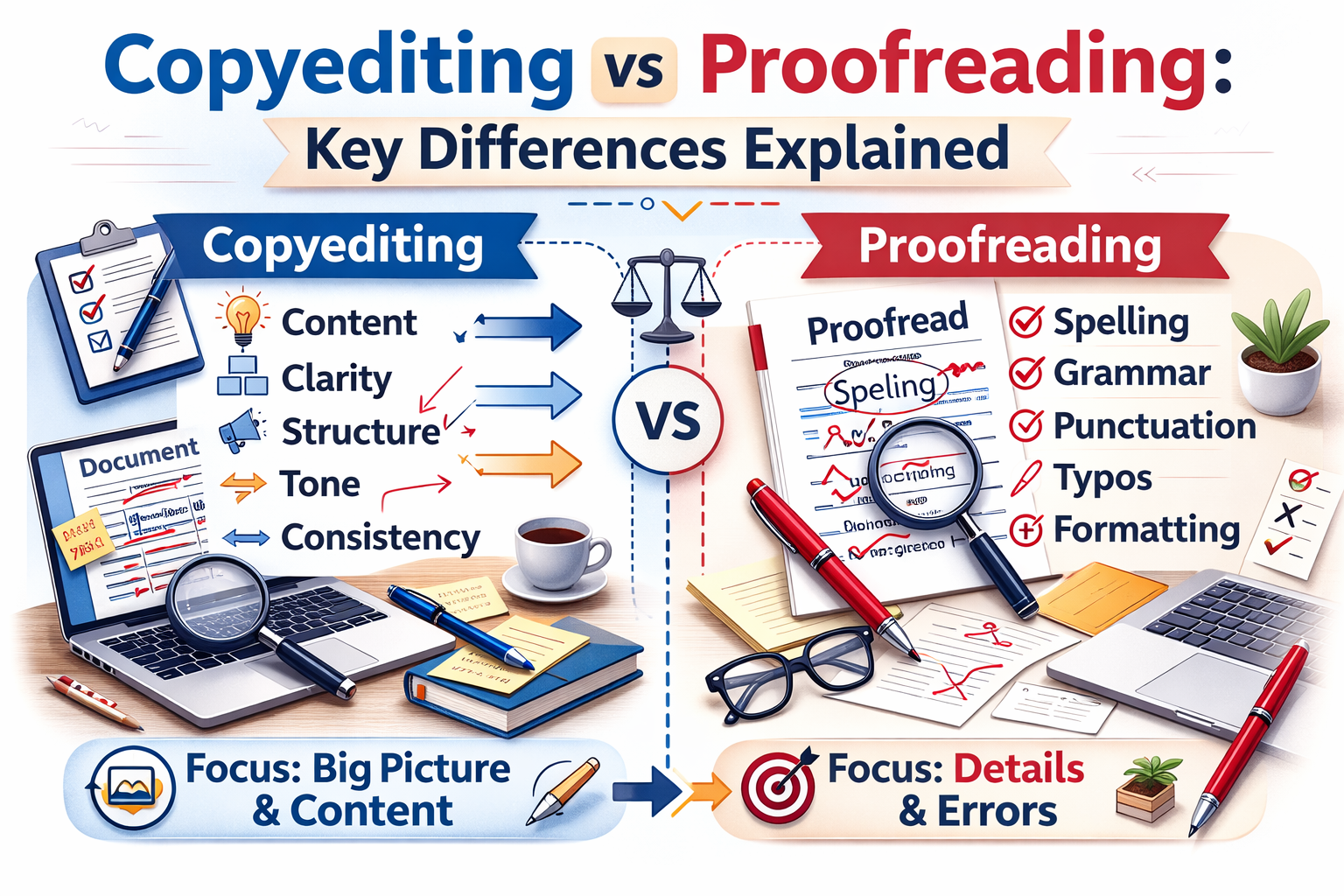
Many writers confuse editing with proofreading. They are not the same. Each stage improves your manuscript in a different way.
Editing Improves Content Quality
Editing focuses on structure, clarity, and readability. It examines:
-
Story flow
-
Argument logic
-
Character consistency
-
Tone and style
-
Sentence clarity
In short, editing strengthens your message.
Proofreading Fixes Surface Errors
Proofreading is the final check before publishing. It corrects:
-
Grammar mistakes
-
Spelling errors
-
Punctuation
-
Formatting issues
-
Typos
Editing shapes the book. Proofreading polishes it.
Step-by-Step Editing and Proofreading Guide for Authors
Step 1: Take a Break After Writing
Never edit immediately after finishing your manuscript. Distance helps you see mistakes clearly. Wait at least:
-
3–5 days for short books
-
1–2 weeks for novels
-
2–4 weeks for long manuscripts
Fresh eyes detect weak sentences and logical gaps faster.
Step 2: Start With Structural Editing
Before fixing grammar, check the foundation of your book.
Ask yourself:
-
Does the introduction hook readers?
-
Is each chapter necessary?
-
Are ideas presented in logical order?
-
Does the ending satisfy expectations?
Cut unnecessary sections. Combine repetitive parts. Rearrange chapters if needed.
Structural editing saves time because you avoid polishing sections you may later delete.
Step 3: Perform Line Editing
Now improve sentence quality. Focus on readability and rhythm.
Look for:
-
Long sentences that confuse readers
-
Passive voice overuse
-
Repeated words
-
Weak verbs
-
Unclear descriptions
Replace complex wording with simple language. Shorter sentences usually read better.
Step 4: Check Consistency
Readers notice inconsistencies immediately. Review:
-
Character names
-
Timeline details
-
Spelling style (US vs UK)
-
Formatting style
-
Tone consistency
Create a style sheet to track decisions. This ensures uniformity throughout your book.
Step 5: Proofread Carefully
Once editing is complete, proofread line by line.
Best methods:
-
Read aloud slowly
-
Print the manuscript
-
Change font style or size
-
Review backward sentence by sentence
These techniques help your brain see text as new rather than familiar.
Step 6: Use Beta Readers
Beta readers provide feedback from a reader’s perspective. They highlight:
-
Confusing scenes
-
Boring sections
-
Plot holes
-
Emotional impact
Choose readers from your target audience. Their reactions reflect how real buyers may respond.
Step 7: Final Proofreading Pass
Before publishing, perform one last proofread or hire a professional proofreader. This stage ensures:
-
Zero typos
-
Clean formatting
-
Professional presentation
Even small errors can reduce reader confidence.
Benefits of Following a Professional Editing Process
Using a structured approach delivers measurable advantages.
Higher Reader Satisfaction
Books with clear language and strong flow are easier to read. Readers finish them faster and leave better reviews.
Stronger Author Reputation
Well-edited books show professionalism. Readers trust authors who deliver polished work.
Better Sales Potential
Books with errors often receive negative reviews. Clean manuscripts attract positive feedback and repeat buyers.
Increased Publishing Opportunities
Agents and publishers reject many manuscripts due to poor editing. A polished draft stands out instantly.
Best Practices From Professional Editors
Professional editors follow strict standards. You can apply these same methods.
Read Your Work Multiple Times
Each editing pass should focus on one element only:
-
Structure
-
Clarity
-
Style
-
Grammar
-
Formatting
Trying to fix everything at once reduces accuracy.
Edit in Different Formats
Switching formats improves error detection.
Try editing in:
-
Printed pages
-
Tablet view
-
Different fonts
-
Double spacing
Visual variation helps you notice mistakes.
Create an Editing Checklist
A checklist keeps your process consistent. Include items like:
-
Sentence clarity
-
Paragraph flow
-
Dialogue formatting
-
Chapter transitions
-
Typo scan
Professionals rarely edit without a checklist.
Read Aloud for Natural Flow
Reading aloud reveals awkward sentences and unnatural dialogue. If a sentence sounds wrong, it usually is.
Cut 10% of Your Words
Strong writing is concise. Removing unnecessary words makes your text sharper and more engaging.
Common Editing Mistakes Authors Must Avoid
Even experienced writers make editing errors. Avoid these common problems.
Editing Too Early
Editing before finishing your draft slows progress. Complete the manuscript first, then revise.
Ignoring Structural Issues
Fixing grammar before structure wastes time. Always start with big-picture edits.
Over-Editing
Some authors revise endlessly and never publish. Aim for professional quality, not perfection.
Relying Only on Spell Check
Software tools catch basic mistakes but miss:
-
Context errors
-
Tone problems
-
Awkward phrasing
-
Logical gaps
Human review is essential.
Skipping Proofreading
Many writers stop after editing. However, proofreading is the final safety net. Skipping it can leave embarrassing typos in your published book.
Editing vs Proofreading Timeline for Publishing in 2026
To publish successfully, plan your schedule carefully.
Recommended timeline:
-
Draft completion
-
Break period
-
Structural edit
-
Line edit
-
Beta reader review
-
Final revisions
-
Proofreading
-
Formatting
-
Publishing
Rushing any stage reduces quality. Professional authors treat editing as a major production phase, not a quick task.
Tools That Support the Editing Process
While human judgment is critical, certain tools can assist.
Helpful tools include:
-
Grammar checkers
-
Readability analyzers
-
Style checkers
-
Plagiarism scanners
Use them as assistants, not replacements for careful editing.
Why Choose a Professional Editing Service
Many authors attempt to edit their own books. Self-editing is useful, but professional editing adds another level of quality.
Objective Feedback
Editors view your manuscript without emotional attachment. They spot issues you may overlook.
Industry Expertise
Professional editors understand publishing standards. They know what agents, publishers, and readers expect.
Time Efficiency
Editing a book alone can take months. Professionals complete it faster without sacrificing quality.
Higher Publishing Success Rate
Books reviewed by professionals are more likely to be accepted by publishers and better received by readers.
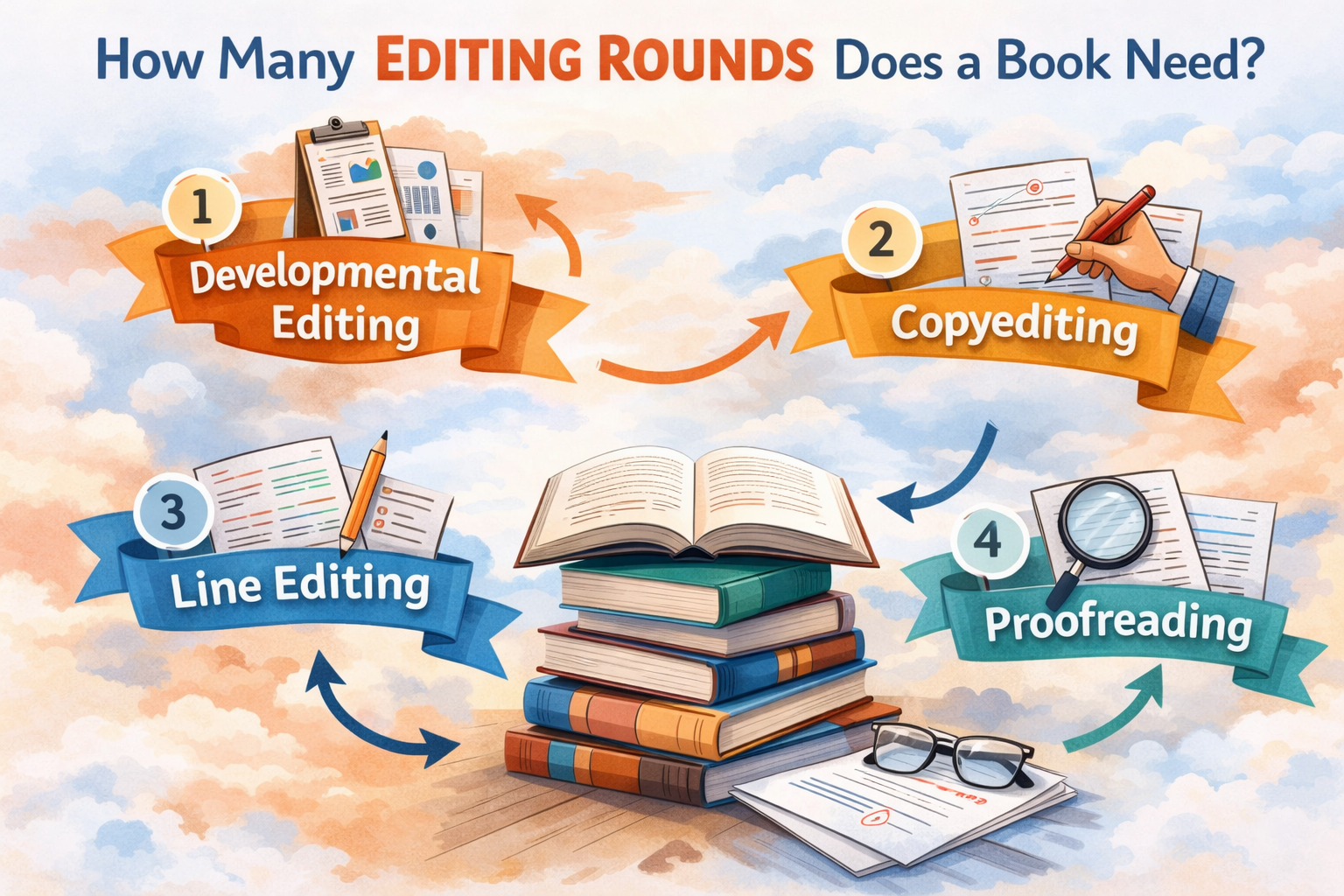
Types of Professional Editing Services
Most publishing companies offer multiple editing levels:
-
Developmental editing — structure and content
-
Line editing — sentence quality
-
Copyediting — grammar and style
-
Proofreading — final corrections
Choosing the right service depends on your manuscript’s condition.
Signs Your Manuscript Needs Professional Editing
Consider professional help if:
-
Readers say your writing is confusing
-
You receive rejection letters mentioning language issues
-
You struggle with grammar or structure
-
Your book feels unfinished
-
You want publishing-level quality
Hiring an editor is not a weakness. It is a strategic investment.
Cost vs Value of Professional Editing
Some authors hesitate because of cost. However, editing is one of the most valuable investments in publishing.
Think of it this way:
Poor editing leads to:
-
Negative reviews
-
Low sales
-
Weak reputation
Professional editing leads to:
-
Positive reader experience
-
Strong credibility
-
Better long-term earnings
Quality editing pays for itself through improved book performance.
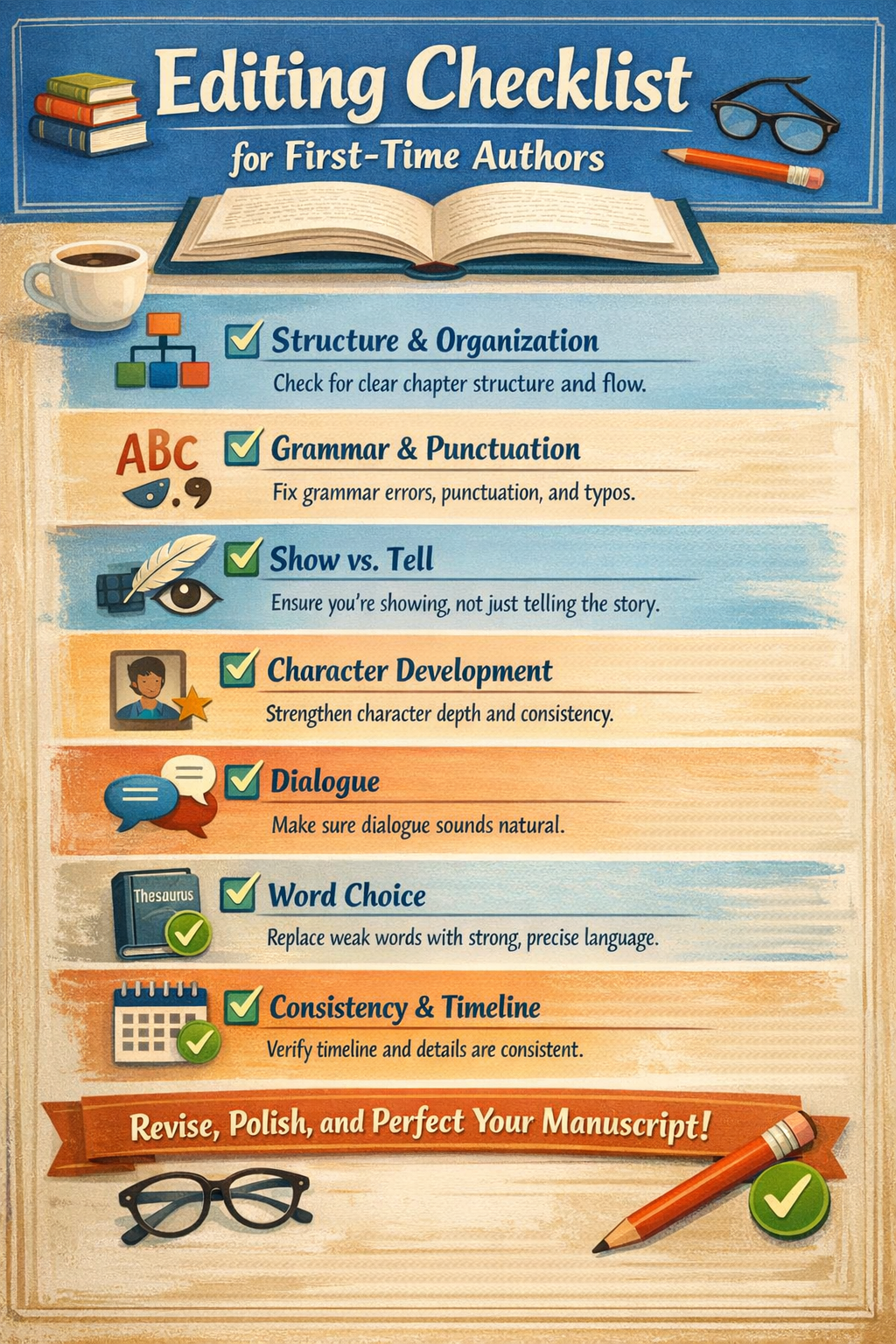
Editing Checklist Before Publishing
Use this final checklist to confirm readiness.
Content
-
Clear message
-
Logical structure
-
Strong opening
-
Effective ending
Language
-
Simple wording
-
Varied sentence length
-
Active voice
-
No repetition
Technical
-
Correct grammar
-
Consistent formatting
-
Proper punctuation
-
No typos
If every box is checked, your manuscript is ready for publishing.
Editing Strategies for Different Book Types
Editing methods vary by genre.
Fiction
Focus on:
-
Character development
-
Dialogue realism
-
Plot pacing
-
Emotional impact
Nonfiction
Prioritize:
-
Clarity
-
Accuracy
-
Logical structure
-
Evidence support
Academic Books
Ensure:
-
Citation accuracy
-
Formal tone
-
Structured arguments
-
Technical precision
Tailoring your editing approach to your genre improves results.
How Editing Impacts Marketing Success
Editing does more than improve writing. It also affects marketing.
Well-edited books:
-
Receive better reviews
-
Get more recommendations
-
Encourage word-of-mouth promotion
-
Build reader trust
-
Increase repeat buyers
Marketing attracts readers. Editing keeps them.