Editing Checklist for First-Time Authors Guide
Writing your first book is an exciting achievement. However, finishing the first draft is only half the journey. Many first-time authors make the mistake of rushing into publishing without properly editing their manuscript. This can lead to poor reviews, reader confusion, and lost opportunities.
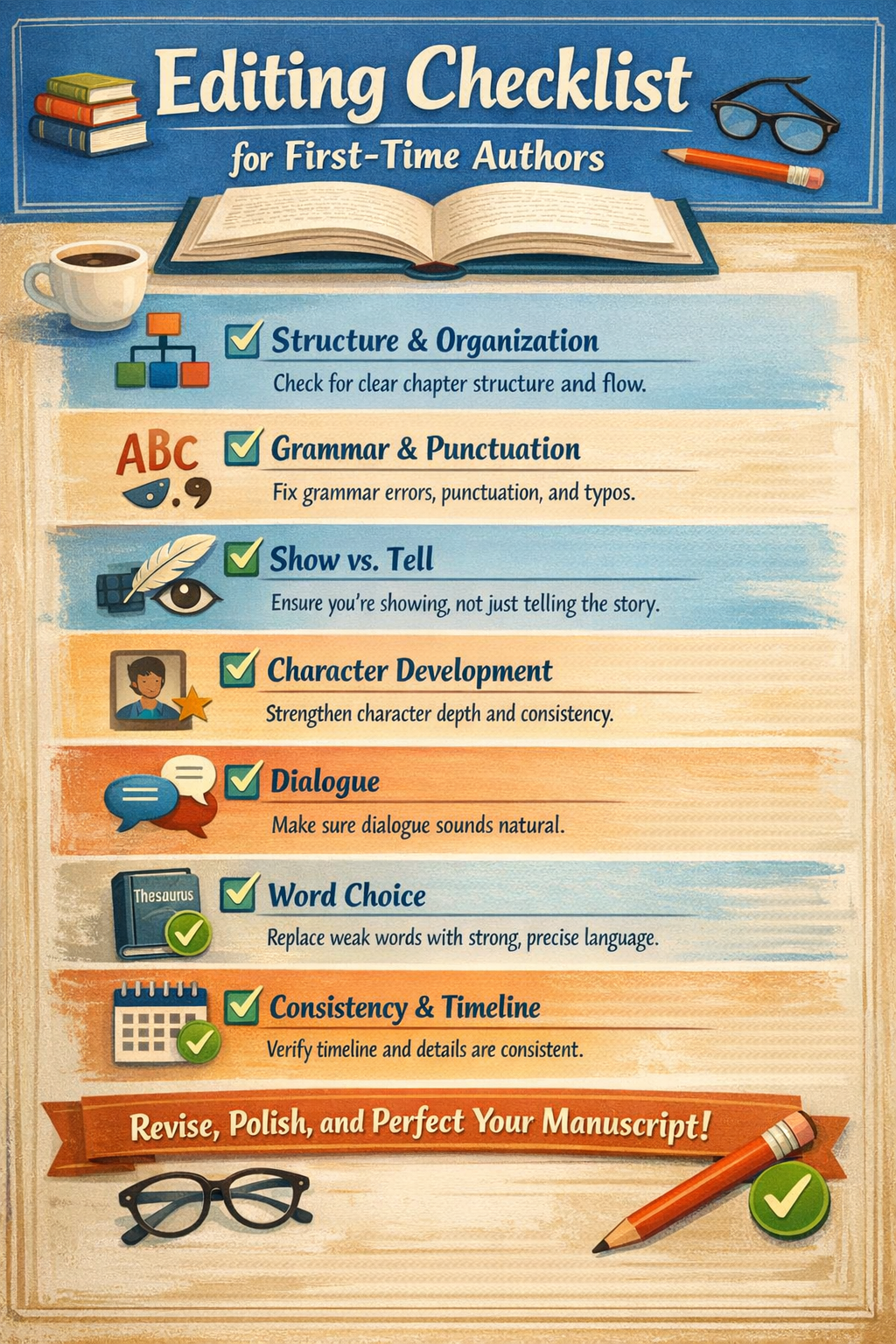
This is where an editing checklist for first-time authors becomes essential. A structured checklist helps you refine your manuscript, fix errors, and improve overall quality. It ensures your book meets professional standards and creates a strong impression on readers.
In this guide, you will learn a step-by-step editing checklist, best practices, common mistakes to avoid, and why professional editing services matter.
Why Editing Is Critical for First-Time Authors
Editing is not just about fixing grammar mistakes. It improves clarity, flow, and readability.
Here’s why editing matters:
-
It makes your book easier to understand
-
It improves reader engagement
-
It enhances your credibility as an author
-
It prepares your manuscript for publishing
-
It reduces negative reviews
Even the best writers need editing. A well-edited book stands out in a competitive market.
Step-by-Step Editing Checklist for First-Time Authors
Follow this complete editing checklist for first-time authors to polish your manuscript.
Step 1: Take a Break Before Editing
Before editing, step away from your manuscript.
Wait at least:
-
One week minimum
-
Two to four weeks if possible
This helps you return with a fresh perspective. You will spot mistakes more easily.
Distance improves editing quality.
Step 2: Review the Big Picture (Developmental Editing)
Start with the overall structure first. Do not focus on grammar yet.
Ask yourself:
Does the story make sense?
Check for:
-
Plot holes
-
Missing information
-
Confusing sections
Are characters well developed?
Ensure:
-
Characters have clear goals
-
Personalities are consistent
-
Actions make sense
Is the pacing balanced?
Avoid:
-
Slow boring sections
-
Rushed endings
Fix structure before small errors.
Step 3: Check Chapter Organization
Each chapter should serve a purpose.
Ask:
-
Does each chapter move the story forward?
-
Is the chapter length consistent?
-
Does each chapter have a clear focus?
Remove unnecessary chapters.
Combine weak sections if needed.
Step 4: Improve Clarity and Readability
Clear writing improves reader experience.
Check for:
-
Long confusing sentences
-
Unnecessary words
-
Repetitive phrases
Example:
Weak:
He ran very fast quickly toward the door.
Better:
He ran toward the door.
Simple writing is powerful.
Step 5: Fix Grammar, Spelling, and Punctuation
This is called copy editing.
Check carefully:
-
Spelling errors
-
Grammar mistakes
-
Missing punctuation
-
Incorrect tense
Common issues include:
-
Their vs There
-
Your vs You’re
-
Its vs It’s
These small errors affect professionalism.
Step 6: Check Consistency
Consistency builds trust.
Review:
Character details
Ensure consistency in:
-
Names spelling
-
Eye color
-
Age
-
Personality
Timeline
Make sure:
-
Events happen in logical order
-
No impossible timing
Style consistency
Check:
-
Tone
-
Voice
-
Writing style
Step 7: Remove Unnecessary Words
New authors often overwrite.
Look for:
-
Repeated words
-
Extra descriptions
-
Unneeded dialogue
Example:
Weak:
She nodded her head in agreement.
Better:
She nodded.
Cleaner writing improves flow.
Step 8: Strengthen Dialogue
Good dialogue feels natural.
Check:
-
Does it sound realistic?
-
Does each character sound unique?
-
Is dialogue necessary?
Avoid:
-
Long boring conversations
-
Unnatural speech
Dialogue should move the story forward.
Step 9: Check Paragraph Structure
Short paragraphs improve readability.
Ensure:
-
One idea per paragraph
-
Smooth transitions
-
Proper formatting
Avoid large blocks of text.
Readers prefer clean layouts.
Step 10: Read Your Manuscript Out Loud
This is one of the most powerful editing techniques.
Reading aloud helps you find:
-
Awkward sentences
-
Missing words
-
Poor flow
If it sounds wrong, fix it.
Step 11: Check Opening and Ending
Your opening and ending are critical.
Opening should:
-
Grab attention
-
Create curiosity
-
Introduce the story clearly
Ending should:
-
Feel satisfying
-
Resolve main conflicts
-
Leave strong impact
Weak endings disappoint readers.
Step 12: Proofread the Final Draft
Proofreading is the final step.
Check:
-
Typos
-
Formatting errors
-
Small mistakes
Do this slowly.
Never skip proofreading.
Benefits of Using an Editing Checklist for First-Time Authors
Using an editing checklist offers many advantages.
Improves Book Quality
Your manuscript becomes:
-
Clear
-
Professional
-
Engaging
Quality attracts readers.
Builds Author Credibility
Readers trust authors who produce polished books.
Professional editing builds reputation.
Reduces Negative Reviews
Poor editing leads to bad reviews.
A checklist helps prevent mistakes.
Increases Publishing Success
Publishers prefer clean manuscripts.
Editing improves acceptance chances.
Boosts Reader Satisfaction
Readers enjoy:
-
Clear writing
-
Smooth flow
-
Professional presentation
Satisfied readers recommend your book.
Best Practices for Editing Your First Book
Follow these proven editing tips.
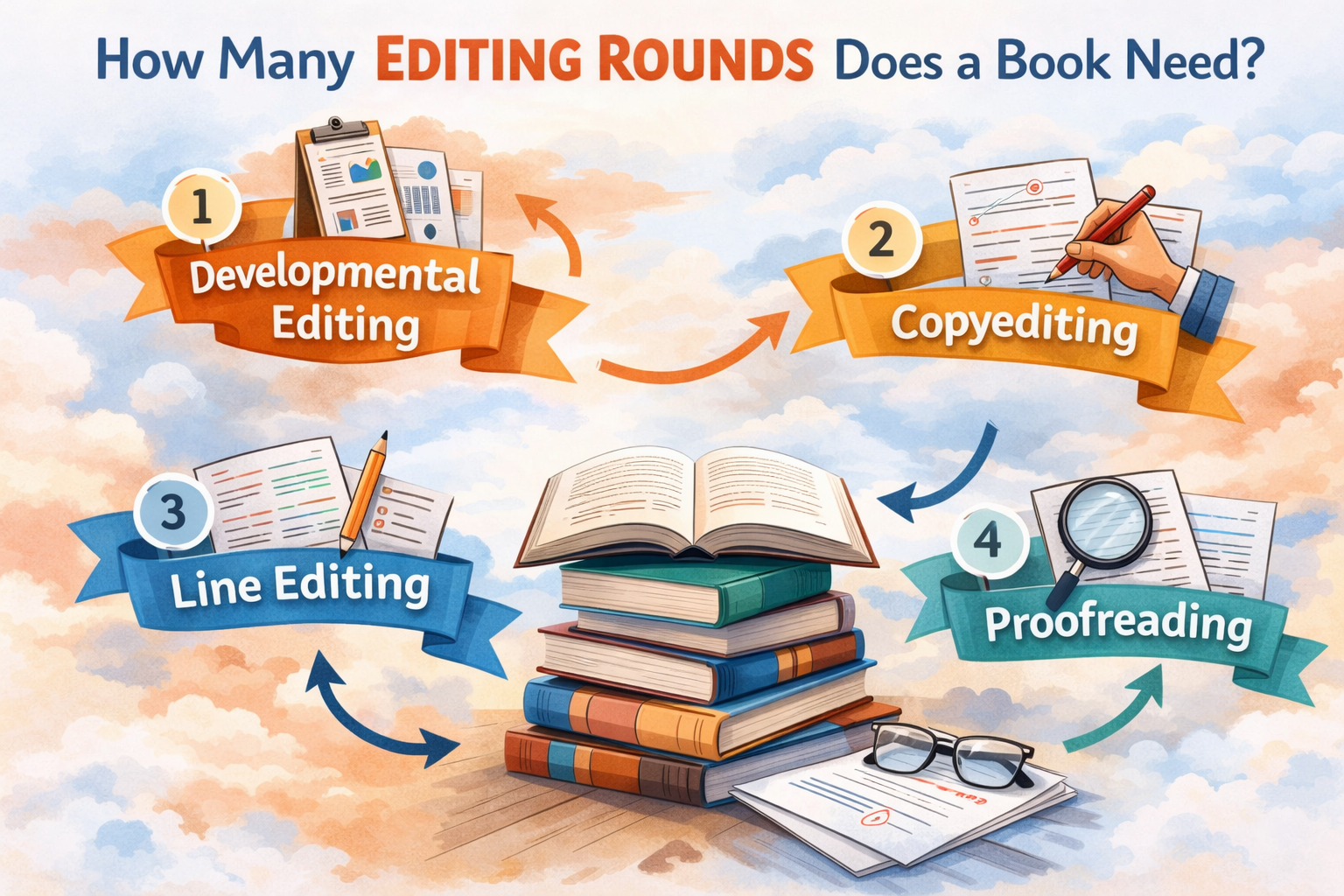
Edit in Multiple Rounds
Do not edit everything at once.
Instead:
-
First round: Structure
-
Second round: Clarity
-
Third round: Grammar
-
Final round: Proofreading
This improves accuracy.
Use a Printed Copy
Errors are easier to see on paper.
Print your manuscript.
Mark corrections.
Change Font and Size
This helps your brain see text differently.
Try:
-
Different font
-
Larger size
This reveals hidden errors.
Edit Slowly
Rushing causes missed mistakes.
Take your time.
Quality matters more than speed.
Ask for Feedback
Get feedback from:
-
Beta readers
-
Friends
-
Writing groups
Fresh readers find hidden problems.
Common Editing Mistakes First-Time Authors Make
Avoid these mistakes.
Editing Immediately After Writing
You miss mistakes because your brain remembers what you meant.
Always take a break.
Only Checking Grammar
Grammar is important.
But structure and clarity matter more.
Fix big issues first.
Ignoring Professional Editing
Self-editing is not enough.
Professionals catch deeper issues.
Over-Editing
Too much editing removes creativity.
Keep your natural voice.
Not Proofreading the Final Version
Final proofreading is essential.
Small mistakes still matter.
Types of Professional Editing Services
Understanding editing types helps you choose correctly.
Developmental Editing
Focuses on:
-
Story structure
-
Characters
-
Flow
Best for early drafts.
Line Editing
Focuses on:
-
Sentence quality
-
Tone
-
Clarity
Improves writing style.
Copy Editing
Focuses on:
-
Grammar
-
Spelling
-
Consistency
Essential before publishing.
Proofreading
Final check before publishing.
Removes small errors.
Why First-Time Authors Should Choose Professional Editing Services
Professional editing makes a major difference.
Experts Know Industry Standards
Professional editors understand:
-
Publishing requirements
-
Reader expectations
They prepare your book for success.
They Improve Writing Quality
Editors enhance:
-
Clarity
-
Flow
-
Engagement
Your book becomes stronger.
They Save Time
Editing alone takes months.
Professionals speed up the process.
They Increase Publishing Opportunities
Publishers prefer professionally edited manuscripts.
This improves your chances.
They Protect Your Reputation
Your first book builds your brand.
Professional editing ensures quality.
How a Book Publishing Company Helps First-Time Authors
A professional publishing company provides complete support.
Services include:
-
Professional editing
-
Proofreading
-
Formatting
-
Cover design
-
Publishing guidance
This ensures your book meets industry standards.
You avoid costly mistakes.