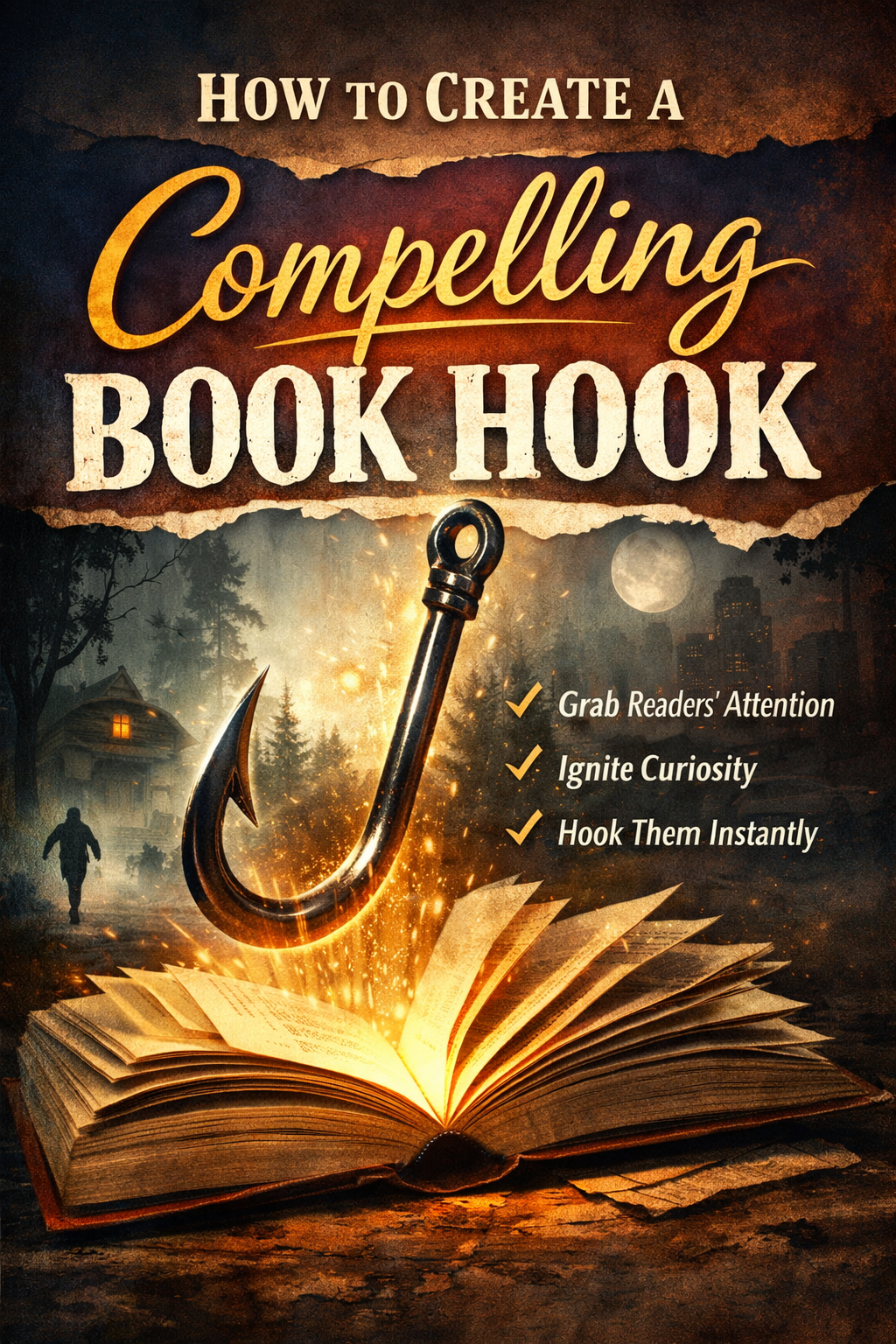
How to Create a Compelling Book Hook That Sells More
Introduction: Why Most Books Fail to Grab Attention
You may have a great story. Your characters might be strong. Your message could be powerful. Yet, many books fail for one simple reason: they don’t capture attention fast enough.
Today’s readers have endless choices. They browse online stores, read previews, and decide within seconds whether to continue. If your opening doesn’t grab them, they move on.
This is where a compelling book hook becomes essential.
A strong hook pulls readers in immediately. It makes them curious. It creates emotional interest. Most importantly, it makes them want to keep reading.
The good news is that creating a powerful hook is a skill you can learn. In this guide, you’ll discover step-by-step strategies, best practices, and professional tips to craft a hook that sells your book.
What Is a Compelling Book Hook?
A book hook is a powerful opening idea or line that grabs the reader’s attention instantly.
It can appear in:
-
Your first sentence
-
Your first paragraph
-
Your book description
-
Your marketing message
Its main purpose is simple: make readers curious enough to continue.
Examples of Simple Hook Ideas
-
A shocking event
-
A mystery
-
A bold statement
-
An emotional moment
-
An unexpected question
A compelling book hook makes readers ask: What happens next?
Why a Compelling Book Hook Is So Important
Before learning how to create one, it’s important to understand why it matters.
1. Creates a Strong First Impression
Readers judge your book quickly. Your hook determines whether they continue or stop.
2. Increases Book Sales
A strong hook improves:
-
Preview engagement
-
Conversion rates
-
Reader interest
This leads to better sales.
3. Builds Emotional Connection
Hooks create curiosity and emotional investment.
Readers become attached early.
4. Helps Marketing and Promotion
Your hook can be used in:
-
Book descriptions
-
Advertisements
-
Social media promotions
It becomes your book’s selling point.
Step-by-Step Guide to Create a Compelling Book Hook
Let’s break down the process into clear steps.
Step 1: Understand Your Target Reader
Before writing your hook, know your audience.
Ask yourself:
-
Who will read this book?
-
What problems do they have?
-
What excites them?
-
What emotions do they want?
For example:
-
Thriller readers want suspense
-
Romance readers want emotion
-
Business readers want solutions
Your compelling book hook must match reader expectations.
Step 2: Start With Conflict or Tension
Conflict creates curiosity.
Without tension, readers lose interest.
Examples:
Instead of:
"He woke up in the morning."
Try:
"He woke up to find a dead body in his room."
See the difference?
Conflict creates questions.
Questions create interest.
Step 3: Use Curiosity
Curiosity is one of the strongest psychological triggers.
Make readers wonder.
Example:
"She received a letter that changed her life forever."
Readers immediately want to know:
-
What was in the letter?
-
Why did it change her life?
This is the power of curiosity.
Step 4: Create Emotional Impact
Emotion connects readers deeply.
Use feelings like:
-
Fear
-
Love
-
Shock
-
Hope
-
Anger
Example:
"The doctor said my son had only 24 hours to live."
This creates immediate emotional engagement.
Step 5: Present a Unique Situation
Original ideas attract attention.
Avoid common openings.
Instead, introduce something unusual.
Example:
"Everyone in the town knew the future—except her."
This creates intrigue.
Step 6: Ask a Powerful Question
Questions involve readers directly.
They make readers think.
Example:
"What would you do if you discovered your life was a lie?"
Readers immediately engage mentally.
Step 7: Keep It Clear and Simple
Avoid confusion.
Your compelling book hook should be easy to understand.
Avoid:
-
Long explanations
-
Too many characters
-
Complex details
Clarity is key.
Types of Compelling Book Hooks You Can Use
Different books need different hooks.
Here are the most effective types.
Question Hook
Example:
"Can one decision destroy your entire life?"
Best for:
-
Fiction
-
Self-help
-
Drama
Shock Hook
Example:
"I killed my best friend."
Best for:
-
Thrillers
-
Mystery
Emotional Hook
Example:
"My mother forgot who I was."
Best for:
-
Drama
-
Memoir
Mystery Hook
Example:
"The door had been locked for 20 years."
Best for:
-
Suspense
-
Thriller
Bold Statement Hook
Example:
"Success has nothing to do with talent."
Best for:
-
Business books
-
Self-help
Where to Use Your Book Hook
Your compelling book hook is not just for the first line.
Use it in multiple places.
Important Locations:
-
First paragraph
-
Book description
-
Back cover
-
Marketing campaigns
-
Advertisements
This increases impact.
How to Test Your Book Hook
Even professionals test multiple hooks.
Here’s how you can test yours.
Method 1: Get Feedback
Ask:
-
Beta readers
-
Editors
-
Other authors
Questions to ask:
-
Does it grab attention?
-
Does it create curiosity?
-
Does it make you want to continue?
Method 2: Write Multiple Versions
Create:
-
5–10 different hooks
Choose the best one.
Method 3: Check Emotional Impact
Ask yourself:
Does it make readers feel something?
If yes, it works.
Benefits of Creating a Compelling Book Hook
A strong hook provides many benefits.
1. Attracts More Readers
Readers become interested quickly.
2. Improves Reader Retention
They continue reading longer.
3. Boosts Professional Image
Your book feels high quality.
4. Increases Publishing Success
Publishers prefer engaging manuscripts.
5. Improves Marketing Results
Hooks improve:
-
Ads
-
Promotions
-
Sales pages
Best Practices for Writing a Compelling Book Hook
Follow these professional tips.
Keep It Short
Short hooks are more powerful.
Avoid long openings.
Focus on One Idea
Don’t include too many details.
Keep it focused.
Avoid Backstory
Don’t explain everything immediately.
Reveal slowly.
Use Strong Words
Powerful words create impact.
Example:
Instead of "sad"
Use:
-
devastated
-
heartbroken
Create Questions in Reader’s Mind
Curiosity drives engagement.
Common Mistakes to Avoid
Many authors weaken their hooks unknowingly.
Avoid these mistakes.
Mistake 1: Starting With Boring Information
Avoid:
-
Weather descriptions
-
Routine actions
Example:
"It was a sunny morning."
This is weak.
Mistake 2: Too Much Explanation
Don’t overload information.
Keep mystery alive.
Mistake 3: Lack of Conflict
No tension means no interest.
Mistake 4: Being Too Vague
Confusing hooks fail.
Be clear but intriguing.
Mistake 5: Copying Other Authors
Your hook must be original.
Readers value uniqueness.
Examples of Compelling Book Hook Ideas (By Genre)
Here are practical examples.
Fiction
"He had seven days to prove his innocence."
Romance
"She fell in love with the man she was supposed to hate."
Thriller
"The police were looking for him—but he didn’t know why."
Self-Help
"Everything you believe about success is wrong."
Memoir
"I survived the accident that killed everyone else."
How Professional Publishing Services Help Create Better Hooks
Creating a compelling book hook can be challenging.
Professional publishing services provide expert support.
Professional Editors Improve Your Hook
Editors:
-
Refine your opening
-
Increase clarity
-
Strengthen emotional impact
Market Research Support
Professionals know:
-
What readers want
-
What sells
They help craft effective hooks.
Improve Overall Book Quality
A strong hook improves:
-
Reader experience
-
Reviews
-
Sales
Save Time and Effort
Experts guide you faster.
You avoid trial and error.
Why Authors Choose Professional Publishing Companies
Working with professionals gives you an advantage.
Here’s why.
Experience
They have worked with many successful books.
Industry Knowledge
They understand market trends.
Quality Improvement
They improve:
-
Opening chapters
-
Book descriptions
-
Marketing hooks
Better Publishing Success
Books become more competitive.
Practical Exercise: Create Your Own Compelling Book Hook
Follow this simple exercise.
Step 1: Write Your Book Idea in One Sentence
Example:
"A man discovers he can see the future."
Step 2: Add Conflict
"He discovers he can see his own death."
Step 3: Add Emotion
"He discovers he can see his own death—and it’s only three days away."
Now you have a powerful hook.
Checklist for a Strong Compelling Book Hook
Use this checklist.
Your hook should:
-
Grab attention instantly
-
Create curiosity
-
Be clear and simple
-
Include emotion or conflict
-
Make readers want more
If yes, your hook works.