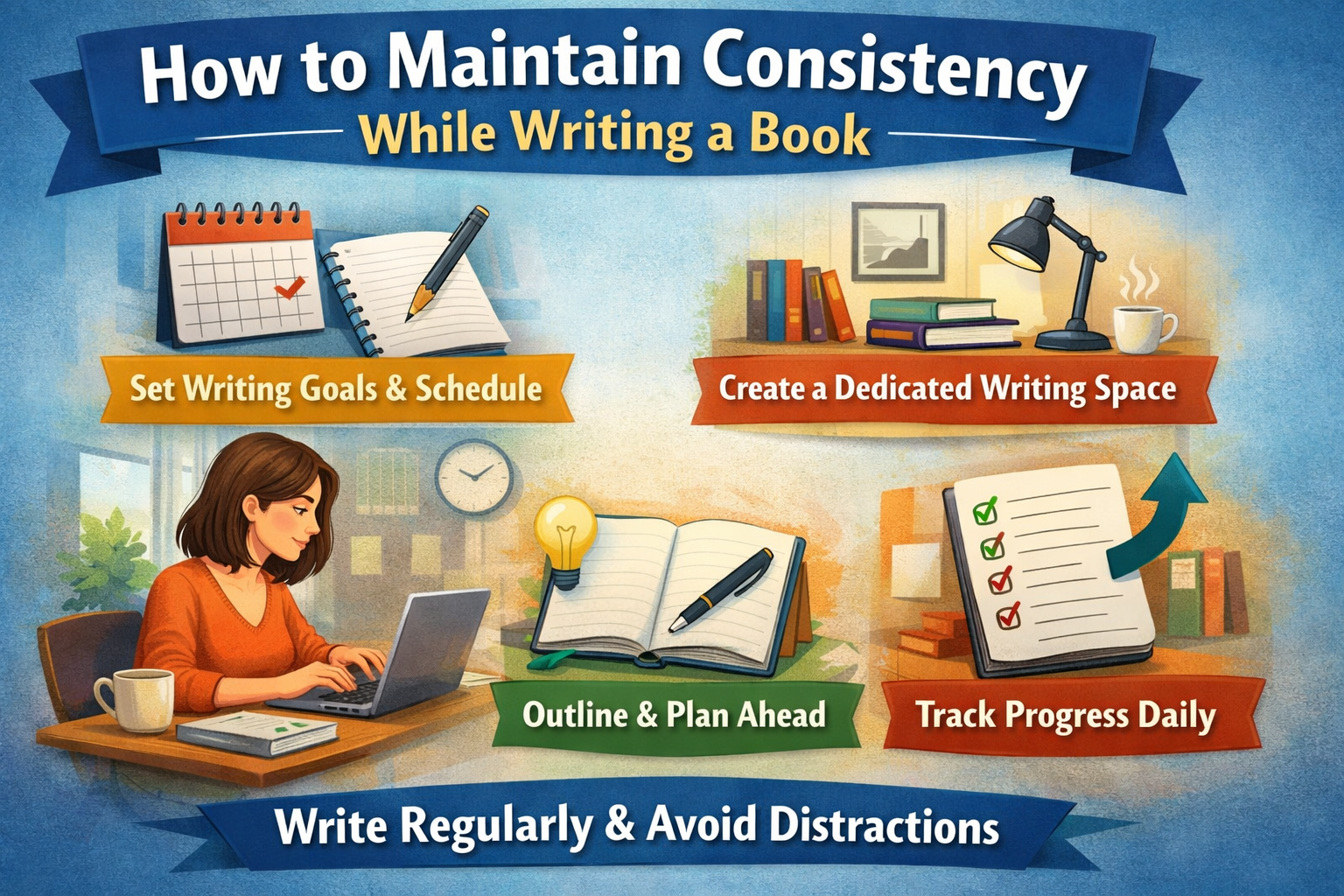
Writing Consistency: Stay Consistent While Writing Books
Introduction: Why Writing Consistency Is the Biggest Challenge for Authors
Starting a book is exciting. You feel motivated, creative, and full of ideas. However, after a few days or weeks, that excitement often fades. Life gets busy. Motivation drops. Writing slows down or stops completely.
This is one of the biggest reasons why many people never finish their books.
The real difference between successful authors and unfinished writers is not talent. It is writing consistency.
Writing consistency helps you make steady progress, stay connected to your story, and complete your manuscript faster. The good news is that consistency is not about writing every day for hours. It is about building simple habits that work for you.
In this guide, you will learn practical steps, proven strategies, and professional tips to maintain writing consistency and successfully finish your book.
What Is Writing Consistency and Why It Matters
Writing consistency means writing regularly and maintaining steady progress on your book.
It does not mean writing perfectly. It means showing up and continuing your work.
Why writing consistency is important:
-
Helps you finish your book faster
-
Keeps your ideas fresh and connected
-
Improves writing quality over time
-
Builds confidence and discipline
-
Reduces stress and procrastination
Most importantly, consistency turns writing from a dream into a finished book.
Step-by-Step Guide to Build Writing Consistency
Step 1: Set Clear and Realistic Writing Goals
One of the biggest mistakes writers make is setting unrealistic goals.
For example:
-
Writing 5000 words daily is not realistic for most people
-
Missing goals leads to frustration and quitting
Instead, set small and achievable goals.
Examples of realistic goals:
-
300 words per day
-
30 minutes of writing daily
-
2000 words per week
Small goals are easier to maintain and build writing consistency.
Pro Tip:
Consistency is more important than speed.
Even 200 words daily can complete a book in months.
Step 2: Create a Fixed Writing Schedule
Your brain works better with routines.
When you write at the same time every day, it becomes a habit.
Choose your best writing time:
-
Early morning
-
Late night
-
Afternoon break
Pick a time when:
-
You feel fresh
-
You have fewer distractions
-
You can focus properly
Example schedule:
-
7:00 am to 7:30 am daily
-
Or 9:00 pm to 9:45 pm daily
A fixed schedule strengthens writing consistency.
Step 3: Create a Dedicated Writing Space
Your environment affects your productivity.
A dedicated writing space helps your brain focus.
Your writing space should be:
-
Quiet
-
Comfortable
-
Distraction-free
It does not need to be perfect. Even a small desk works.
Avoid writing in places associated with relaxation, like your bed.
Your brain should connect that space with writing.
Step 4: Plan Your Book in Advance
Many writers lose consistency because they do not know what to write next.
Planning solves this problem.
Create a simple outline:
-
Chapter list
-
Main points
-
Key ideas
This gives you direction.
When you sit to write, you already know what to do.
Planning reduces confusion and improves writing consistency.
Step 5: Focus on Progress, Not Perfection
Perfection is the biggest enemy of consistency.
Many writers:
-
Rewrite the same paragraph again and again
-
Stop writing because it is not perfect
This slows progress.
Remember:
Your first draft does not need to be perfect.
It only needs to be written.
Editing comes later.
Focus on completing your draft first.
Step 6: Build a Writing Habit, Not Depend on Motivation
Motivation is temporary.
Habits are permanent.
If you depend on motivation, your writing will stop when motivation disappears.
Instead, build a habit.
How to build habit:
-
Write at the same time daily
-
Start with small goals
-
Avoid skipping multiple days
After some time, writing becomes automatic.
This creates strong writing consistency.
Step 7: Track Your Progress
Tracking progress increases motivation.
It helps you see how far you have come.
You can track:
-
Daily word count
-
Weekly progress
-
Completed chapters
Seeing progress builds confidence.
It encourages you to continue writing.
Step 8: Remove Distractions
Distractions destroy writing consistency.
Common distractions include:
-
Social media
-
Mobile phones
-
Notifications
-
TV
Solutions:
-
Turn off notifications
-
Use airplane mode
-
Write in a quiet place
Even 30 distraction-free minutes can produce great results.
Step 9: Accept Slow Progress
Not every writing day will be perfect.
Some days:
-
You write less
-
You feel tired
-
Ideas come slowly
This is normal.
Do not stop.
Slow progress is still progress.
Consistency matters more than speed.
Benefits of Writing Consistency
Writing consistency offers many long-term benefits.
1. Helps You Finish Your Book
This is the biggest benefit.
Consistency ensures your book gets completed.
Many writers fail because they stop.
Consistent writers succeed because they continue.
2. Improves Writing Quality
Writing regularly improves:
-
Language
-
Clarity
-
Creativity
Practice makes writing better.
3. Builds Confidence
Every writing session increases confidence.
You start believing in yourself.
This makes writing easier.
4. Reduces Writer’s Block
Writer’s block often happens when you stop writing.
Consistency keeps your mind active.
Ideas flow more easily.
5. Builds Professional Discipline
Professional authors follow discipline.
Writing consistency builds professional habits.
This helps in future books too.
Best Practices to Maintain Writing Consistency
Follow these proven best practices.
Start Small
Do not start with big targets.
Small targets are easier to maintain.
Write Even When You Don’t Feel Like It
Not every day feels productive.
Still, write something.
Even a few sentences help.
Celebrate Small Wins
Celebrate:
-
Completing a chapter
-
Reaching word goals
This keeps motivation high.
Stay Connected to Your Purpose
Remember why you started writing your book.
Your purpose keeps you moving.
Avoid Long Breaks
Breaks are fine.
But long breaks break consistency.
Try to stay regular.
Common Mistakes That Break Writing Consistency
Avoid these mistakes.
Waiting for Perfect Motivation
Motivation comes and goes.
Successful writers write without waiting.
Setting Unrealistic Goals
Very high goals cause burnout.
Set achievable targets.
Editing Too Early
Editing during writing slows progress.
Write first.
Edit later.
Comparing Yourself with Other Authors
Every writer has a different journey.
Focus on your own progress.
Skipping Writing for Many Days
Skipping breaks habit.
Restart becomes difficult.
Stay consistent.
Why Professional Support Helps Maintain Writing Consistency
Writing a book alone can feel overwhelming.
Professional guidance makes the process easier.
A professional publishing company helps by providing:
Structured Writing Guidance
Clear roadmap
Chapter planning
Writing direction
Professional Editing Support
Improves quality
Saves time
Reduces stress
Accountability and Motivation
Helps you stay consistent
Encourages completion
End-to-End Publishing Assistance
From writing to publishing
Complete support
This makes your author journey smooth and successful.
Practical Daily Writing Consistency Plan (Example)
Here is a simple daily plan.
Daily:
-
Write for 30 minutes
-
Target 300 words
Weekly:
-
Review progress
-
Plan next chapters
Monthly:
-
Complete 1–2 chapters
Following this plan can complete a book in 6–8 months.
Mindset Tips to Stay Consistent
Your mindset is important.
Follow these principles.
Progress Over Perfection
Done is better than perfect.
Discipline Over Motivation
Habits create success.
Consistency Over Speed
Slow writing still finishes books.
Focus on Completion
Completion is the goal.
Not perfection.
How Successful Authors Maintain Writing Consistency
Successful authors follow simple habits.
They:
-
Write regularly
-
Follow schedule
-
Avoid excuses
-
Stay disciplined
They treat writing like a priority.
Not a hobby.
This mindset ensures success.
Long-Term Impact of Writing Consistency
Writing consistency does more than finish one book.
It helps you:
-
Become a professional author
-
Write multiple books
-
Build writing confidence
-
Improve creativity
Consistency builds your author career.