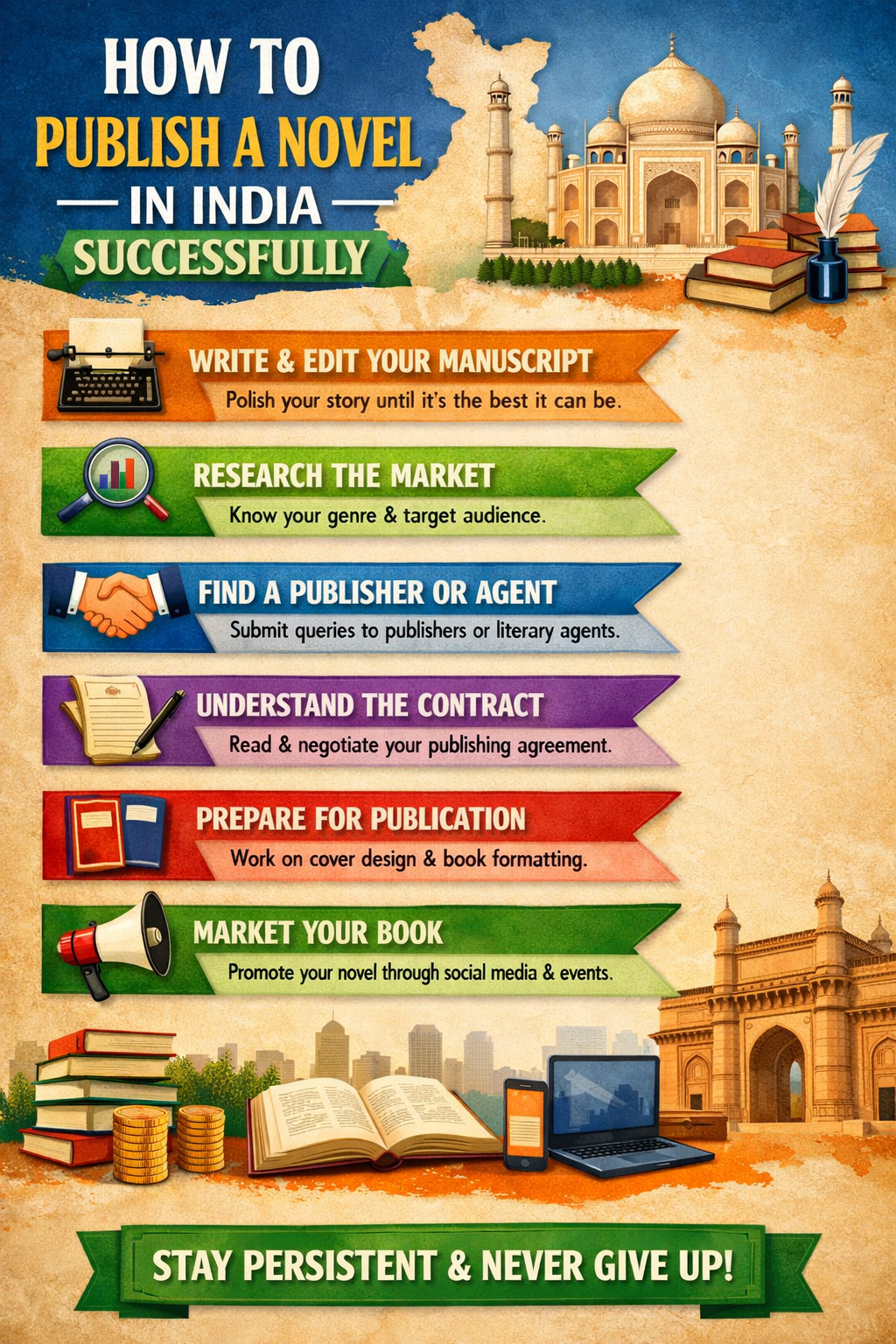
How to Publish a Novel in India Successfully
Publishing a novel is a dream for many writers. However, the journey from manuscript to bookstore can feel confusing and overwhelming. Many aspiring authors in India struggle with questions like: Should I choose traditional publishing or self-publishing? How do I get an ISBN? What are the costs involved?
If you want to publish a novel in India successfully, you need clarity, planning, and the right strategy. This guide will walk you step-by-step through the entire process. By the end, you will understand your options, avoid common mistakes, and move forward with confidence.
Understanding the Indian Publishing Landscape
Before you publish a novel in India, you must understand how the publishing industry works.
In India, authors generally have two main options:
-
Traditional publishing
-
Self-publishing
Both have advantages and challenges. Your choice depends on your goals, budget, timeline, and creative control.
Step 1: Finish and Polish Your Manuscript
Your manuscript is your foundation. No publisher or reader will overlook weak writing.
Edit Before You Submit
First, complete your draft. Then revise it carefully.
Focus on:
-
Plot structure
-
Character development
-
Dialogue clarity
-
Grammar and spelling
-
Consistent tone
After self-editing, consider hiring a professional editor. A well-edited manuscript increases your chances of acceptance and improves reader satisfaction.
Beta Readers Matter
Ask trusted readers to review your novel. Their feedback can highlight:
-
Confusing scenes
-
Weak endings
-
Slow pacing
-
Unrealistic characters
Constructive criticism will help you refine your story.
Step 2: Choose Between Traditional and Self-Publishing
This is one of the most important decisions when you publish a novel in India.
Traditional Publishing
In traditional publishing:
-
The publisher selects your manuscript.
-
They handle editing, design, printing, and distribution.
-
You receive royalties on sales.
-
You usually do not pay upfront costs.
However:
-
Acceptance rates are low.
-
The process takes longer.
-
Creative control may be limited.
You typically submit your manuscript to publishing houses or literary agents. If accepted, they offer a contract.
Self-Publishing
In self-publishing:
-
You invest in editing, design, and printing.
-
You control pricing and rights.
-
You earn higher royalty percentages.
-
You can publish faster.
Self-publishing is growing rapidly in India. Many authors choose this route for faster results and greater independence.
If your goal is speed and control, self-publishing may be the better option.
Step 3: Get an ISBN in India
An ISBN (International Standard Book Number) is essential if you want to sell your book in bookstores or online platforms.
In India, ISBNs are issued by the government free of cost.
You will need:
-
Author details
-
Book title
-
Format details (paperback, hardcover, ebook)
Each format requires a separate ISBN.
Without an ISBN, your book cannot be professionally distributed. So do not skip this step.
Step 4: Professional Book Editing and Formatting
Even the best stories fail without proper presentation.
Types of Editing
When you publish a novel in India, consider:
-
Developmental editing (structure and flow)
-
Copyediting (grammar and clarity)
-
Proofreading (final polish)
Professional editing builds credibility and reader trust.
Book Formatting
Your book must be formatted correctly for:
-
Print version
-
eBook version
Proper formatting ensures:
-
Clean margins
-
Consistent fonts
-
Readable layout
-
Correct chapter structure
Poor formatting leads to bad reviews.
Step 5: Design an Attractive Book Cover
Readers judge books by their covers. A professional cover design directly impacts sales.
A strong cover should:
-
Match your genre
-
Use clear typography
-
Be visually striking
-
Look good in thumbnail size
Invest in a skilled designer. A cheap cover can hurt your brand image.
Step 6: Pricing and Printing Strategy
Pricing your book correctly is crucial.
Consider:
-
Printing costs
-
Competitor pricing
-
Target audience
-
Royalty margins
In India, most novels are priced affordably. If you price too high, sales may drop. If too low, you may reduce profit.
Print-on-Demand vs Bulk Printing
Print-on-Demand (POD):
-
Lower upfront cost
-
Prints books only when ordered
-
Ideal for new authors
Bulk printing:
-
Lower cost per copy
-
Higher upfront investment
-
Suitable if demand is predictable
Choose wisely based on your budget.
Step 7: Distribution Channels in India
To successfully publish a novel in India, distribution is key.
Your book can be sold through:
-
Online marketplaces
-
Author website
-
Offline bookstores
-
Literary events
-
Book fairs
Online distribution is especially powerful for new authors. It provides nationwide reach without heavy investment.
Step 8: Marketing Your Novel
Publishing is only half the journey. Marketing determines success.
Build an Author Brand
Start early:
-
Create social media profiles
-
Share writing updates
-
Build an email list
-
Create a professional website
Consistency builds trust.
Launch Strategy
Plan a strong book launch:
-
Pre-order campaigns
-
Early reviews
-
Social media promotions
-
Influencer outreach
-
Book launch event
The first 30 days after release are critical for momentum.
Benefits of Publishing a Novel in India Today
The Indian book market is growing rapidly. English and regional language publishing both have strong potential.
When you publish a novel in India today, you gain:
-
Access to a large and diverse readership
-
Expanding online platforms
-
Growing self-publishing ecosystem
-
International distribution opportunities
Digital platforms have reduced barriers for new authors.
Best Practices for Long-Term Success
To build a sustainable writing career:
-
Focus on quality over speed
-
Write consistently
-
Engage with readers
-
Collect reviews ethically
-
Track sales performance
-
Continue marketing after launch
Remember, one book can open doors. But a long-term strategy builds an author brand.
Common Mistakes to Avoid
Many authors fail not because of bad writing, but because of poor decisions.
Avoid these mistakes:
1. Publishing Without Editing
Skipping professional editing damages credibility.
2. Choosing the Wrong Publishing Model
Understand contracts before signing.
3. Ignoring Marketing
Even the best novel needs promotion.
4. Poor Cover Design
A weak cover reduces sales instantly.
5. Unrealistic Expectations
Success takes time and effort.
Patience and planning are essential when you publish a novel in India.
Why Choose a Professional Publishing Service?
While self-publishing gives freedom, it also requires expertise.
A professional publishing company offers:
-
Expert editing
-
Professional cover design
-
ISBN assistance
-
Formatting support
-
Printing management
-
Distribution setup
-
Marketing guidance
This saves time and avoids costly errors.
Moreover, experienced professionals understand the Indian market. They can guide you on pricing, positioning, and promotion strategies.
If you are serious about publishing success, partnering with experts can significantly improve your results.
Traditional vs Self-Publishing: Quick Comparison
| Factor | Traditional | Self-Publishing |
|---|---|---|
| Upfront Cost | No | Yes |
| Royalty | Lower | Higher |
| Control | Limited | Full |
| Speed | Slow | Fast |
| Marketing Support | Partial | Mostly self-driven |
Choose based on your long-term goals.
Timeline to Publish a Novel in India
Here is a realistic timeline:
-
Writing & editing: 3–12 months
-
Cover & formatting: 2–4 weeks
-
ISBN & setup: 1–2 weeks
-
Printing & distribution: 2–3 weeks
-
Marketing launch: Ongoing
Planning ahead reduces stress.
Final Thoughts
To publish a novel in India successfully, you need more than a good story. You need strategy, patience, and professional presentation.
Start with a polished manuscript. Choose the right publishing model. Invest in editing and design. Plan your marketing carefully. Avoid common mistakes.
Most importantly, treat your book like a serious business project.
India offers tremendous opportunity for new authors. With the right approach, your novel can reach thousands of readers and build your long-term author brand.