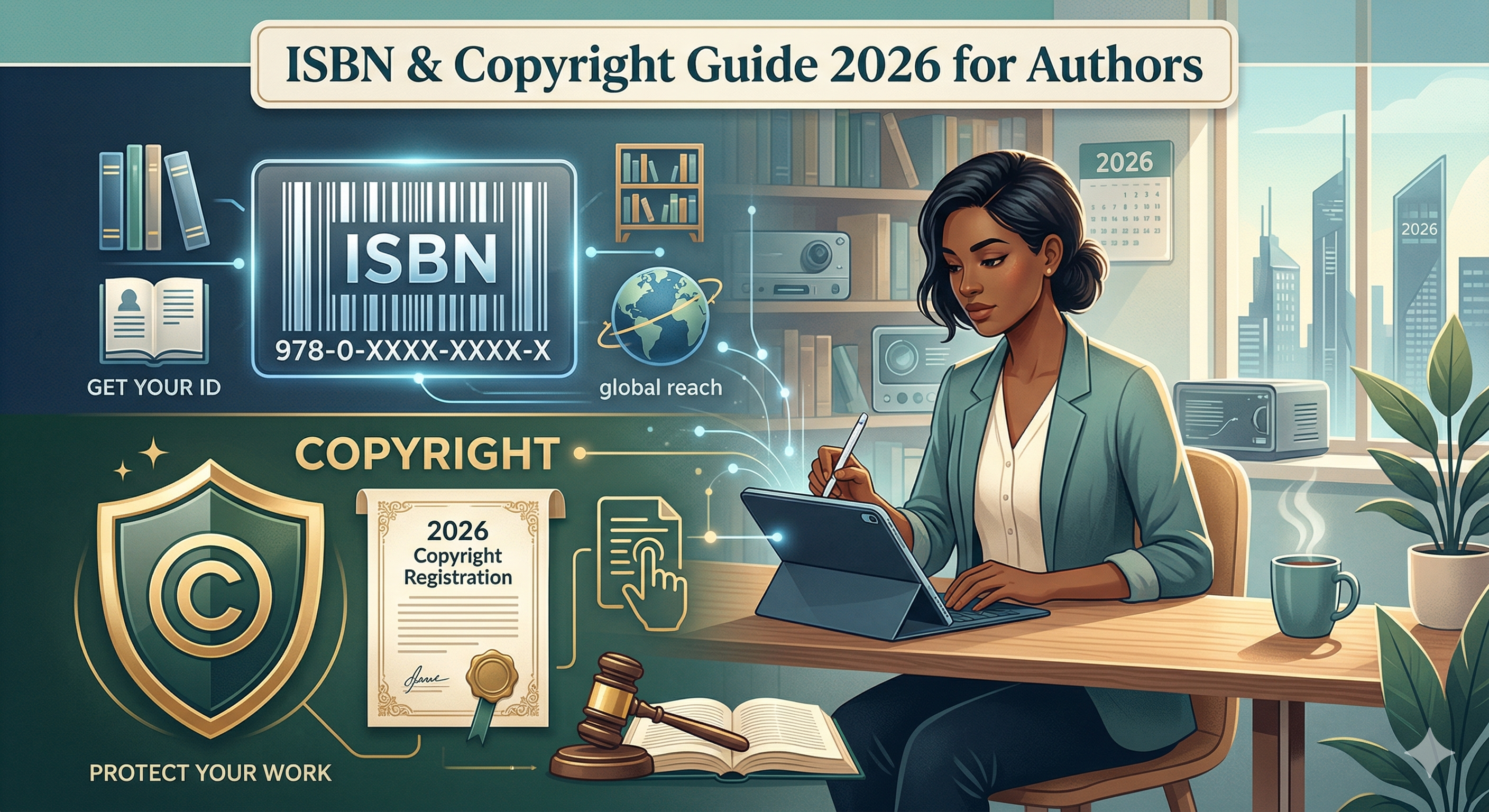
ISBN and Copyright Guide 2026 for Authors
Introduction: Why Legal Steps Can Make or Break Your Book
Many authors focus only on writing and marketing. But they overlook one critical area—legal protection.
Without an ISBN, your book cannot be properly distributed. Without copyright, your work is exposed to misuse. These are not optional steps; they are the foundation of professional publishing.
In 2026, the publishing industry is more competitive and more digital than ever. That means protecting your work and making it discoverable is essential.
This guide explains everything you need to know about ISBN and copyright—from basics to advanced strategy—so you can publish and market your book with confidence.
What Is an ISBN and Why It Matters
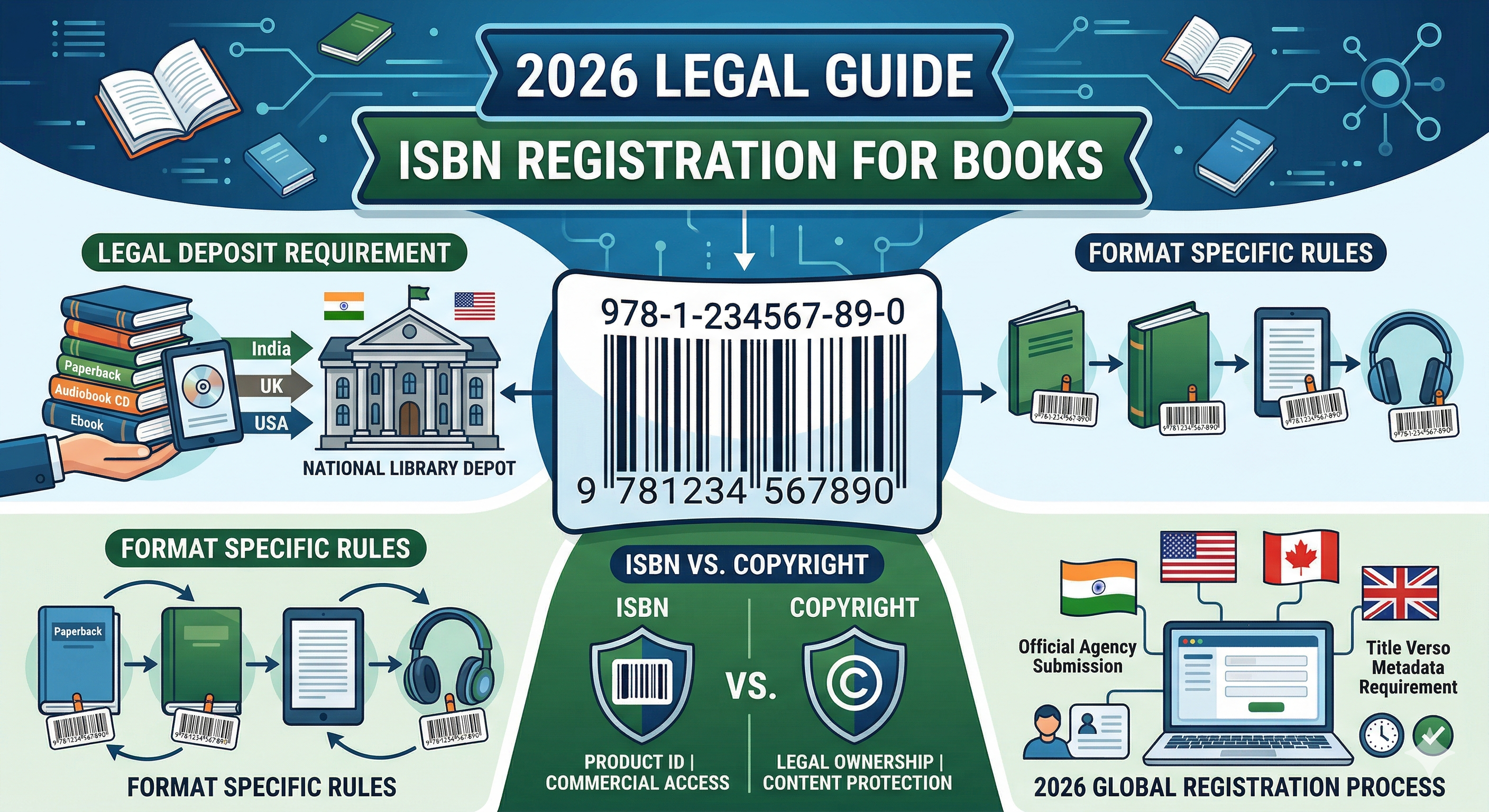
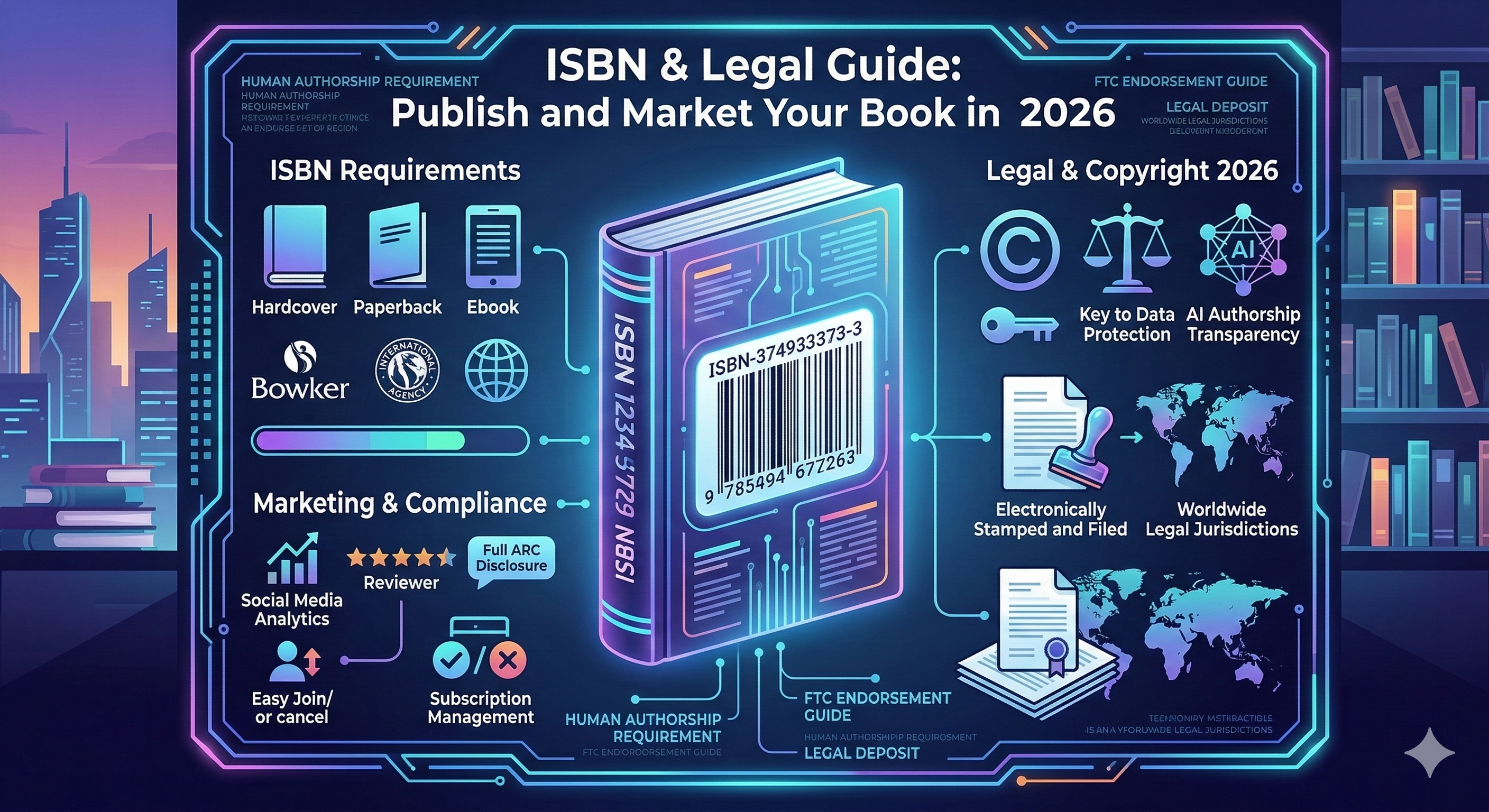
An ISBN (International Standard Book Number) is a unique identifier for your book. It acts like a product code in the publishing world.
Key Functions of an ISBN
- Identifies your book globally
- Helps retailers and libraries track your book
- Enables distribution through online platforms
- Separates different formats (ebook, paperback, hardcover)
Important Note
Each format of your book requires a separate ISBN. For example:
- Paperback → 1 ISBN
- Hardcover → 1 ISBN
- eBook → 1 ISBN
Without an ISBN, your book may struggle to appear in bookstores, catalogs, and online listings.
What Is Copyright and Why You Need It
Copyright is the legal protection of your original work. It gives you exclusive rights to control how your content is used.
What Copyright Protects
- Text content
- Cover design
- Illustrations
- Layout and formatting
Your Rights as an Author
- Reproduce your work
- Sell and distribute copies
- Create adaptations
- License your content
In simple terms, copyright ensures that no one can legally copy or profit from your work without permission.
Step-by-Step Guide to Getting an ISBN in 2026
Getting an ISBN is straightforward, but doing it correctly is important.
Step 1: Decide Your Publishing Route
- Self-publishing → You need your own ISBN
- Traditional publishing → Publisher provides ISBN
Step 2: Choose the Right ISBN Agency
Each country has an official ISBN agency. In India, authors can obtain ISBNs through government-supported channels.
Step 3: Apply for ISBN
Prepare the following:
- Book title
- Author name
- Format details
- Publication details
Submit your application online or through the official process.
Step 4: Assign ISBN to Your Book
Once approved:
- Add ISBN to your book metadata
- Place barcode on the back cover (for print books)
Step 5: Register Metadata
Ensure your book details are correctly listed:
- Title and subtitle
- Author name
- Genre and category
- Price and publication date
Accurate metadata improves discoverability.
Step-by-Step Guide to Copyright Registration
Technically, your work is protected the moment you create it. But formal registration gives you legal proof.
Step 1: Prepare Your Manuscript
Finalize your content before applying. Changes after registration may require updates.
Step 2: File Copyright Application
Provide:
- Author details
- Work title
- Type of work (literary)
- Copy of manuscript
Step 3: Pay the Required Fee
Fees vary depending on country and filing type.
Step 4: Verification Process
Authorities review your application. This can take weeks or months.
Step 5: Receive Certificate
Once approved, you get official proof of ownership.
This certificate is crucial if disputes arise.
Benefits of Proper ISBN and Copyright Management
1. Professional Credibility
Books with ISBNs look legitimate and are taken seriously by retailers and readers.
2. Wider Distribution
ISBN allows your book to be listed on:
- Online stores
- Libraries
- Book distributors
3. Legal Protection
Copyright ensures:
- Your work is safe from plagiarism
- You can take legal action if needed
4. Better Marketing Opportunities
With proper registration:
- Your book is easier to promote
- You can track sales and performance
5. Long-Term Control
You retain rights to:
- Republish
- Translate
- Adapt into other formats
Best Practices for Authors in 2026
Use Separate ISBNs for Each Format
Avoid reusing ISBNs. This can create confusion in distribution systems.
Register Copyright Early
Do not wait until after publishing. Early registration reduces risk.
Maintain Accurate Records
Keep copies of:
- ISBN allocation
- Copyright certificate
- Publishing agreements
Protect Digital Content
Use DRM (Digital Rights Management) when publishing eBooks.
Monitor Your Work Online
Regularly check if your content is being used without permission.
Common Mistakes to Avoid
1. Using Free ISBNs Without Understanding Terms
Some platforms offer free ISBNs, but:
- They may list the platform as the publisher
- You may lose control over distribution
2. Skipping Copyright Registration
Relying only on automatic protection is risky. Without proof, legal cases become difficult.
3. Incorrect Metadata Entry
Wrong information can:
- Reduce visibility
- Confuse buyers
- Impact sales
4. Reusing ISBN Across Formats
This breaks industry standards and can lead to distribution issues.
5. Ignoring Legal Agreements
Always read contracts carefully, especially when working with publishers or distributors.
Why Choose a Professional Publishing Service
Handling ISBN and copyright alone is possible. But mistakes can be costly.
What Professionals Offer
- Correct ISBN allocation
- Proper metadata setup
- Copyright registration assistance
- Legal guidance
- Distribution support
Advantages
- Saves time
- Reduces errors
- Ensures compliance with industry standards
- Improves market reach
Professional services also help integrate legal setup with marketing strategy, which is critical in 2026.
Integrating Legal Setup with Marketing Strategy
Legal steps are not separate from marketing—they support it.
How ISBN Helps Marketing
- Makes your book searchable
- Enables listing on global platforms
- Improves credibility in promotions
How Copyright Supports Branding
- Protects your unique voice
- Secures your intellectual property
- Allows licensing opportunities
Smart Strategy
Combine:
- Strong legal foundation
- Clear branding
- Targeted promotion
This ensures long-term success.
Future Trends in ISBN and Copyright (2026 and Beyond)
Increased Digital Publishing
More authors are publishing eBooks and audiobooks, requiring multiple ISBNs.
Global Distribution Platforms
Books are now sold worldwide. Proper registration ensures smooth distribution.
Stronger Copyright Enforcement
Digital tools are improving content tracking and protection.
Rise of Self-Publishing
More authors are handling their own legal and publishing processes.
Staying updated with these trends gives you a competitive edge.