ISBN and Legal Publishing Guide 66: Book Success 2026
Introduction: Why Legal Knowledge Matters for Authors
Publishing a book is exciting, but many authors overlook one critical area—legal and identification requirements. Without proper registration, rights protection, and compliance, your book can face distribution delays, copyright disputes, or even removal from stores.
This ISBN and Legal Publishing Guide explains exactly how to secure your publishing rights, register your book properly, and avoid legal issues. Whether you plan to self-publish or work with a publishing company, understanding these steps ensures your book launches smoothly and earns trust from distributors and readers.
What Is an ISBN and Why It Matters
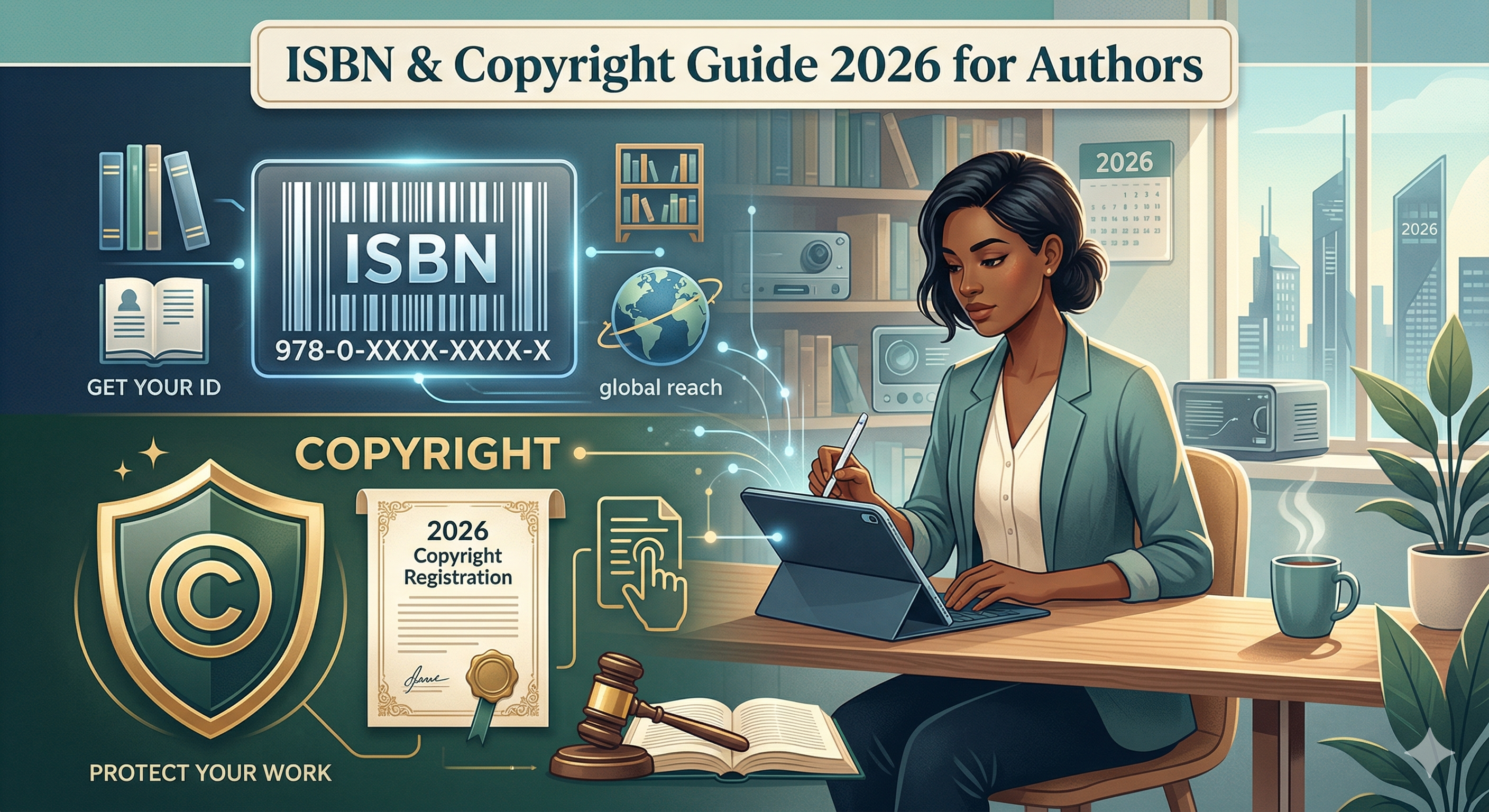
An ISBN (International Standard Book Number) is a unique identifier assigned to each published book edition. Think of it as your book’s fingerprint in the global marketplace.
Key Functions of an ISBN
-
Identifies your book worldwide
-
Helps bookstores track inventory
-
Enables libraries to catalog titles
-
Simplifies online sales and distribution
-
Adds credibility to your publication
Without an ISBN, most retailers and distributors will not list your book.
When You Need Separate ISBNs
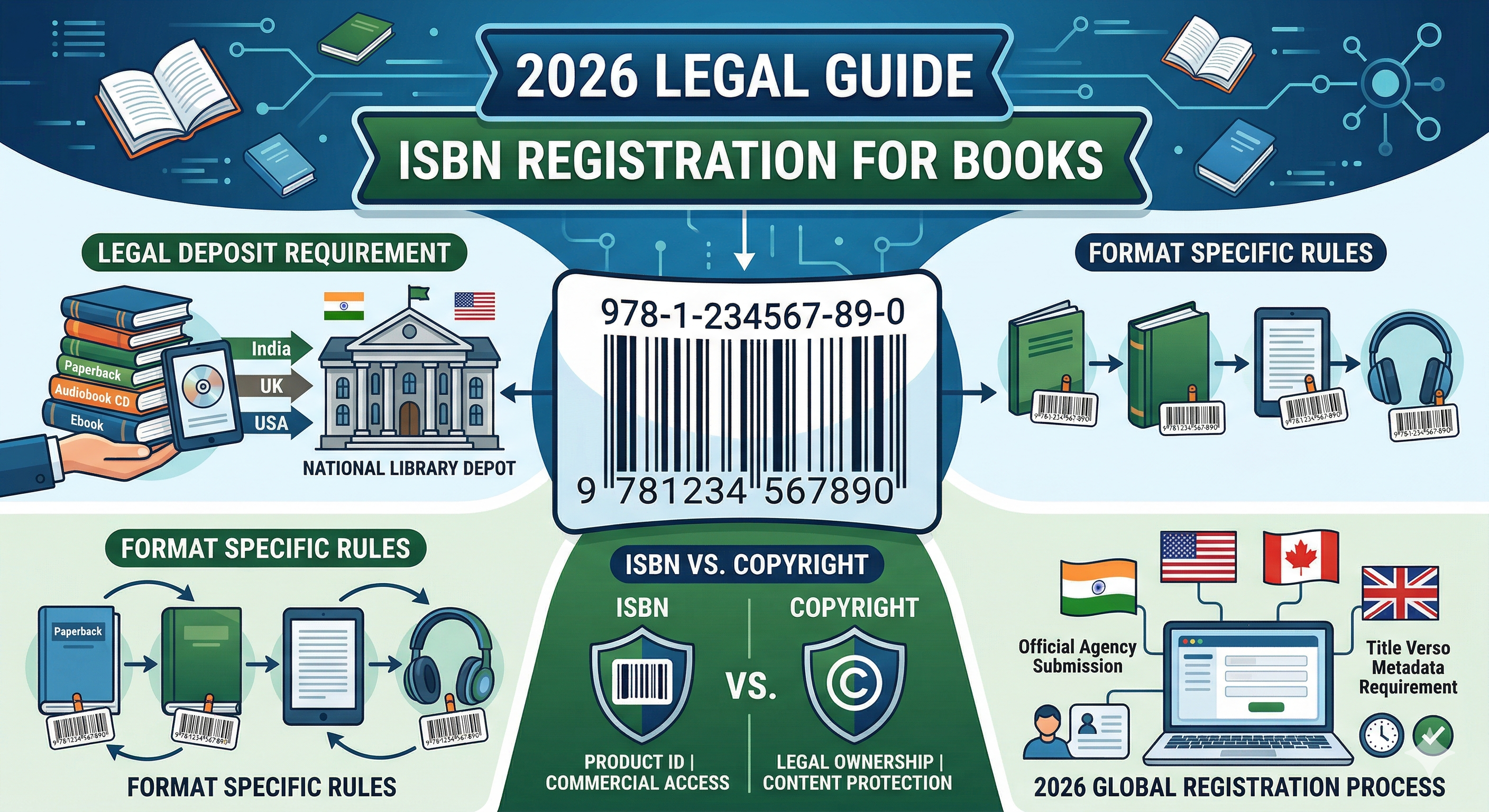
Each format requires its own ISBN:
-
Paperback edition
-
Hardcover edition
-
eBook version
-
Audiobook
If you release a revised edition or major update, you also need a new ISBN.
Step-by-Step ISBN Registration Process
Understanding how to obtain an ISBN is the first practical step in this ISBN and Legal Publishing Guide.
Step 1: Determine Publisher Ownership
You must decide who will be listed as publisher:
-
You (self-publisher)
-
Your publishing company
-
A partner publisher
Ownership determines who controls distribution rights.
Step 2: Apply Through Your National ISBN Agency
Every country has an official ISBN agency. Applications typically require:
-
Book title
-
Author name
-
Format type
-
Publication date
-
Publisher details
Processing times vary from same day to several weeks.
Step 3: Assign ISBN Correctly
Once issued, assign your ISBN to the correct edition and format. Never reuse an ISBN for a different book or format.
Step 4: Generate Barcode
Print books require a scannable barcode. This is created using your ISBN and price data. Most publishing services generate this automatically.
Understanding Copyright Protection
Copyright protects your book’s content from unauthorized use. It applies automatically once you create original work, but formal registration strengthens legal protection.
What Copyright Covers
-
Text content
-
Illustrations
-
Photos
-
Cover design
-
Layout formatting
It does not cover ideas or concepts—only the original expression of them.
Benefits of Registering Copyright
-
Legal proof of ownership
-
Ability to sue for infringement
-
Eligibility for statutory damages
-
Increased licensing value
Formal registration is strongly recommended, especially for authors planning wide distribution.
Legal Requirements Before Publishing
This ISBN and Legal Publishing Guide emphasizes that publishing is not just creative—it is also legal.
Mandatory Legal Elements in Books
Most professionally published books include:
-
Copyright page
-
ISBN listing
-
Publisher details
-
Edition statement
-
Rights reservation notice
-
Disclaimer (if needed)
These pages signal professionalism and legal compliance.
Disclaimers You May Need
Depending on genre, you may require:
-
Fiction disclaimer (characters are fictional)
-
Advice disclaimer (medical, legal, financial)
-
Liability limitation statement
Disclaimers reduce legal risk and protect both author and publisher.
ISBN and Legal Publishing Guide for Self-Publishers
Self-publishing gives you control, but also responsibility. You must handle legal steps yourself unless you hire a service.
Legal Tasks Self-Publishers Must Manage
-
ISBN registration
-
Copyright filing
-
Metadata accuracy
-
Distribution rights setup
-
Sales tax compliance
Failure to complete these steps can delay publication or restrict sales regions.
Metadata Accuracy Is Critical
Metadata includes:
-
Title
-
Subtitle
-
Author name
-
Category
-
Keywords
-
Description
Incorrect metadata can cause listing errors or discoverability issues in online stores.
Publishing Rights Every Author Should Understand
Rights determine how your book can be used and distributed.
Types of Publishing Rights
-
Print rights
-
Digital rights
-
Audio rights
-
Translation rights
-
Film adaptation rights
You can license or sell these rights individually. Many authors retain certain rights while licensing others.
Why Rights Strategy Matters
Smart rights management can:
-
Generate multiple income streams
-
Expand global reach
-
Enable adaptations
-
Increase book valuation
Poor rights management can lock your book into restrictive contracts.
Legal Deposits and National Library Requirements
Many countries require publishers to submit copies of newly published books to national libraries. This is called legal deposit.
Purpose of Legal Deposit
-
Preserve cultural records
-
Document national publications
-
Provide research access
Failure to submit copies can result in fines or publishing restrictions in some regions.
Permissions and Third-Party Content
If your book includes material created by someone else, you must obtain permission unless it falls under public domain or fair use.
Content That Requires Permission
-
Song lyrics
-
Poems
-
Photos
-
Artwork
-
Long quotations
-
Charts or graphs
Always keep written permission records.
Public Domain Content
Works in the public domain can be used freely. However, confirm:
-
Copyright expiration
-
Jurisdiction laws
-
Edition rights
Not all old works are automatically public domain everywhere.
Benefits of Following the ISBN and Legal Publishing Guide
Adhering to proper publishing procedures provides long-term advantages.
Professional Benefits
-
Retailer acceptance
-
Distributor trust
-
Library eligibility
-
Media credibility
Financial Benefits
-
Higher licensing potential
-
Protection against piracy losses
-
Ability to enforce rights legally
Brand Benefits
-
Author authority
-
Professional reputation
-
Reader confidence
Legal compliance is not just protection—it is a strategic advantage.
Common Legal Mistakes Authors Must Avoid
Many new authors unknowingly make errors that can cause serious issues later.
Frequent Publishing Mistakes
-
Using free ISBNs tied to another publisher
-
Forgetting copyright registration
-
Copying online content without permission
-
Signing contracts without legal review
-
Misusing stock images
These mistakes can lead to rights disputes or lost revenue.
Contract Red Flags
Always review publishing contracts carefully. Watch for:
-
Exclusive lifetime rights
-
No royalty transparency
-
Forced pricing control
-
Rights to derivative works
If unclear, consult a publishing lawyer or professional service.
ISBN and Legal Publishing Guide for Global Distribution
Selling internationally requires additional compliance.
International Publishing Considerations
-
Regional ISBN registration rules
-
Tax obligations for foreign sales
-
Translation rights management
-
Import/export restrictions
If you plan global distribution, confirm all requirements before launch.
Why Choose a Professional Publishing Service
While authors can handle legal tasks independently, many prefer professional help for accuracy and efficiency.
Advantages of Professional Support
-
Correct ISBN registration
-
Error-free copyright pages
-
Contract review assistance
-
Metadata optimization
-
Legal compliance checks
Professionals understand publishing regulations and can prevent costly mistakes.
When Professional Help Is Essential
Consider expert support if:
-
You plan wide distribution
-
You have co-authors
-
Your book contains licensed content
-
You want foreign translations
-
You intend film or media adaptation
The more complex your publishing goals, the more valuable expert guidance becomes.
Best Practices for Legal Publishing Success
Follow these proven practices to ensure a smooth publishing process:
-
Register ISBN before printing
-
Copyright your manuscript early
-
Keep signed permission documents
-
Track rights agreements
-
Maintain organized publishing records
Consistency and documentation protect you long term.
Future Trends in Publishing Compliance (2026 and Beyond)
Publishing laws and standards continue evolving. Authors should expect:
-
Increased digital rights monitoring
-
Stronger anti-piracy enforcement
-
Metadata standardization requirements
-
Expanded global distribution regulations
Staying updated ensures your book remains compliant and competitive.