ISBN Guide 2026: Legal Steps to Publish a Book
Introduction
Publishing a book in 2026 is easier than ever. However, many authors still struggle with the legal side of publishing. Missing steps like getting an ISBN, registering copyright, or understanding distribution rules can delay your launch—or worse, cause legal issues later.
This ISBN Guide 2026 gives you a clear, step-by-step strategy to handle everything properly. From understanding what an ISBN is to completing legal requirements and preparing your book for sale, this guide simplifies the process.
By the end, you will know exactly how to publish your book legally and position it for success in the market.
What Is an ISBN and Why It Matters
An ISBN (International Standard Book Number) is a unique identifier assigned to a book. It helps bookstores, libraries, and online platforms track and sell your book.
Key purposes of an ISBN:
- Identifies your book globally
- Enables distribution through retailers
- Helps manage inventory and sales
- Improves discoverability
Without an ISBN, your book may not be accepted by major platforms or retailers.
Step-by-Step ISBN Guide 2026
Step 1: Determine If You Need an ISBN
Not all books require an ISBN, but most do.
You need an ISBN if:
- You plan to sell your book online or in stores
- You want your book listed in libraries
- You are publishing in multiple formats (eBook, paperback, hardcover)
You may not need it if:
- You’re distributing privately
- You’re using platforms that provide free ISBNs (with limitations)
Step 2: Choose Between Free vs Paid ISBN
You have two options:
Free ISBN
- Provided by publishing platforms
- Cost-effective
- Platform listed as publisher
Paid ISBN
- Purchased directly from an official agency
- You retain full publishing control
- Your brand appears as publisher
Best practice: If you are serious about building an author brand, choose a paid ISBN.
Step 3: Register Your ISBN
Each country has its own ISBN registration authority.
Typical process:
- Create an account on the official ISBN agency website
- Fill in book details
- Pay the required fee (if applicable)
- Receive your ISBN
Make sure your metadata (title, author name, category) is accurate. This data will be used across platforms.
Step 4: Assign ISBNs Correctly
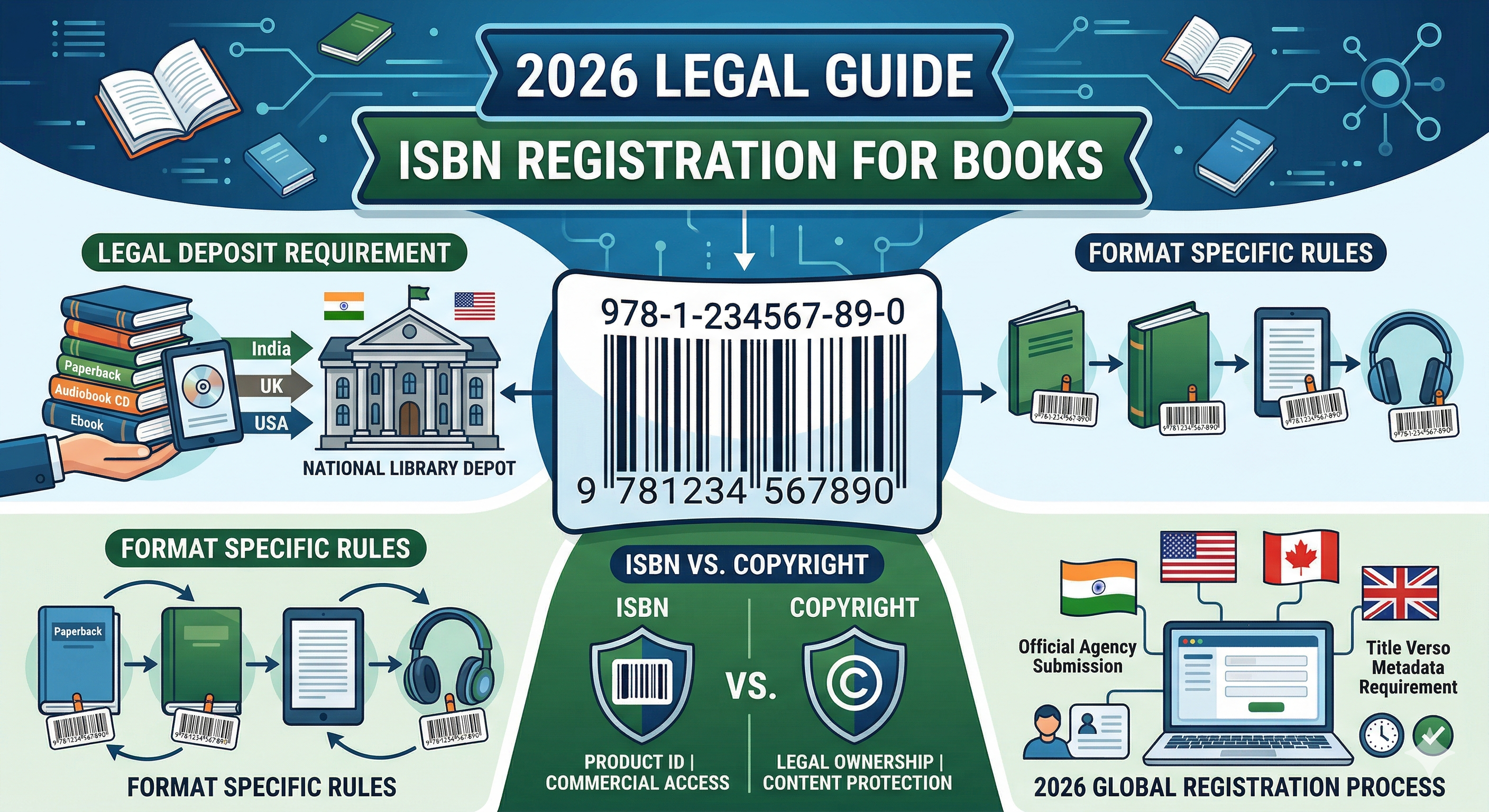
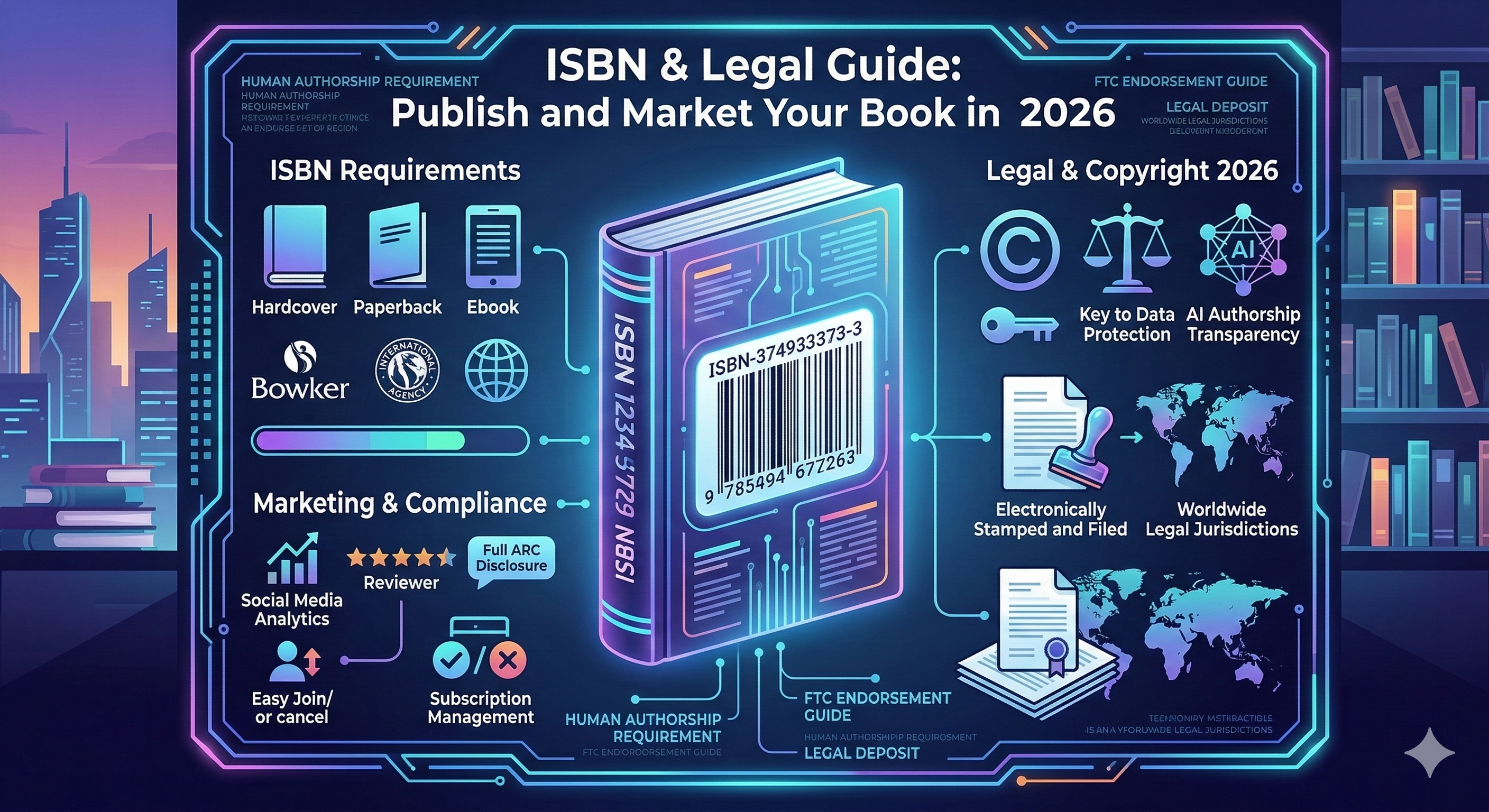
Each format of your book requires a separate ISBN.
For example:
- Paperback → 1 ISBN
- Hardcover → 1 ISBN
- eBook → 1 ISBN (optional in some cases)
This helps retailers track each version separately.
Step 5: Add ISBN to Your Book
Place your ISBN in the correct locations:
- Back cover (barcode format)
- Copyright page inside the book
This ensures compliance with industry standards.
Legal Requirements Beyond ISBN
Getting an ISBN is only one part of the legal process.
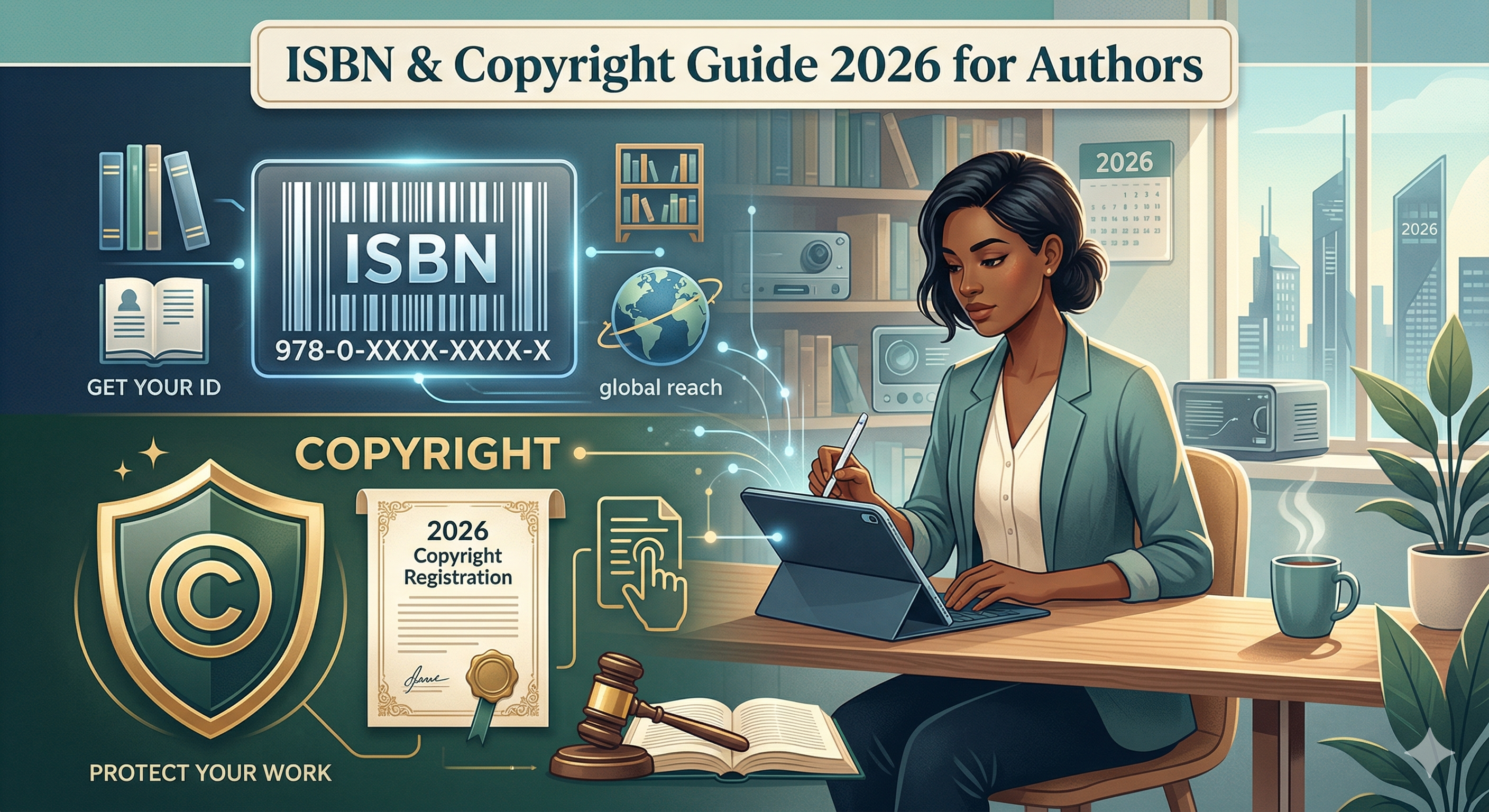
Copyright Registration
Copyright protects your work from unauthorized use.
Benefits:
- Legal ownership proof
- Protection against plagiarism
- Easier dispute resolution
Although copyright exists automatically upon creation, registration strengthens your legal rights.
Legal Deposit Requirements
Some countries require authors to submit copies of their book to national libraries.
Purpose:
- Preserve published works
- Maintain cultural records
Check your country’s legal deposit rules before publishing.
Publishing Agreements
If you work with a publisher or service provider, review contracts carefully.
Look for:
- Rights ownership
- Royalty terms
- Distribution rights
- Duration of agreement
Avoid signing unclear or restrictive agreements.
ISBN and Copyright Page Setup
Your copyright page should include:
- Copyright notice
- Author name
- ISBN
- Publisher details
- Year of publication
- Disclaimer (if needed)
This page gives your book a professional and legally compliant structure.
Benefits of Following the ISBN Guide 2026
Proper legal setup offers long-term advantages.
1. Professional Credibility
Books with ISBNs and proper legal details are taken more seriously by retailers and readers.
2. Wider Distribution
You can sell your book globally through multiple platforms.
3. Legal Protection
You reduce the risk of copyright issues and disputes.
4. Better Marketing Opportunities
Retailers and libraries rely on ISBN data for listing and promotion.
Best Practices for ISBN and Legal Compliance
Follow these proven strategies to avoid issues:
- Always double-check metadata before submission
- Use consistent author and publisher names
- Maintain records of ISBN assignments
- Register copyright early
- Keep copies of all legal documents
Additionally, update your information if changes occur after publication.
Common Mistakes to Avoid
Many authors make avoidable mistakes during the publishing process.
1. Using One ISBN for Multiple Formats
Each version of your book must have a unique ISBN.
2. Entering Incorrect Metadata
Wrong details can affect discoverability and sales.
3. Ignoring Copyright Registration
This weakens your legal protection.
4. Choosing Free ISBN Without Understanding Limits
You may lose control over publishing rights.
5. Skipping Legal Deposit Requirements
This can lead to compliance issues in some countries.
ISBN and Book Marketing Strategy
An ISBN is not just a legal tool—it also supports marketing.
How ISBN helps in marketing:
- Improves search visibility on retail platforms
- Enables listing in global databases
- Helps bookstores order your book easily
Combine ISBN with:
- Strong book metadata
- Optimized keywords
- Professional cover design
- Distribution strategy
Together, these elements increase your chances of success.
Why Choose a Professional Publishing Service
Handling ISBN and legal requirements alone can be confusing, especially for first-time authors.
A professional service can help with:
- ISBN registration and management
- Copyright filing
- Metadata optimization
- Legal documentation
- Distribution setup
Key advantages:
- Saves time
- Reduces errors
- Ensures compliance
- Improves book quality
If your goal is long-term success, working with experts is a smart investment.