ISBN Publishing Guide 2026: Protect Your Book Rights
Introduction: Why Legal Steps Matter More Than Ever
Many authors finish writing their book only to get stuck on legal and technical requirements. They wonder if they need an ISBN, how copyright works, or what permissions are required. These questions delay publication and sometimes lead to costly mistakes.
A clear ISBN publishing guide solves this problem. When you understand the registration process, ownership rules, and legal protections, you can publish confidently and market your book worldwide. This guide explains each step in simple language so you can move from manuscript to published author without confusion.
What Is an ISBN and Why It Matters
An ISBN (International Standard Book Number) is a unique numeric identifier assigned to a book edition. Think of it as your book’s fingerprint in the global publishing system.
Key Functions of an ISBN
-
Identifies your book worldwide
-
Helps bookstores and libraries track inventory
-
Enables online sales listing
-
Links to metadata such as title, author, and edition
Without an ISBN, most retailers and distributors will not list your book. While some platforms assign free numbers, owning your ISBN gives you full control as the publisher.
How ISBN Ownership Works
Ownership is often misunderstood. The ISBN does not identify the author—it identifies the publisher.
If You Buy Your Own ISBN
-
You become the official publisher
-
You control distribution rights
-
Your publishing imprint appears in databases
If a Platform Provides One
-
The platform becomes the publisher of record
-
You may face distribution limits
-
Changing distributors later can be difficult
For long-term publishing plans, purchasing your own ISBN is usually the better option.
Step-by-Step ISBN Registration Process
This ISBN publishing guide would be incomplete without a practical walkthrough. Follow these steps to secure your number correctly.
Step 1: Choose Your Publishing Role
Decide whether you are:
-
Self-publisher
-
Independent press
-
Publishing company
Your role determines whose name appears as publisher.
Step 2: Apply Through the Official Agency
Each country has an official ISBN agency. Apply through your national provider and fill in:
-
Book title
-
Author name
-
Format type
-
Edition number
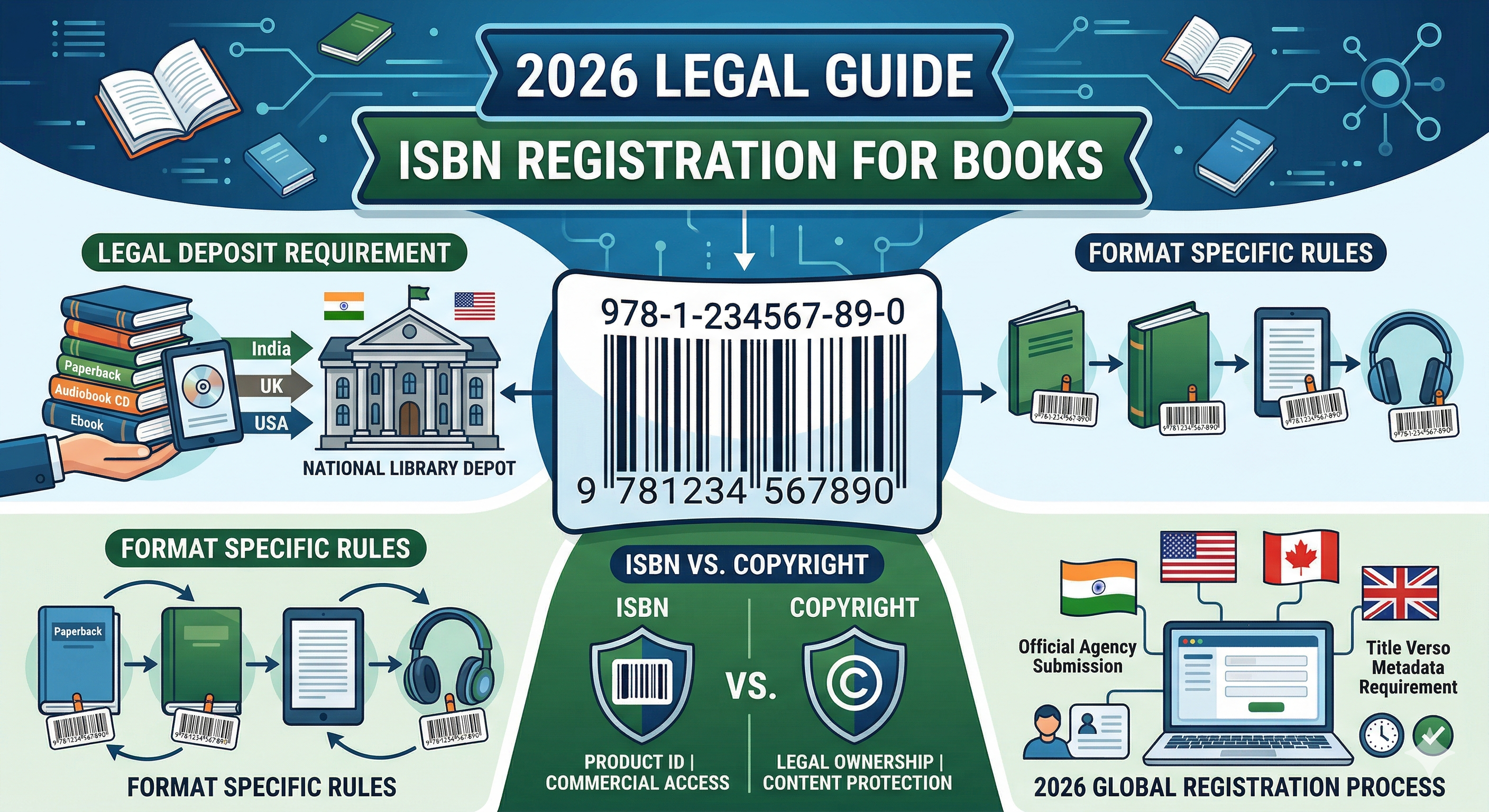
Step 3: Assign ISBN to Each Format
Different formats require separate numbers:
-
Paperback
-
Hardcover
-
Ebook
-
Audiobook
One book can therefore have multiple ISBNs.
Step 4: Register Metadata
Metadata improves discoverability. Include:
-
Description
-
Keywords
-
Category
-
Publication date
Accurate metadata helps bookstores and search engines find your book.
Understanding Copyright Protection
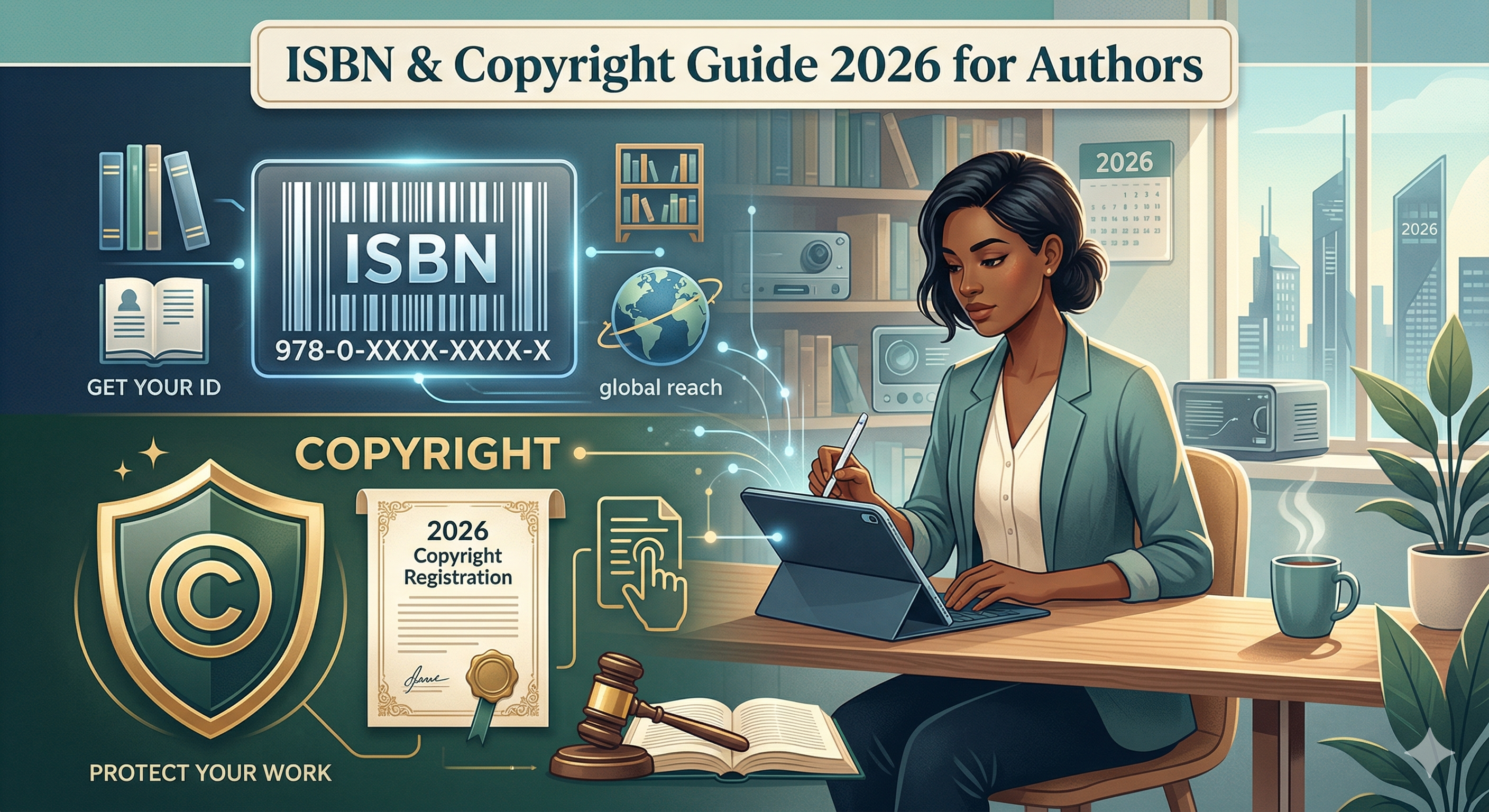
Copyright protects your intellectual property automatically when you create original work. However, registration strengthens your legal position.
What Copyright Protects
-
Text content
-
Illustrations
-
Cover design
-
Layout
-
Characters and story
It does not protect ideas or titles. Only the expression of ideas is protected.
Why Register Copyright
Although copyright exists upon creation, official registration provides:
-
Legal proof of ownership
-
Ability to sue for damages
-
Public record of rights
Registration is especially important if you plan international distribution.
Legal Requirements for Publishing a Book in 2026
Publishing laws vary by country, but most regions share common requirements. Understanding these ensures compliance.
Mandatory Elements Inside a Book
Most published books must include:
-
Copyright page
-
Publisher information
-
ISBN listing
-
Edition statement
-
Disclaimer (if needed)
Legal Deposits
Many governments require publishers to submit copies to national libraries. This helps preserve cultural records.
Permissions and Licenses
You must obtain permission if your book includes:
-
Quotes beyond fair use limits
-
Song lyrics
-
Images or artwork
-
Charts from other publications
Failure to obtain permissions can lead to legal claims or forced removal from stores.
ISBN Publishing Guide for Self-Publishers
Self-publishing authors handle tasks that traditional publishers manage. This makes legal awareness essential.
Checklist Before Publishing
-
Purchase ISBNs for all formats
-
Register copyright
-
Verify permissions
-
Create copyright page
-
Confirm distribution rights
Following this checklist prevents delays when submitting to retailers.
Benefits of Following a Proper ISBN Publishing Guide
Authors who skip legal steps often face rejection from distributors or disputes later. A structured approach offers major advantages.
Professional Credibility
Books with proper ISBN and legal pages appear more legitimate to retailers, reviewers, and readers.
Global Distribution Access
Many international marketplaces require valid ISBN registration. Without it, your book’s reach is limited.
Legal Protection
Registered rights give you authority to challenge plagiarism or unauthorized use.
Long-Term Publishing Control
Owning your publishing details allows you to change printers, distributors, or platforms anytime.
Best Practices for ISBN and Legal Compliance
Following industry best practices ensures smooth publication and fewer problems later.
Maintain Accurate Records
Keep a file with:
-
ISBN assignments
-
Registration receipts
-
Permission agreements
-
Contracts
Organized records simplify audits and rights management.
Use Consistent Author Name
Changing your author name format across editions can cause database confusion. Always use the same spelling and order.
Register Early
Secure ISBN and copyright before marketing or printing. Early registration prevents last-minute delays.
Verify Metadata Accuracy
Incorrect metadata leads to listing errors or search invisibility. Double-check spelling, categories, and publication dates.
Common ISBN and Legal Mistakes to Avoid
Many new authors make avoidable mistakes that cost time and money. Knowing them helps you stay ahead.
Using One ISBN for Multiple Formats
Each format must have its own ISBN. Reusing one number can cause cataloging issues.
Skipping Copyright Page
Even if not legally required everywhere, a copyright page signals professionalism and protects rights.
Ignoring Image Licenses
Using images from the internet without permission is one of the most common legal violations.
Listing Wrong Publisher Name
If you bought your ISBN, your imprint—not the printing company—should be listed as publisher.
Waiting Until Launch Week
Legal registrations can take time. Starting late may delay your release date.
How ISBNs Affect Book Marketing
An ISBN is not just administrative. It also supports promotion and discoverability.
Improves Search Visibility
Retailers use ISBNs to index books. Accurate data increases the chances your book appears in search results.
Enables Bookstore Distribution
Physical stores rely on ISBN systems for inventory tracking. Without one, they cannot stock your book.
Supports Sales Tracking
Sales reporting systems use ISBNs to monitor performance. This data helps you plan marketing strategies.
Why Professional Publishing Services Help
Handling ISBN and legal steps alone is possible, but professional support reduces risk and saves time.
Advantages of Hiring Experts
-
Correct documentation filing
-
Faster approval processing
-
Metadata optimization
-
Rights verification
-
Distribution readiness
Professionals understand industry standards and prevent errors that beginners often miss.
When to Consider Professional Help
You should consider assistance if:
-
You plan global distribution
-
Your book includes third-party content
-
You are publishing multiple titles
-
You want bookstore placement
Professional guidance is an investment in long-term publishing success.
Advanced Legal Considerations for Authors
Once you understand basics, there are deeper legal topics worth knowing.
ISBN vs Barcode
An ISBN is the number; a barcode is the scannable graphic representation used by retailers. Both are needed for printed books.
Pen Names and Legal Identity
You may publish under a pen name, but legal registrations must use your real identity. Contracts should always list your legal name.
International Rights
If your book will be sold globally, confirm:
-
Translation rights ownership
-
Regional distribution permissions
-
Tax obligations
Planning rights early prevents conflicts later.
ISBN Publishing Guide Timeline for Launch
A realistic schedule keeps your publishing process organized.
8–12 Weeks Before Release
-
Apply for ISBN
-
Register copyright
6 Weeks Before
-
Finalize book files
-
Create metadata
4 Weeks Before
-
Submit to distributors
-
Order proof copies
2 Weeks Before
-
Approve print files
-
Confirm listings
Launch Week
-
Start marketing campaigns
-
Monitor retailer pages
Following a structured timeline ensures your release happens smoothly.
Frequently Asked Questions
Do ebooks need ISBNs?
Some platforms do not require them, but having one improves distribution flexibility.
Can two books share one ISBN?
No. Each edition and format must have a unique number.
Is copyright mandatory?
Copyright exists automatically, but official registration strengthens legal protection.
Can I change ISBN later?
No. Once assigned and published, an ISBN is permanent for that edition.