ISBN Registration for Books: 2026 Legal Guide
Introduction
Publishing a book in 2026 is easier than ever. However, many authors still struggle with the legal side—especially ISBN registration, copyright protection, and compliance.
Without proper legal setup, your book may face distribution issues, copyright risks, or rejection from major platforms. This can delay your launch and affect your credibility as an author.
The solution is simple: understand the legal framework early and follow a structured process. This guide explains ISBN registration for books and everything else you need to publish and market your book successfully in 2026.
What Is an ISBN and Why It Matters
An ISBN (International Standard Book Number) is a unique identifier for your book. It helps publishers, retailers, and libraries track and manage your book globally.
Key Functions of an ISBN
- Identifies your book edition and format
- Enables distribution through bookstores and online platforms
- Helps in inventory tracking and sales reporting
- Builds credibility and professionalism
Without an ISBN, your book may not be accepted by major platforms or bookstores.
Step-by-Step Guide to ISBN Registration for Books
Step 1: Determine If You Need an ISBN
You need an ISBN if you are:
- Publishing a printed book
- Releasing an eBook (on most platforms)
- Distributing through retailers or libraries
You may not need one if:
- You publish only on platforms that provide free ISBNs
- Your book is for private use only
However, owning your ISBN is always better for control and branding.
Step 2: Choose the Right ISBN Authority
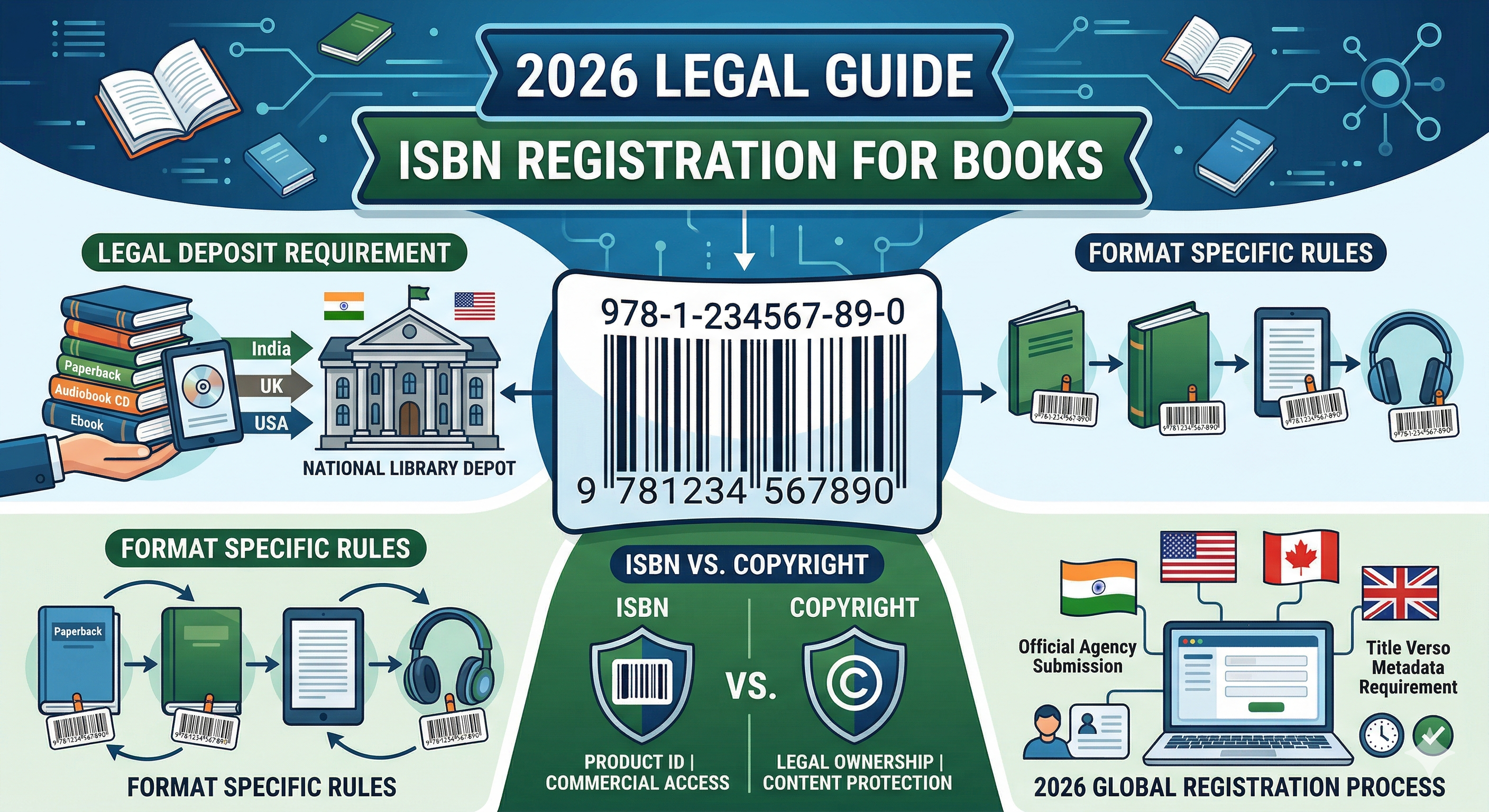
Each country has an official ISBN agency.
For example:
- India: Raja Rammohun Roy National Agency for ISBN
- USA: Bowker
You must apply through your country’s official agency.
Step 3: Gather Required Information
Before applying, prepare:
- Book title and subtitle
- Author name
- Book format (paperback, hardcover, eBook)
- Edition details
- Publisher name (or self-publisher name)
Accuracy is important because ISBN data becomes part of global databases.
Step 4: Apply for ISBN
The application process usually includes:
- Filling an online form
- Submitting manuscript details
- Uploading identification documents (if required)
In some countries, ISBNs are free. In others, they are paid.
Step 5: Assign ISBN to Your Book
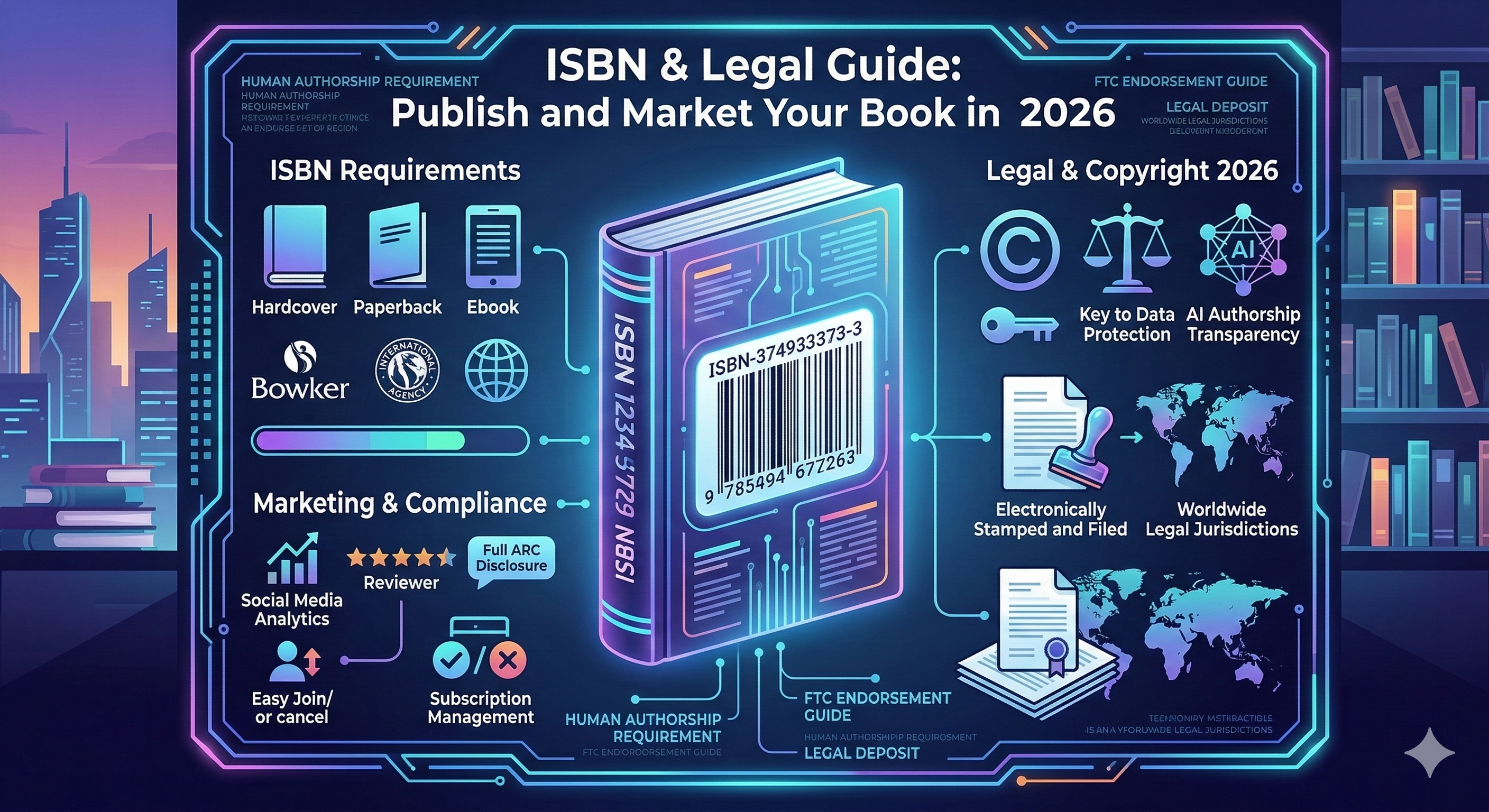
Each version of your book needs a separate ISBN:
- Paperback → 1 ISBN
- Hardcover → 1 ISBN
- eBook → 1 ISBN
Do not reuse the same ISBN across formats.
Step 6: Add ISBN to Your Book
Place the ISBN in:
- Copyright page
- Back cover (as barcode)
This ensures your book is scannable and trackable in retail systems.
Understanding Copyright and Legal Protection
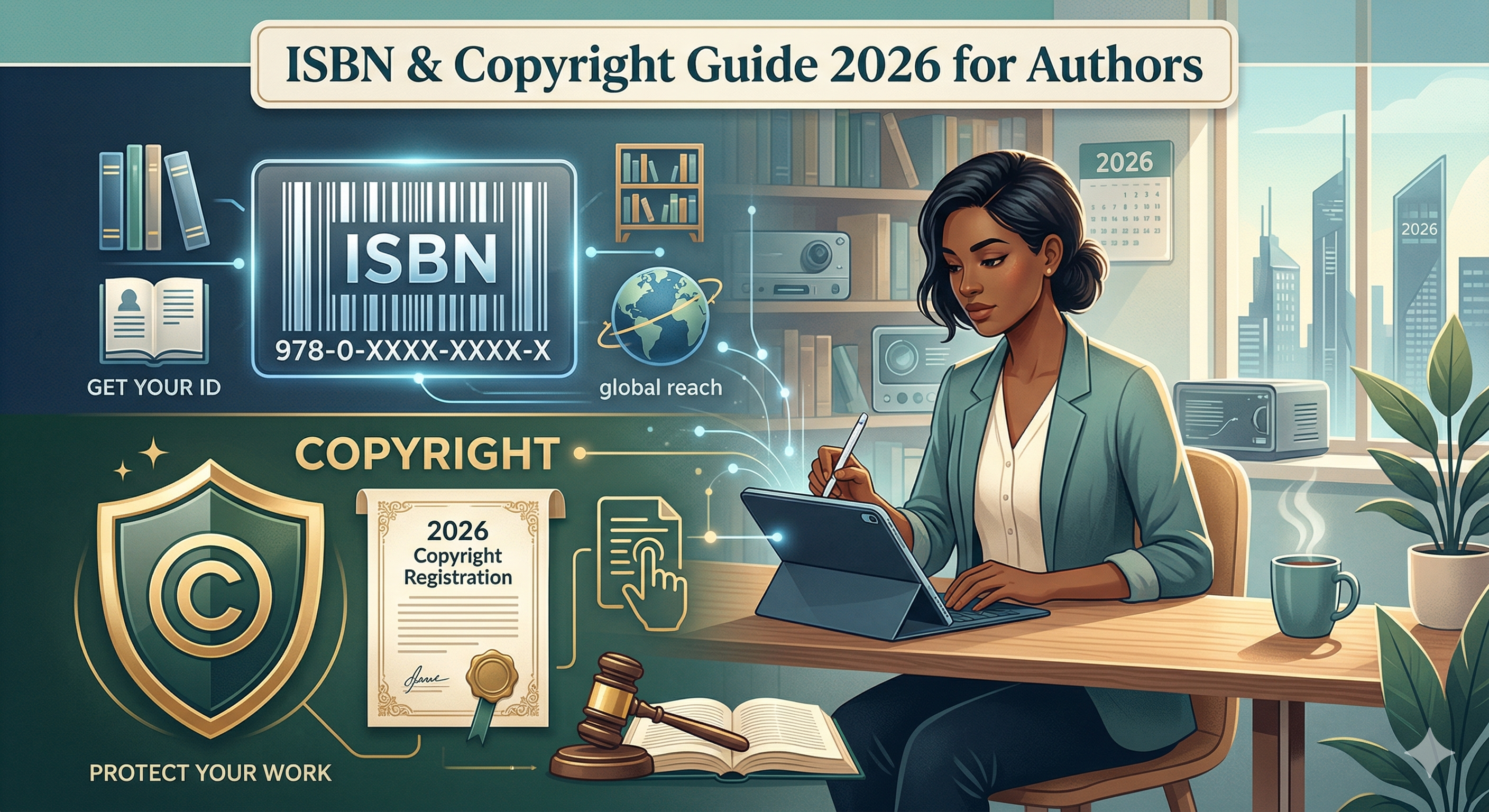
ISBN does not protect your content. You also need copyright.
What Copyright Covers
- Your text and content
- Images and illustrations
- Book layout (in some cases)
How to Secure Copyright
- Automatic upon creation (in most countries)
- Optional registration for stronger legal proof
Registering your copyright gives you legal backing in disputes.
Legal Requirements for Publishing in 2026
Publishing laws vary, but common requirements include:
1. Copyright Page
Include:
- Copyright notice
- Author name
- Year of publication
- ISBN
- Rights statement
2. Legal Disclaimers
Depending on your book type:
- Fiction: “This is a work of fiction…”
- Non-fiction: Liability disclaimers
- Educational: Accuracy disclaimer
3. Permissions
If you use:
- Quotes
- Images
- Data
You must have permission or proper licensing.
4. GST and Business Registration (India)
If you sell books commercially:
- Register for GST (if applicable)
- Maintain invoices and sales records
Benefits of Proper ISBN and Legal Setup
Getting your legal foundation right offers long-term advantages.
1. Global Distribution
Retailers and distributors rely on ISBNs to list books worldwide.
2. Professional Image
A properly registered book looks credible to readers and publishers.
3. Better Sales Tracking
ISBN allows accurate tracking of:
- Sales
- Inventory
- Performance
4. Legal Protection
Copyright registration helps protect against:
- Plagiarism
- Unauthorized reproduction
5. Platform Acceptance
Major platforms require legal compliance for listing.
Best Practices for ISBN Registration and Legal Compliance
Always Own Your ISBN
Using free ISBNs from platforms limits your control.
Owning your ISBN means:
- You are listed as the publisher
- You control distribution
Maintain Consistent Metadata
Ensure:
- Title
- Author name
- Edition
remain consistent across platforms.
Keep Legal Documents Organized
Maintain records of:
- ISBN certificates
- Copyright registration
- Permissions
Use Professional Formatting
Incorrect formatting can cause rejection even if legal steps are complete.
Plan for Multiple Formats
Assign ISBNs early for all formats you plan to publish.
Common Mistakes to Avoid
1. Using One ISBN for All Formats
Each format requires a unique ISBN. Reusing creates confusion in distribution.
2. Skipping Copyright Registration
While optional, skipping it weakens your legal position.
3. Incorrect Metadata
Wrong details can lead to:
- Listing errors
- Search issues
- Distribution problems
4. Ignoring Permissions
Using copyrighted material without permission can lead to legal action.
5. Relying Only on Platform ISBNs
This limits your publishing flexibility and brand identity.
6. Missing Legal Pages
A missing copyright page reduces professionalism and compliance.
How ISBN and Legal Setup Support Book Marketing
Legal preparation is not just about compliance—it directly impacts marketing.
Improved Discoverability
ISBN ensures your book appears in:
- Online catalogs
- Library systems
- Retail databases
Easier Distribution
Distributors prefer books with proper ISBN and metadata.
Strong Branding
Owning your ISBN establishes you as a serious publisher.
Better Analytics
You can track:
- Sales trends
- Market performance
This helps refine your marketing strategy.
Why Choose a Professional Publishing Service
Handling ISBN and legal processes alone can be time-consuming and confusing.
A professional service helps you avoid mistakes and speed up publishing.
What They Offer
- ISBN registration support
- Copyright guidance
- Legal documentation setup
- Metadata optimization
- Distribution assistance
Benefits of Hiring Experts
- Saves time
- Reduces legal risks
- Ensures accuracy
- Improves market readiness
When You Should Consider It
- First-time authors
- Multi-format publishing
- International distribution
If you want a smooth publishing process, professional help is often worth it.