Professional Editing vs Self-Editing: What Wins for Authors
Writing a book is a huge achievement. However, finishing your manuscript is only half the job. Editing is what turns your draft into a polished, professional book.
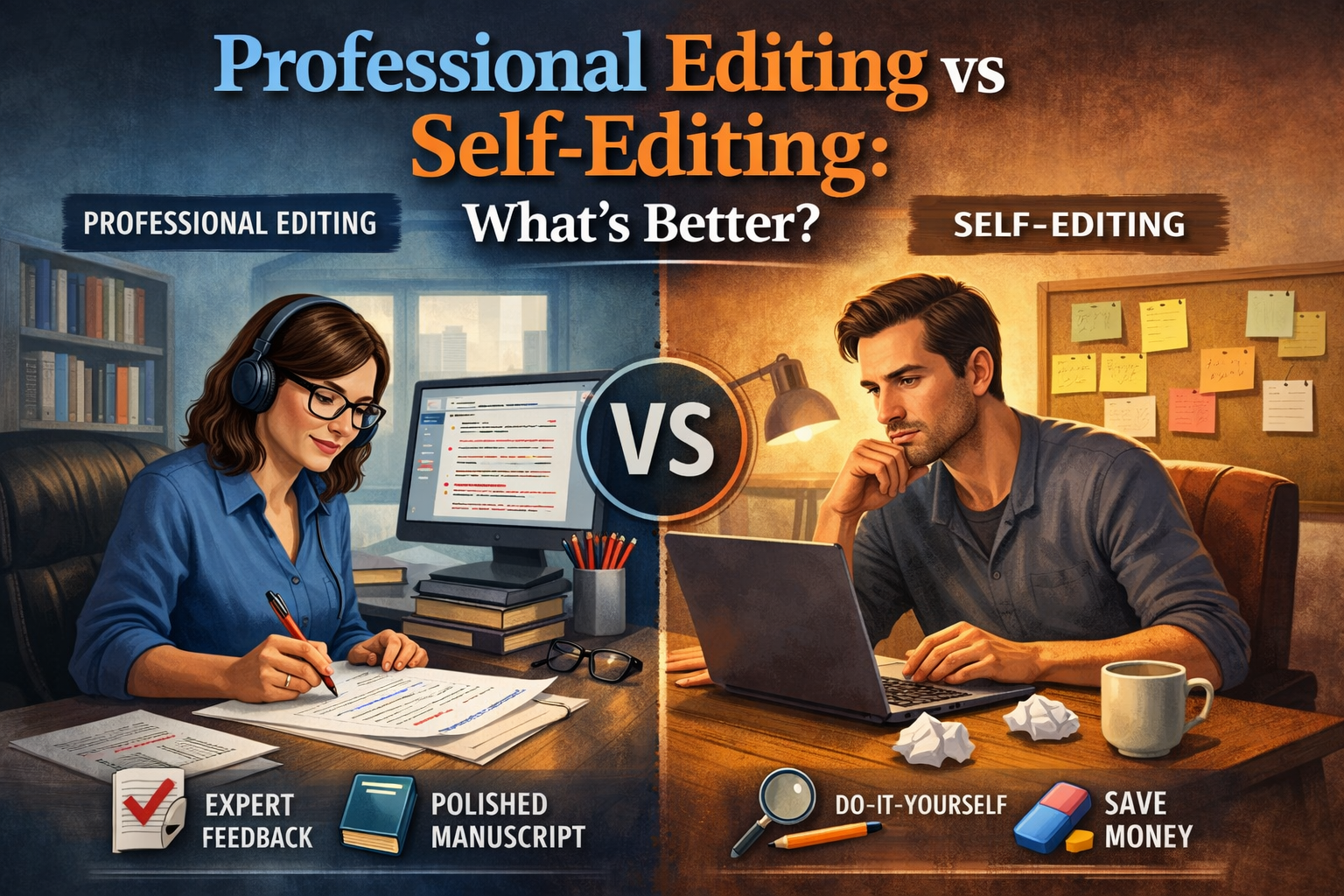
Many authors face one big question: professional editing vs self-editing — which is better?
Some writers prefer to edit their work themselves to save money. Others invest in professional editors for better quality. Both options have advantages and drawbacks.
This guide will help you understand:
-
The difference between professional editing and self-editing
-
When each option works best
-
Benefits and limitations of both
-
Common mistakes to avoid
-
Why professional editing often makes a major difference
By the end, you will know exactly which path is right for your book.
Understanding Professional Editing vs Self-Editing
Before choosing, you must understand what each option really means.
What Is Self-Editing?
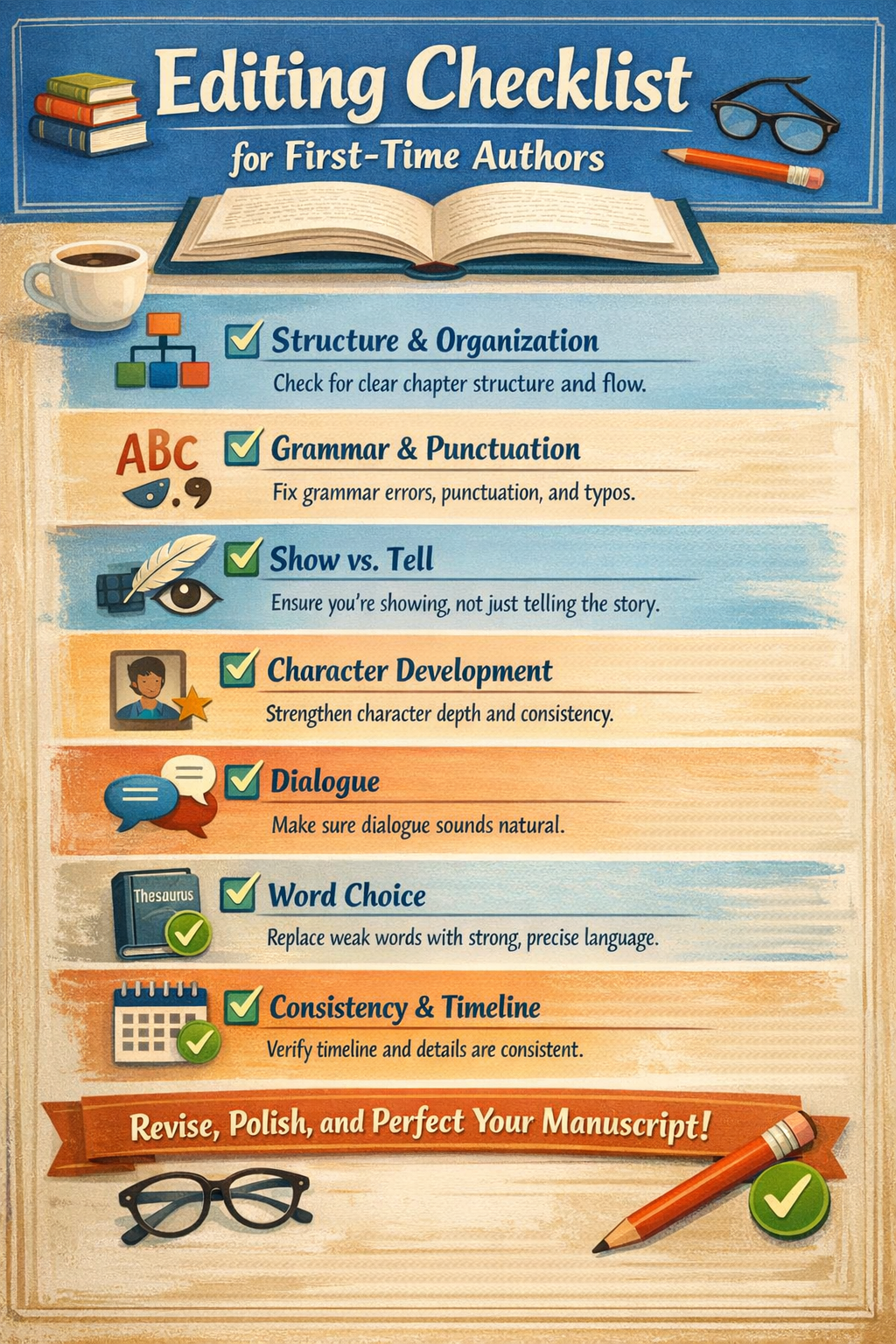
Self-editing means reviewing and improving your manuscript on your own.
This includes:
-
Fixing grammar mistakes
-
Improving sentence clarity
-
Removing repetition
-
Checking story flow
-
Correcting spelling and punctuation
Self-editing is usually the first step after writing your draft.
Every author should self-edit before sharing their work.
What Is Professional Editing?
Professional editing involves hiring an experienced editor to review your manuscript.
Professional editors provide deeper improvements such as:
-
Structural improvements
-
Clarity enhancement
-
Tone consistency
-
Grammar correction
-
Publishing-level polish
They look at your manuscript from a reader’s perspective.
This helps make your book market-ready.
Types of Professional Editing
Professional editing is not just one service. There are different levels.
1. Developmental Editing
This focuses on the big picture.
It improves:
-
Story structure
-
Plot consistency
-
Character development
-
Book organization
This is common for novels and nonfiction books.
2. Line Editing
This improves sentence flow and readability.
Editors refine:
-
Sentence structure
-
Tone
-
Word choice
This makes your writing smoother.
3. Copy Editing
This corrects technical errors.
Such as:
-
Grammar mistakes
-
Spelling errors
-
Punctuation
This ensures accuracy.
4. Proofreading
This is the final step.
It fixes:
-
Minor errors
-
Formatting issues
-
Typos
Proofreading prepares your book for publishing.
Step-by-Step: How Self-Editing Works
Self-editing is a process. You cannot do it effectively in one read.
Follow these steps.
Step 1: Take a Break
After finishing your manuscript, wait a few days.
This helps you see mistakes more clearly.
Step 2: Read Slowly
Read every sentence carefully.
Focus on clarity.
Ask yourself:
-
Does this sentence make sense?
-
Is it easy to understand?
Step 3: Check for Repetition
New writers often repeat words and ideas.
Remove unnecessary repetition.
Step 4: Improve Clarity
Simplify complex sentences.
Clear writing improves reader experience.
Step 5: Correct Grammar and Spelling
Fix all basic language errors.
Use grammar tools if needed.
Step 6: Read Aloud
Reading aloud helps find awkward sentences.
This is one of the most effective techniques.
Benefits of Self-Editing
Self-editing offers several advantages.
1. Saves Money
This is the biggest benefit.
Professional editing can be expensive.
Self-editing costs nothing.
2. Improves Writing Skills
You learn from your mistakes.
Your writing improves over time.
3. Gives Full Control
You make all decisions.
Nothing changes without your approval.
4. Essential First Step
Even professional editors expect authors to self-edit first.
It makes editing faster and cheaper.
Limitations of Self-Editing
Self-editing has serious limitations.
This is why many books remain unpolished.
1. You Cannot See Your Own Mistakes
Your brain fills gaps automatically.
You read what you meant to write.
Not what you actually wrote.
2. Lack of Professional Expertise
Professional editors have training and experience.
Most authors do not.
3. Emotional Attachment
You may resist removing weak sections.
Editors make objective decisions.
4. Missed Errors
Small mistakes remain unnoticed.
These reduce book quality.
Benefits of Professional Editing
This is where professional editing becomes powerful.
1. Professional Quality
Editors ensure your book meets publishing standards.
This improves credibility.
2. Objective Feedback
Editors give honest feedback.
This strengthens your manuscript.
3. Better Reader Experience
Professional editing improves:
-
Flow
-
Clarity
-
Engagement
Readers enjoy your book more.
4. Higher Publishing Success
Professionally edited books have better chances of:
-
Getting published
-
Receiving good reviews
-
Selling more copies
5. Saves Time
Editing takes weeks or months.
Professionals do it faster.
Limitations of Professional Editing
Professional editing also has some drawbacks.
1. Cost
This is the biggest concern.
Editing can cost:
-
Hundreds
-
Or thousands
Depending on book length.
2. Requires Trust
You must trust the editor.
Choosing the right editor is important.
3. Not Instant
Editing takes time.
Quality editing cannot be rushed.
Professional Editing vs Self-Editing: Direct Comparison
Here is a simple comparison.
| Factor | Self-Editing | Professional Editing |
|---|---|---|
| Cost | Free | Paid |
| Quality | Basic | High |
| Error Detection | Limited | Extensive |
| Objectivity | Low | High |
| Publishing Readiness | Moderate | Excellent |
| Skill Required | High | Not required |
Professional editing clearly offers higher quality.
But both options play important roles.
Best Strategy: Use Both Together
The best solution is not choosing one.
It is combining both.
Step 1: Self-Edit First
Always self-edit your manuscript.
This removes obvious mistakes.
It reduces editing cost.
Step 2: Hire Professional Editor
After self-editing, hire an editor.
They refine your manuscript professionally.
This creates the best result.
Common Mistakes Authors Make
Many authors make editing mistakes.
Avoid these errors.
1. Skipping Editing Completely
This is the biggest mistake.
Unedited books look unprofessional.
Readers notice quickly.
2. Relying Only on Self-Editing
Self-editing alone is not enough.
Professional editing improves quality significantly.
3. Editing Immediately After Writing
Always take a break first.
Fresh perspective improves editing.
4. Ignoring Feedback
Feedback improves your book.
Do not ignore professional suggestions.
5. Choosing Cheap Editors Only
Cheap editing often means poor quality.
Choose experienced professionals.
When Self-Editing May Be Enough
Self-editing may work in some cases.
For example:
-
Personal writing
-
Blog posts
-
Journals
-
Practice books
However, for professional publishing, professional editing is strongly recommended.
When Professional Editing Is Essential
Professional editing is necessary if:
-
You plan to publish your book
-
You want to sell your book
-
You want professional quality
-
You want good reviews
-
You want long-term success
Publishing is competitive.
Quality matters.
Why Professional Editing Improves Book Sales
Readers expect professional quality.
Books with errors get negative reviews.
This reduces sales.
Professional editing improves:
-
Readability
-
Reader satisfaction
-
Reputation
-
Sales potential
Good editing is an investment.
Not an expense.
How to Choose the Right Professional Editing Service
Not all editing services are equal.
Choose carefully.
Look for Experience
Choose editors with book editing experience.
Check Samples
Ask for sample edits.
Review quality.
Read Reviews
Client reviews show reliability.
Understand Services
Make sure they offer the editing level you need.
Clear Communication
Good editors communicate clearly.
Best Practices for Authors
Follow these tips for best results.
-
Always self-edit first
-
Take breaks before editing
-
Read aloud
-
Accept feedback
-
Invest in professional editing
-
Choose experienced editors
This improves your book quality significantly.
Professional Editing vs Self-Editing: Cost vs Value
Many authors focus only on cost.
But value is more important.
Professional editing provides:
-
Better quality
-
Better reviews
-
Better sales
Poor editing can damage your reputation.
Professional editing protects your work.
Real Impact on Author Success
Successful authors understand the importance of editing.
Professional editing helps create:
-
Professional books
-
Loyal readers
-
Strong author reputation
This builds long-term success.
Why Authors Choose Professional Publishing Services
Professional publishing services provide complete editing support.
They offer:
-
Expert editors
-
Multiple editing levels
-
Publishing-ready manuscripts
-
Quality assurance
This makes publishing easier.
You also save time and avoid stress.
Professional services ensure your book meets industry standards.