Traditional Publishing Guide 2026: Complete Strategy to Successfully Publish and Market Your Book
Introduction
For many authors, traditional publishing still feels like the ultimate goal. However, the process can seem confusing, slow, and highly competitive. Many writers struggle with rejection, unclear submission rules, and finding the right publisher.
The good news is that traditional publishing in 2026 is more structured and accessible than ever—if you follow the right strategy. This guide explains exactly how to navigate the system, get your manuscript accepted, and successfully market your book after publication.
What Is Traditional Publishing?
Traditional publishing is when a publishing house acquires your book, covers the production costs, and pays you royalties. Unlike self-publishing, you don’t pay upfront.
Key features:
- Publisher handles editing, design, and distribution
- You may receive an advance payment
- Royalties are shared based on contract terms
- A literary agent is often required
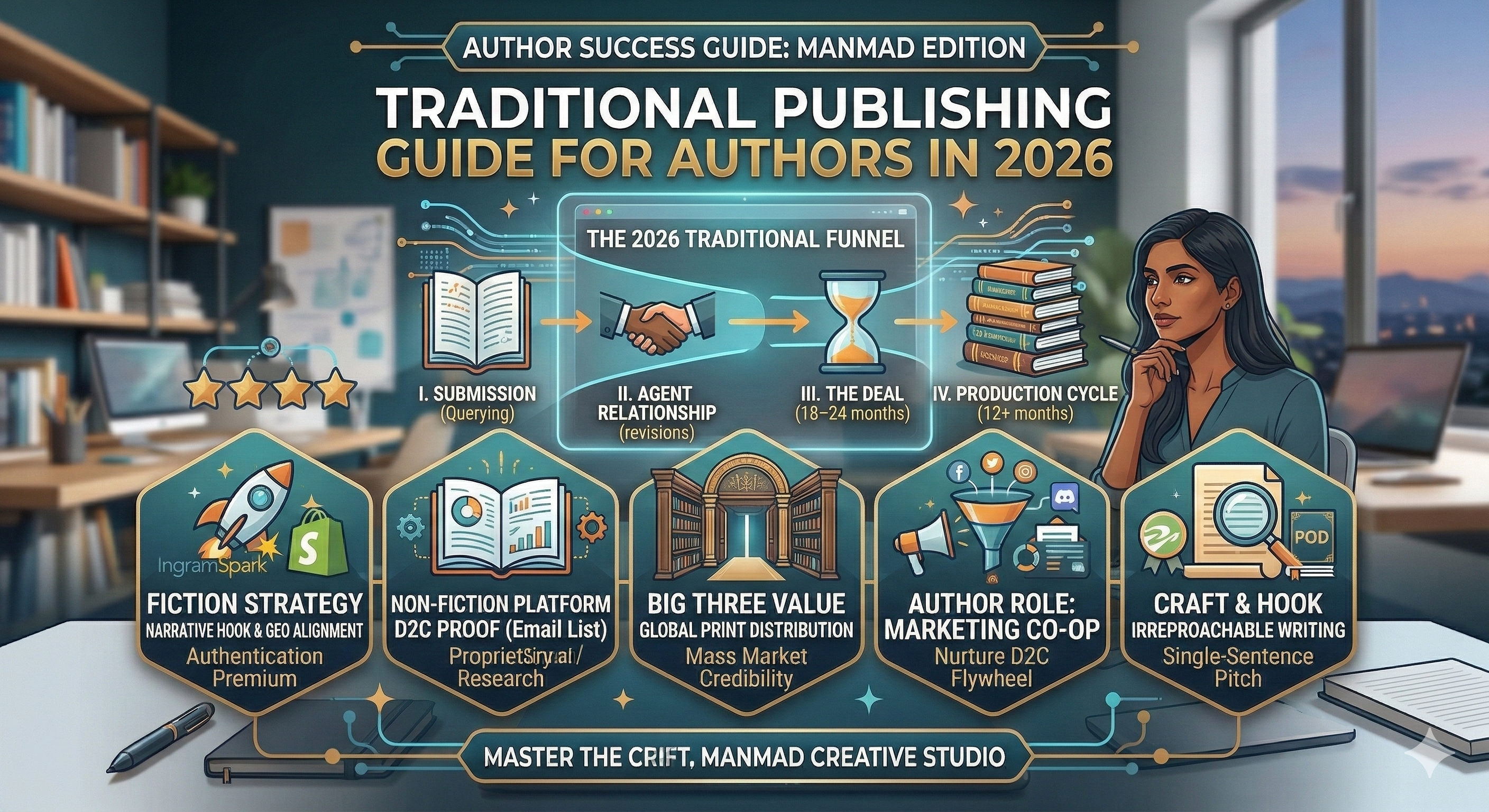
Step-by-Step Traditional Publishing Process
Step 1: Finish and Polish Your Manuscript
Before anything else, your manuscript must be complete and well-edited.
Focus on:
- Strong opening chapters
- Clear structure and flow
- Error-free grammar and formatting
Best practices:
- Revise your draft multiple times
- Get feedback from beta readers
- Consider professional editing
A polished manuscript significantly improves your chances of acceptance.
Step 2: Research Your Genre and Market
Understanding your market is critical in 2026. Publishers want books that fit current trends but still stand out.
Do this:
- Study bestselling books in your genre
- Identify your target audience
- Analyze similar titles (tone, style, themes)
This helps you position your book effectively when pitching.
Step 3: Write a Strong Query Letter
Your query letter is your first impression. It must be concise, compelling, and professional.
Include:
- A strong hook
- Brief summary of your book
- Author bio
- Word count and genre
Keep it:
- Under 300 words
- Clear and engaging
- Free from unnecessary details
A great query letter can open doors quickly.
Step 4: Find a Literary Agent
In most cases, you need a literary agent to access major publishers.
How to find one:
- Search for agents in your genre
- Review submission guidelines
- Personalize each query
Why agents matter:
- They pitch your book to publishers
- Negotiate contracts
- Guide your publishing journey
Take time to choose the right agent—it’s a long-term partnership.
Step 5: Submit and Handle Rejections
Rejection is part of the process. Even successful authors face multiple rejections.
What to expect:
- Weeks or months of waiting
- Standard rejection responses
- Occasional feedback
How to respond:
- Keep submitting to other agents
- Improve your manuscript if needed
- Stay consistent and patient
Persistence is key in traditional publishing.
Step 6: Secure a Publishing Deal
Once an agent accepts your manuscript, they will pitch it to publishers.
When accepted:
- You receive a contract
- Terms include advance and royalties
- Timeline for publication is set
Important:
- Review contract carefully
- Understand rights and obligations
- Ask questions before signing
Step 7: Editing and Production
After signing, your book enters the production phase.
This includes:
- Developmental editing
- Copyediting
- Cover design
- Typesetting
You will collaborate with editors to refine your book further.
Step 8: Book Launch and Marketing
Even with a traditional publisher, authors must actively participate in marketing.
Key strategies:
- Build an author platform
- Promote on social media
- Engage with readers
Marketing is essential for long-term success.
Benefits of Traditional Publishing
Traditional publishing offers several advantages, especially for new authors.
1. Professional Support
You get access to editors, designers, and marketing teams.
2. Credibility
Books published traditionally often carry more industry recognition.
3. Wider Distribution
Your book can reach bookstores, libraries, and global markets.
4. Financial Support
Publishers cover production costs and may offer an advance.
Best Practices for Success in 2026
To succeed in traditional publishing, follow these proven strategies:
Build an Author Platform Early
Start growing your presence before publishing.
- Use social media
- Create a website
- Build an email list
Stay Updated with Trends
Publishing trends change quickly. Stay informed about:
- Popular genres
- Reader preferences
- Market demand
Network in the Industry
Connections can open opportunities.
- Attend writing events
- Join writing communities
- Engage with industry professionals
Be Professional
Always follow submission guidelines and communicate clearly.
Common Mistakes to Avoid
Many authors fail due to avoidable errors. Here are the most common ones:
Submitting an Unfinished Manuscript
Agents expect complete and polished work.
Ignoring Submission Guidelines
Each agent has specific requirements—follow them strictly.
Sending Generic Queries
Personalization increases your chances of success.
Giving Up Too Early
Rejections are normal. Persistence matters.
Overlooking Marketing
Even traditionally published authors must promote their books.
Why Choose a Professional Publishing Service or Company
While traditional publishing doesn’t require upfront investment, professional guidance can improve your chances significantly.
What a professional service offers:
- Manuscript evaluation
- Editing and proofreading
- Query letter writing assistance
- Agent matchmaking guidance
Benefits:
- Saves time and effort
- Improves manuscript quality
- Increases acceptance chances
Working with experts can help you avoid costly mistakes.
Traditional Publishing vs Self-Publishing
Understanding the difference helps you choose the right path.
Traditional Publishing:
- No upfront cost
- Slower process
- Limited creative control
Self-Publishing:
- Full control
- Faster release
- Requires investment
In 2026, both options are viable. Your choice depends on your goals.
Future Trends in Traditional Publishing (2026)
The publishing industry continues to evolve.
Key trends:
- Increased demand for diverse voices
- Hybrid publishing models rising
- Digital marketing becoming essential
- Data-driven acquisitions
Authors who adapt to these trends gain an advantage.