Writing Tips for Authors: Complete 2026 Guide
Introduction: Why Most Books Fail — and How You Can Succeed
Every year, thousands of books are written. Only a small percentage succeed.
Many authors struggle not because they lack talent, but because they lack direction. They write without structure. They publish without strategy. They market without a plan.
In 2026, the publishing world is more competitive than ever. Readers expect quality. Retail platforms reward optimization. Marketing requires precision.
That’s why mastering the right writing tips for authors is no longer optional — it’s essential.
This complete guide will walk you step by step through writing, publishing, and marketing your book successfully in 2026.
Let’s begin.
Step 1: Start with a Clear Book Strategy
Before you write a single chapter, you need clarity.
Define Your Book’s Purpose
Ask yourself:
-
Who is this book for?
-
What problem does it solve?
-
What transformation does it offer?
-
What genre does it belong to?
Books that sell solve a specific need. Whether fiction or nonfiction, your book must deliver value.
Research the Market
Study:
-
Top-selling books in your genre
-
Reader reviews
-
Common complaints
-
Popular themes
Look at platforms like Amazon categories and bestseller lists. Notice patterns in titles, covers, and descriptions.
Great writing begins with understanding the reader.
Step 2: Build a Strong Foundation Before Drafting
Many authors rush into writing. Professionals prepare first.
Create a Structured Outline
An outline prevents:
-
Plot holes
-
Repetition
-
Writer’s block
-
Weak pacing
Break your book into:
-
Major sections or acts
-
Chapters
-
Key turning points
-
Emotional beats
For nonfiction, outline:
-
Core problem
-
Supporting arguments
-
Case studies
-
Action steps
Structure creates clarity. Clarity builds reader trust.
Develop Compelling Characters (For Fiction)
Readers connect to:
-
Flawed heroes
-
Clear motivations
-
Internal conflict
-
Emotional growth
Flat characters lead to forgettable stories.
Define Your Unique Voice
Your voice is what makes you different.
Ask:
-
Are you conversational or formal?
-
Inspirational or analytical?
-
Bold or subtle?
Consistency matters more than perfection.
Step 3: Write with Discipline and Purpose
Now it’s time to draft.
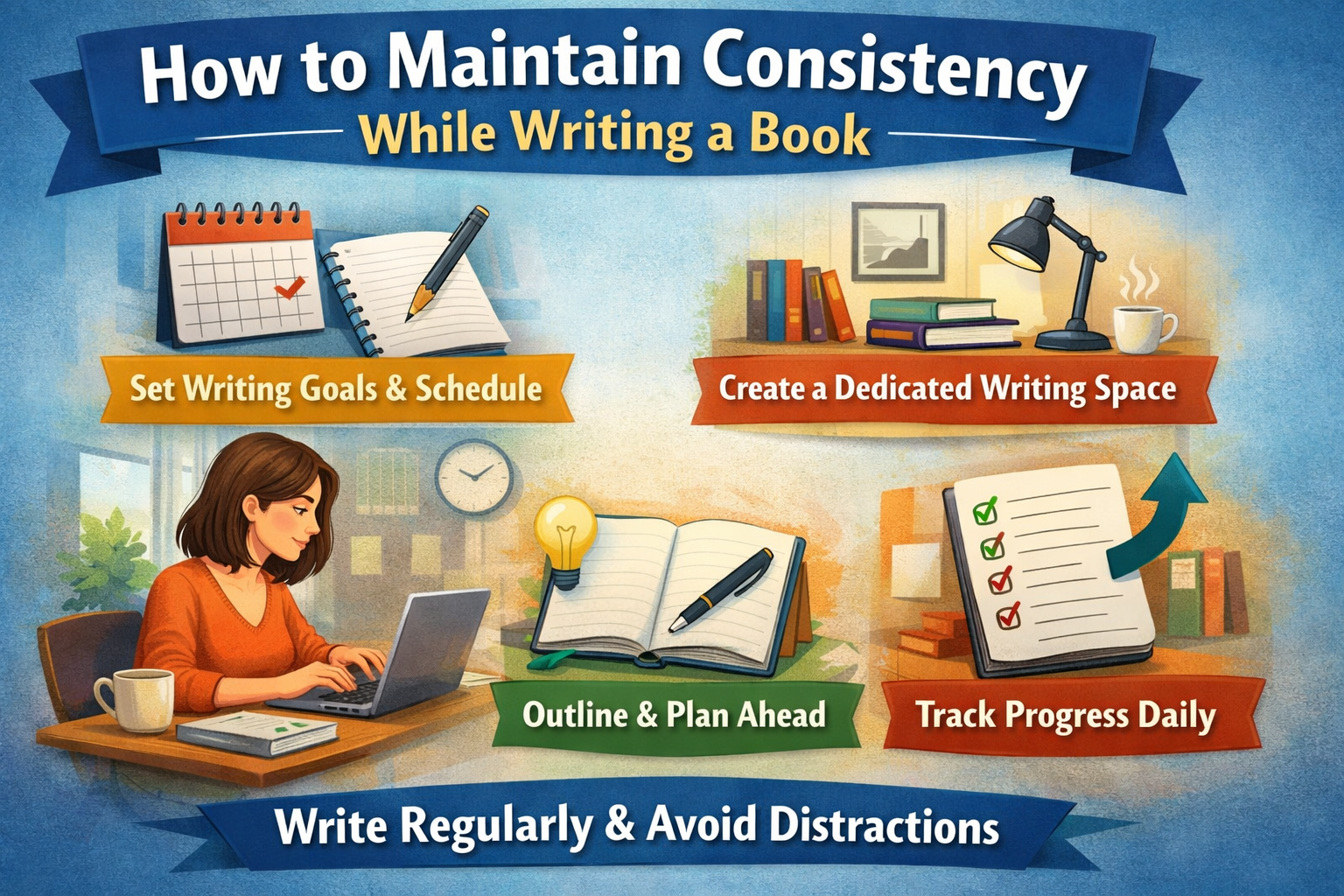
Set a Realistic Writing Schedule
Instead of waiting for inspiration:
-
Write 500–1,000 words daily
-
Block distraction-free time
-
Track your progress
Small daily progress leads to completed manuscripts.
Focus on Clarity Over Complexity
In 2026, readability wins.
Use:
-
Short sentences
-
Simple language
-
Clear transitions
-
Active voice
Avoid overcomplicated phrasing. Readers value clarity.
Hook the Reader Early
The first 10 pages determine whether readers continue.
Start with:
-
A dramatic moment
-
A powerful question
-
A bold statement
-
Immediate conflict
Never begin slowly.
Step 4: Edit Like a Professional
Writing is rewriting.
One of the most important writing tips for authors is to treat editing as a separate creative stage.
Self-Edit First
Look for:
-
Repetition
-
Weak verbs
-
Filler words
-
Long paragraphs
-
Inconsistent tone
Read your manuscript aloud. You’ll catch awkward phrasing quickly.
Hire Professional Editing
Consider:
-
Developmental editing
-
Line editing
-
Copyediting
-
Proofreading
Each level improves quality.
Books that skip editing rarely succeed long term.
Step 5: Design a Market-Ready Book Package
Readers judge books within seconds.
Invest in Professional Cover Design
Your cover must:
-
Match your genre
-
Use readable typography
-
Look strong as a thumbnail
-
Feel modern
A weak cover reduces credibility instantly.
Craft a Persuasive Book Description
A powerful description:
-
Identifies the reader
-
States the problem
-
Promises transformation
-
Includes emotional triggers
End with a strong call to action.
Step 6: Choose the Right Publishing Path
In 2026, authors have more options than ever.
Traditional Publishing
Pros:
-
Industry credibility
-
Distribution support
-
Advance payments
Cons:
-
Long timelines
-
Low royalty rates
-
Limited creative control
Self-Publishing
Pros:
-
Full ownership
-
Higher royalties
-
Faster launch
Cons:
-
Upfront costs
-
Marketing responsibility
Choose based on your goals, timeline, and budget.
Step 7: Build an Author Platform Before Launch
Publishing without marketing is like opening a store in the desert.
Create an Author Website
Your website should include:
-
About page
-
Book page
-
Email sign-up
-
Blog or resources
This is your long-term digital home.
Grow an Email List
Email marketing remains powerful in 2026.
Offer:
-
Free sample chapter
-
Bonus guide
-
Exclusive content
Your email list is your most valuable asset.
Use Social Media Strategically
Focus on 1–2 platforms only.
Share:
-
Writing journey
-
Behind-the-scenes content
-
Reader testimonials
-
Valuable insights
Consistency matters more than volume.
Step 8: Launch with a Clear Marketing Plan
A successful launch requires preparation.
Pre-Launch Phase
-
Build anticipation
-
Send advance reader copies
-
Collect early reviews
-
Tease cover reveal
Launch Week
-
Email your list
-
Run promotional pricing
-
Schedule interviews
-
Host live sessions
Post-Launch Momentum
-
Continue content marketing
-
Run paid ads
-
Pitch podcasts
-
Encourage reviews
Sustained marketing builds long-term sales.
Benefits of Following Proven Writing Tips for Authors
When you apply structured strategies, you gain:
-
Higher-quality manuscripts
-
Stronger reader engagement
-
Better reviews
-
Increased credibility
-
More sales opportunities
-
Long-term brand growth
Professional execution separates hobby writers from career authors.
Best Practices for 2026 Publishing Success
Here are modern strategies that work today:
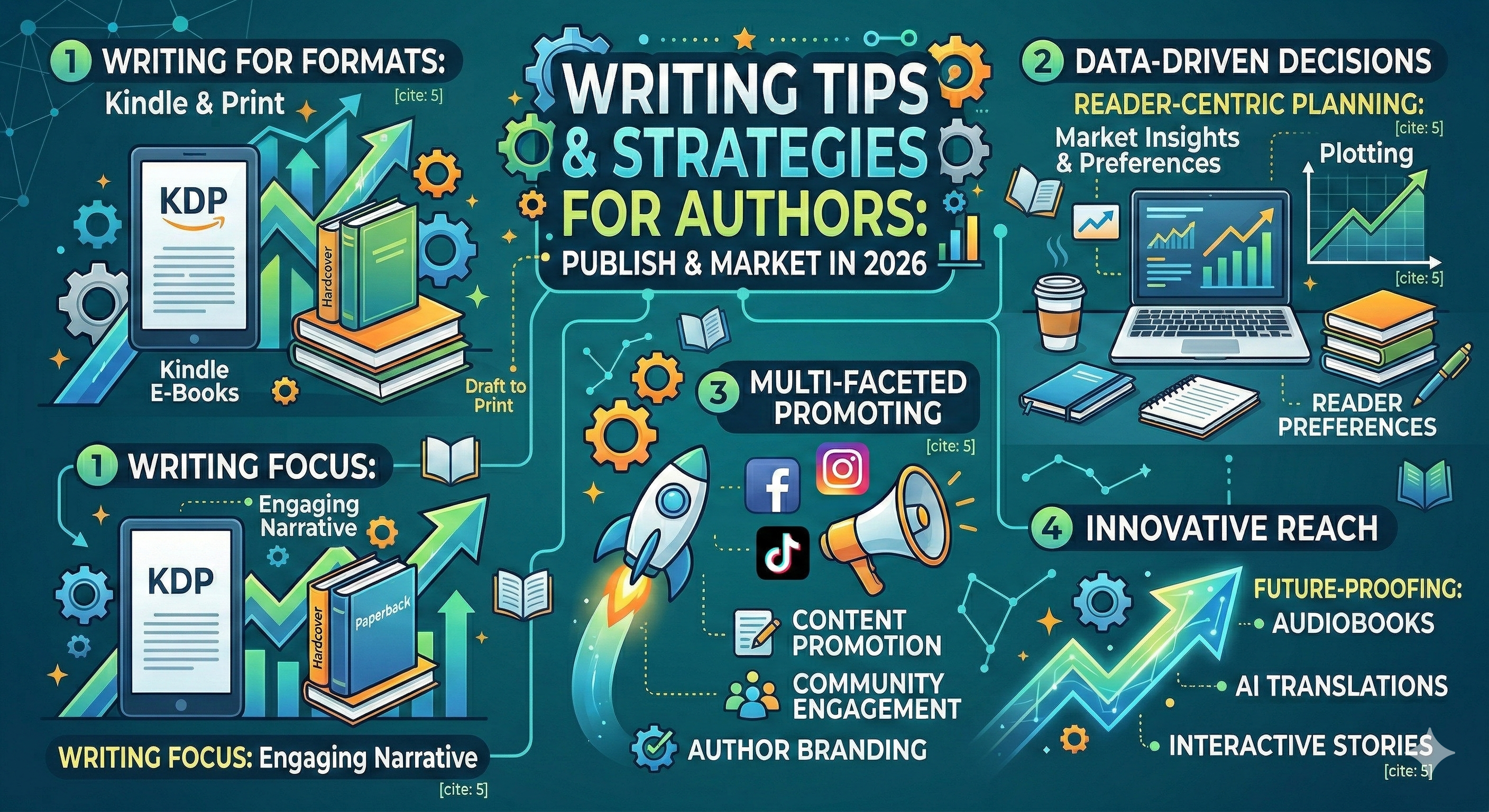
Embrace Data-Driven Decisions
Use:
-
Keyword research
-
Category optimization
-
Sales tracking
-
Audience feedback
Publishing is creative — but also strategic.
Think Series, Not Single Book
Series build:
-
Reader loyalty
-
Predictable revenue
-
Stronger branding
Even nonfiction can become a series.
Focus on Reader Experience
Deliver:
-
Clean formatting
-
Professional editing
-
Engaging storytelling
-
Clear structure
Happy readers become repeat buyers.
Common Mistakes Authors Must Avoid
Even talented writers make preventable errors.
Writing Without Market Research
Great writing without demand often struggles commercially.
Skipping Professional Editing
Typos and weak structure destroy credibility.
Ignoring Book Metadata
Your title, subtitle, keywords, and categories affect discoverability.
Launching Without Reviews
Social proof matters. Always secure early reviews.
Giving Up Too Soon
Most books gain traction slowly.
Publishing is a marathon, not a sprint.
Why Choose a Professional Publishing Service?
While some authors manage everything independently, professional guidance accelerates success.
A reputable publishing company can help with:
-
Manuscript evaluation
-
Professional editing
-
Custom cover design
-
Formatting for print and eBook
-
Distribution setup
-
Marketing strategy
This saves time and prevents costly mistakes.
Most importantly, professionals understand market trends, reader behavior, and retail algorithms in 2026.
If you’re serious about building an author career — not just publishing one book — expert support can make a significant difference.