Author Branding Guide 2026: Complete Strategy to Successfully Publish and Market Your Book
Introduction: Why Author Branding Matters More Than Ever
Publishing a book is no longer enough. Thousands of new titles are released every day, and most disappear without notice. The real challenge is not writing—it’s getting noticed.
This is where a strong author brand becomes essential.
An author brand is how readers recognize, trust, and remember you. It shapes your identity, builds credibility, and directly impacts book sales. Without it, even a great book struggles to gain traction.
This Author Branding Guide 2026 gives you a complete, practical strategy to build your brand, publish successfully, and market your book with confidence.
What Is Author Branding?
Author branding is the process of creating a consistent identity as a writer. It includes:
- Your writing style and voice
- Your genre and themes
- Your online presence
- Your personal story and values
In simple terms, it answers one question:
Why should readers choose you over others?
A strong brand helps readers instantly understand what you offer—and keeps them coming back for more.
Step-by-Step Author Branding Strategy for 2026
Step 1: Define Your Author Identity
Before marketing anything, you need clarity.
Ask yourself:
- What genre do I write in?
- Who is my target audience?
- What makes my writing unique?
Be specific. Instead of saying “fiction writer,” say:
- “Psychological thriller author”
- “Romance writer focusing on modern relationships”
This clarity helps you attract the right readers.
Step 2: Create a Strong Author Message
Your message should communicate:
- What you write
- Who it’s for
- Why it matters
Example:
“I write fast-paced thrillers for readers who love suspense and unexpected twists.”
Keep it simple and consistent across all platforms.
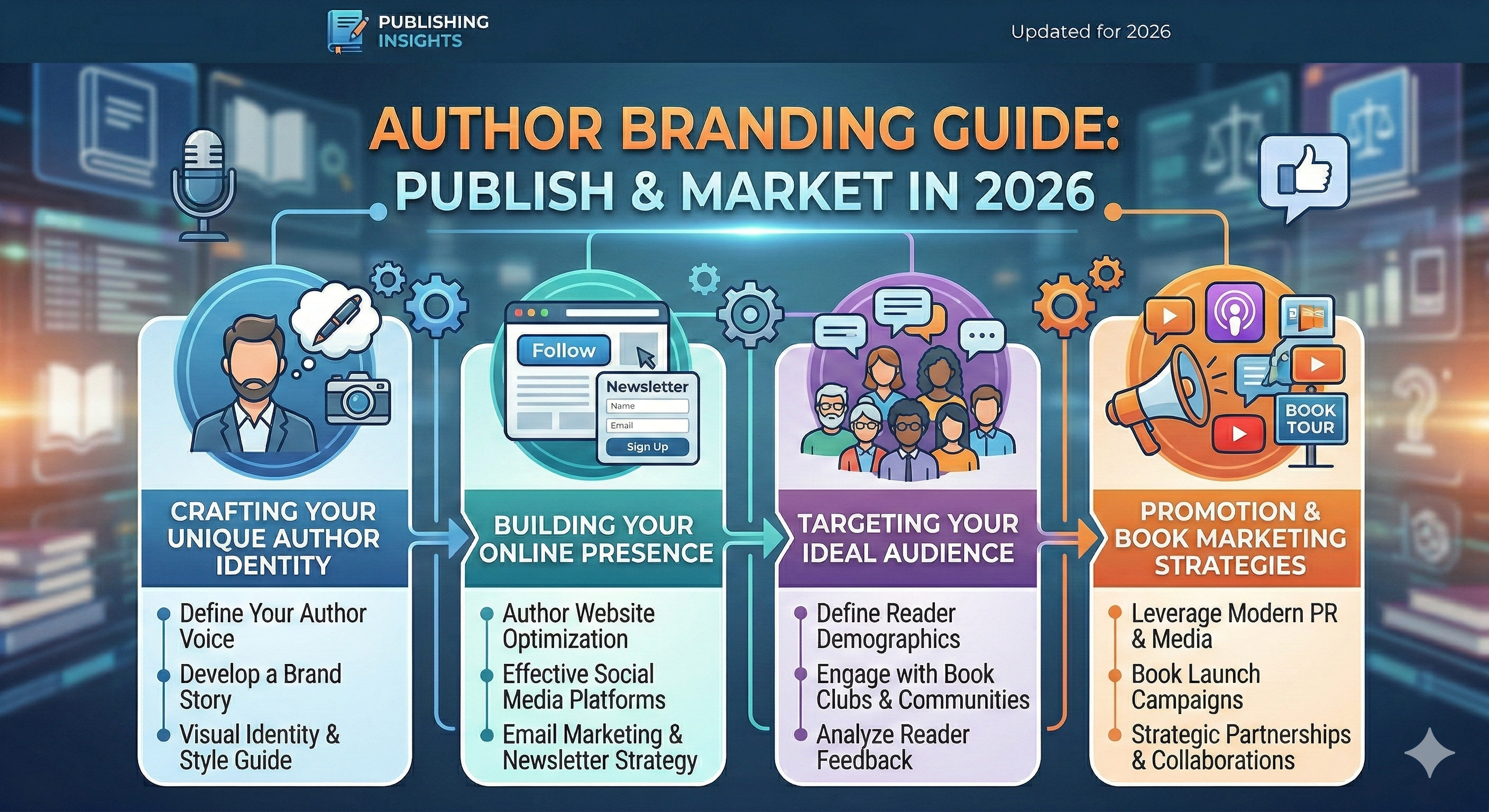
Step 3: Build a Professional Author Platform
Your platform is your digital home. It includes:
1. Author Website
Your website should have:
- About page
- Book listings
- Contact details
- Email signup form
2. Social Media Presence
Choose 1–2 platforms instead of being everywhere.
Best options:
- Instagram (visual storytelling)
- Twitter/X (quick updates, networking)
- LinkedIn (non-fiction authors)
3. Email List
This is your most valuable asset.
- Offer a free chapter or bonus
- Collect emails from day one
- Send regular updates
Step 4: Develop a Consistent Visual Brand
Visual consistency builds recognition.
Focus on:
- Author logo or name style
- Color scheme
- Book cover design style
Your website, social media, and book covers should feel connected.
Step 5: Publish Strategically
In 2026, publishing is not just about releasing a book—it’s about timing and positioning.
Key strategies:
- Build audience before launch
- Use pre-orders
- Plan a launch campaign
Choose your publishing route:
Self-Publishing
- Full control
- Faster release
- Higher royalties
Traditional Publishing
- Professional support
- Wider distribution
- Lower control
Both work—but your branding must stay consistent.
Step 6: Market Your Book Effectively
Marketing should start before publishing.
Pre-Launch Marketing
- Share writing progress
- Reveal cover designs
- Build anticipation
Launch Phase
- Announce across platforms
- Run promotions
- Use email campaigns
Post-Launch
- Collect reviews
- Run ads
- Continue content creation
Consistency matters more than intensity.
Benefits of Strong Author Branding
A well-built author brand offers long-term advantages:
1. Higher Book Sales
Readers trust familiar names. A strong brand increases conversions.
2. Loyal Audience
Instead of one-time buyers, you build repeat readers.
3. Easier Marketing
Your audience already knows what to expect.
4. Better Opportunities
Brands, publishers, and media prefer authors with a clear identity.
Best Practices for Author Branding in 2026
Follow these proven practices:
- Stay consistent across all platforms
- Focus on one niche instead of many
- Engage with your audience regularly
- Share value, not just promotions
- Invest in professional design and editing
Also, track what works:
- Which posts get engagement
- Which campaigns drive sales
- What readers respond to
Adjust your strategy based on data.
Common Author Branding Mistakes to Avoid
Avoid these common errors:
1. Lack of Consistency
Changing tone, style, or genre confuses readers.
2. Trying to Target Everyone
If you target everyone, you connect with no one.
3. Ignoring Marketing
Even great books fail without promotion.
4. Weak Online Presence
No website or inactive profiles reduce credibility.
5. Poor Visual Branding
Low-quality covers or design hurt your image instantly.
Why You Should Choose a Professional Publishing Service
Building a strong author brand takes time and expertise.
A professional publishing company can help with:
1. Brand Strategy
They define your positioning and audience.
2. High-Quality Book Production
- Editing
- Cover design
- Formatting
3. Marketing Support
- Launch campaigns
- Social media strategy
- Email marketing
4. Distribution and Visibility
They ensure your book reaches the right platforms and readers.
Instead of learning everything from scratch, you get a structured, proven approach.
Advanced Author Branding Strategies for 2026
To stay ahead, consider these advanced tactics:
Personal Storytelling
Readers connect with people, not just books.
Share:
- Your journey
- Challenges
- Behind-the-scenes content
Content Marketing
Create valuable content regularly:
- Writing tips
- Insights from your genre
- Short stories or excerpts
This builds authority and attracts organic traffic.
Collaboration and Networking
Work with:
- Other authors
- Influencers
- Book reviewers
Cross-promotion expands your reach.
Use Data to Improve
Track metrics like:
- Website traffic
- Email open rates
- Social engagement
Data-driven decisions lead to better results.