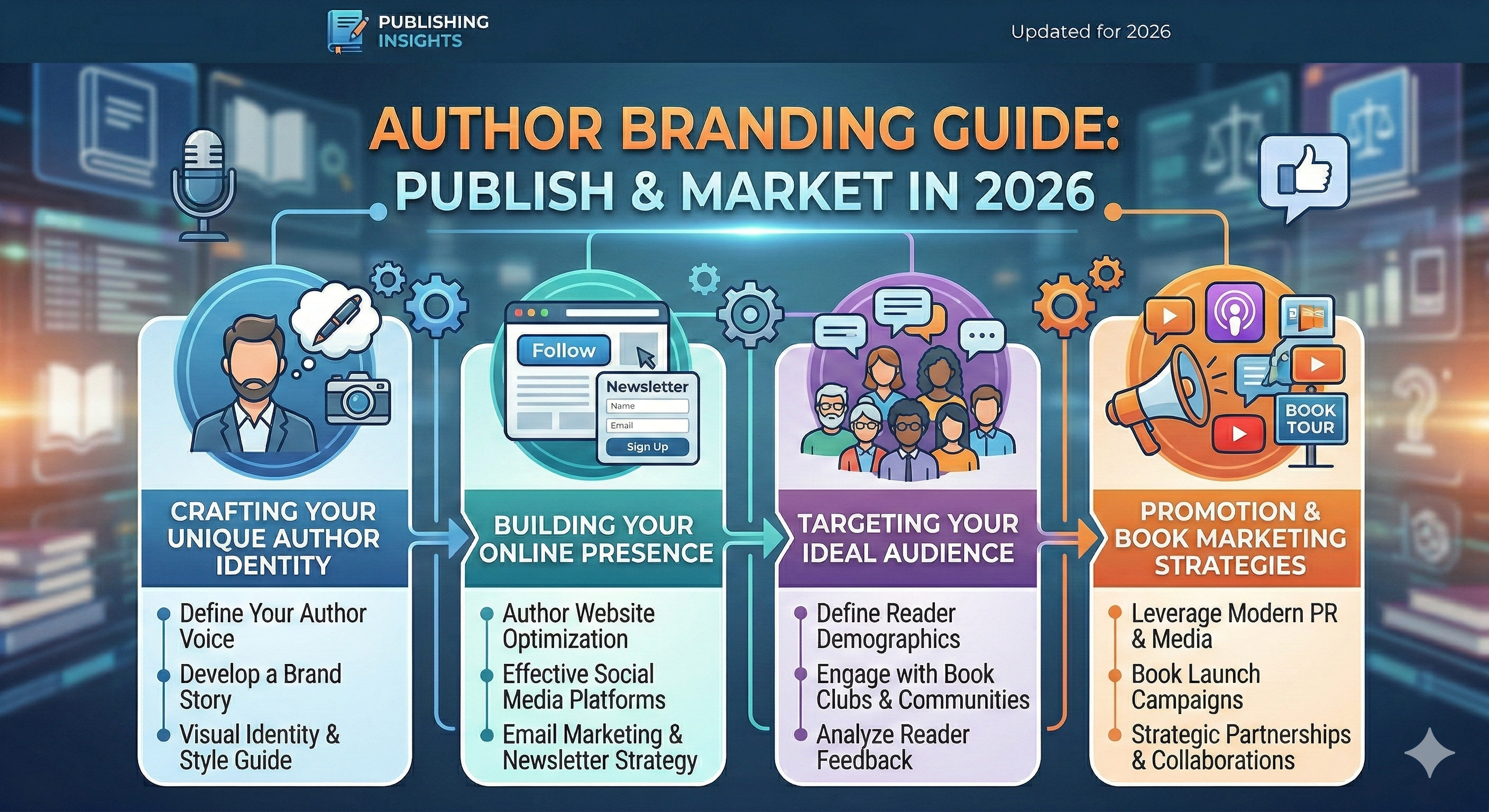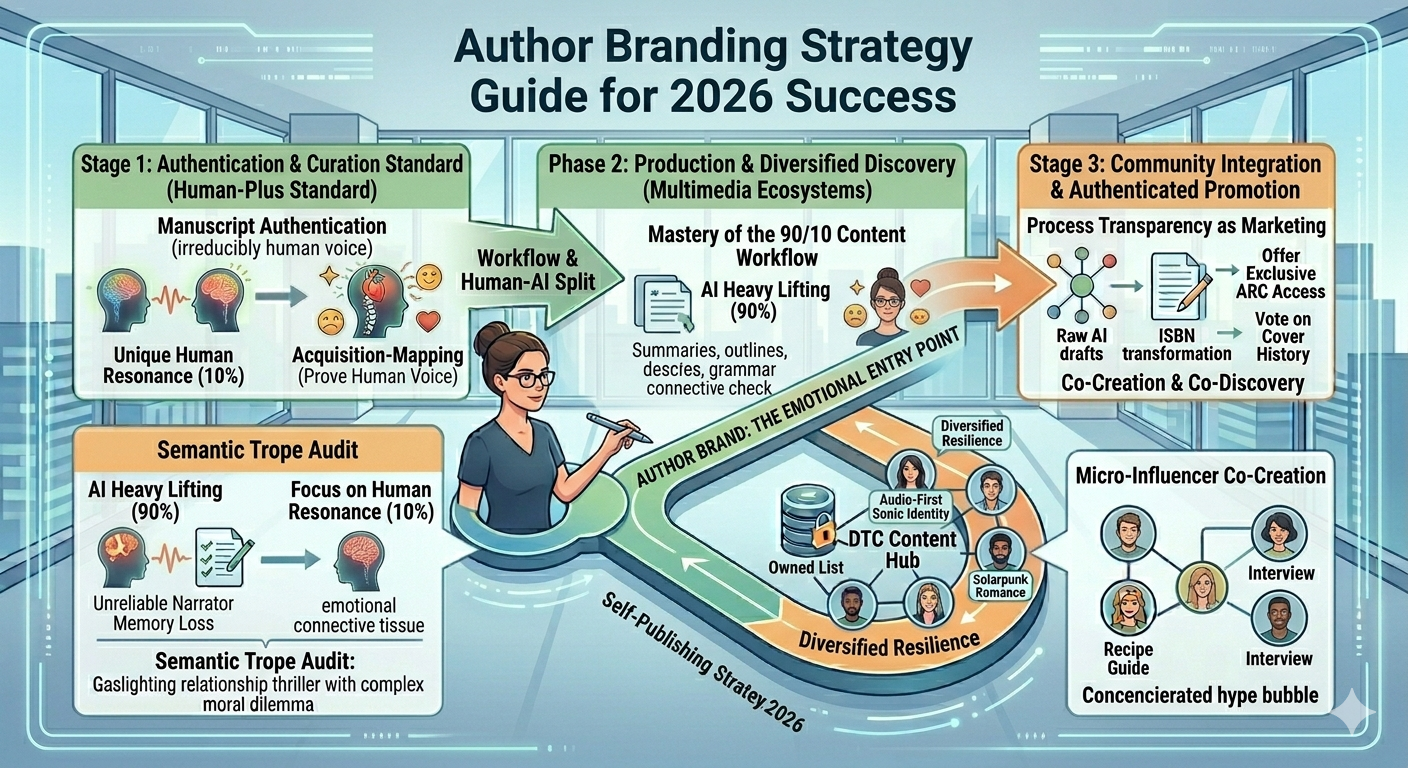
Author Branding Strategy Guide for 2026 Success
Introduction: Why Author Branding Matters More Than Ever
Publishing a book is no longer enough. Thousands of books are released every day, making it harder for new authors to stand out. Even great writing can go unnoticed without the right visibility.
This is where a strong author branding strategy 2026 becomes essential.
Author branding is how readers recognize, trust, and remember you. It shapes your identity, builds your audience, and directly impacts your book sales. In 2026, readers don’t just follow books—they follow authors.
This guide gives you a complete, step-by-step strategy to build a powerful author brand, publish successfully, and market your book with confidence.
What Is Author Branding?
Author branding is the way you present yourself as a writer to your audience. It includes:
- Your voice and writing style
- Your niche or genre
- Your visual identity (website, covers, social media)
- Your message and values
Simply put, it’s what people think of when they hear your name.
A clear brand helps readers instantly understand:
- What you write
- Why they should care
- What makes you different
Step-by-Step Author Branding Strategy 2026
Step 1: Define Your Author Identity
Before building anything, you need clarity.
Ask yourself:
- What genre do I write?
- Who is my ideal reader?
- What themes do I focus on?
- What is my long-term goal?
Create a simple author statement:
“I help [audience] experience [benefit] through [type of writing].”
Example:
“I help young professionals improve productivity through practical self-help books.”
This becomes the foundation of your author branding strategy 2026.
Step 2: Choose Your Niche and Positioning
Trying to appeal to everyone is a mistake.
Instead, focus on a clear niche:
- Fiction: thriller, romance, fantasy, etc.
- Non-fiction: self-help, finance, health, etc.
Then define your positioning:
- Are you educational?
- Inspirational?
- Entertaining?
Strong positioning helps readers remember you.
Step 3: Create a Consistent Author Voice
Your voice should feel the same across:
- Books
- Social media
- Emails
- Website
Decide:
- Formal or casual?
- Serious or humorous?
- Simple or detailed?
Consistency builds trust and recognition.
Step 4: Build a Professional Author Website
Your website is your online home.
It should include:
- Author bio
- Book listings
- Blog or articles
- Contact page
- Email signup form
Keep it:
- Clean
- Mobile-friendly
- Easy to navigate
This is where readers, publishers, and media will find you.
Step 5: Develop a Strong Visual Brand
Visual identity matters more than most authors think.
Focus on:
- Professional author photo
- Consistent color scheme
- Typography style
- Book cover design
Make sure everything looks connected. This creates a memorable brand image.
Step 6: Grow Your Author Platform
Your platform is where your audience lives.
Focus on:
- Social media (choose 1–2 platforms)
- Email list
- Blogging or content creation
Don’t try to be everywhere. Instead:
- Be consistent
- Provide value
- Engage with readers
In 2026, an email list is still one of the most powerful assets.
Step 7: Create Valuable Content
Content builds trust and authority.
Examples:
- Writing tips
- Behind-the-scenes content
- Story insights
- Educational posts
Use formats like:
- Short posts
- Videos
- Newsletters
Good content keeps your audience engaged between book launches.
Step 8: Build Relationships with Readers
Readers want connection, not just content.
Engage by:
- Replying to comments
- Asking questions
- Hosting Q&A sessions
- Offering exclusive updates
Loyal readers become your best promoters.
Step 9: Align Branding with Book Marketing
Your branding should support your marketing.
Make sure:
- Your book covers match your brand
- Your messaging is consistent
- Your promotions reflect your voice
This creates a seamless experience for readers.
Step 10: Monitor and Improve Your Brand
Branding is not one-time work.
Track:
- Audience growth
- Engagement rates
- Book sales
- Feedback
Then improve based on what works.
Benefits of a Strong Author Branding Strategy 2026
A well-built brand gives you long-term advantages:
1. Better Visibility
Readers recognize and remember your name.
2. Higher Book Sales
Trust leads to more purchases.
3. Loyal Audience
People follow you, not just your books.
4. Easier Marketing
Promotions become more effective.
5. More Opportunities
Publishers, collaborations, and media reach out to strong brands.
Best Practices for Author Branding
To succeed in 2026, follow these proven practices:
- Stay consistent across all platforms
- Focus on value, not self-promotion
- Build an email list early
- Invest in professional design
- Be authentic and transparent
- Keep learning and adapting
Consistency is more important than perfection.
Common Mistakes to Avoid
Many authors fail because of avoidable errors.
1. No Clear Identity
Without direction, your brand feels confusing.
2. Inconsistent Messaging
Changing tone and style weakens trust.
3. Ignoring Visual Branding
Poor design reduces credibility.
4. Trying Every Platform
Spreading too thin leads to burnout.
5. No Audience Engagement
Ignoring readers kills long-term growth.
6. Short-Term Focus
Branding is a long-term investment.
Avoiding these mistakes can save years of effort.
Why Choose a Professional Publishing Company?
Building an author brand alone can be overwhelming.
A professional publishing company helps you:
Strategic Planning
- Define your brand clearly
- Create a long-term roadmap
Design and Development
- Professional website
- High-quality book covers
- Branding assets
Marketing Support
- Campaign planning
- Audience targeting
- Content strategy
Industry Expertise
- Proven methods
- Market insights
- Faster growth
Working with experts ensures your author branding strategy 2026 is effective and results-driven.