Printing & Distribution Guide 68: Complete Strategy to Successfully Publish and Market Your Book in 2026
Introduction
Many authors finish writing a book but struggle with the next stage: printing and distribution. Without a clear plan, books may be overpriced, poorly printed, or unavailable where readers shop. This leads to low sales and wasted effort.
The solution is a structured book printing and distribution strategy. When done correctly, your book reaches the right audience, looks professional, and sells across multiple channels. This guide explains every step in simple terms so you can print smarter, distribute wider, and maximize results in 2026.
Understanding Book Printing and Distribution
Printing and distribution are the backbone of publishing. Printing produces physical copies, while distribution ensures those copies reach readers through bookstores, online platforms, and libraries.
Both must work together. A beautifully printed book without distribution will not sell. Likewise, wide distribution cannot fix poor print quality.
Key Components
-
Print method selection
-
Format decisions
-
Cost management
-
Distribution channels
-
Logistics and fulfillment
Mastering these elements gives your book a professional edge.
Step-by-Step Book Printing and Distribution Strategy
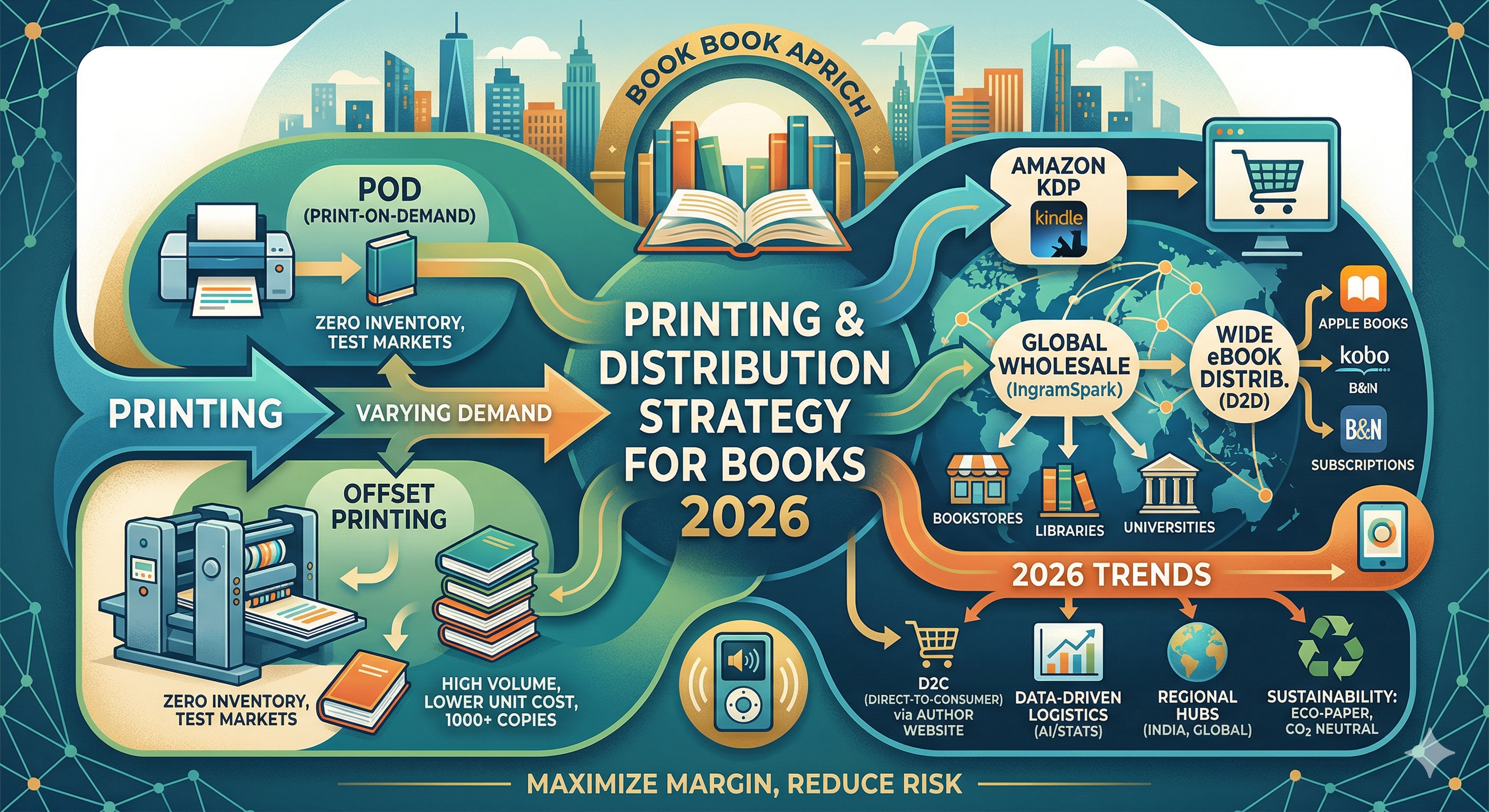
Step 1: Choose the Right Printing Method
Your first decision is how your book will be printed. There are three main options.
Print-on-Demand (POD)
Best for new authors and small print runs.
Benefits:
-
No upfront inventory cost
-
Books printed only after purchase
-
Lower risk
Limitations:
-
Higher per-copy cost
-
Limited customization
Offset Printing
Best for large print runs.
Benefits:
-
Lower cost per unit
-
High-quality results
-
Ideal for bulk distribution
Limitations:
-
Requires upfront investment
-
Needs storage space
Hybrid Printing
Combines POD and offset. You print some copies in bulk and use POD for ongoing orders.
Best for authors who expect steady demand.
Step 2: Select Book Format and Specifications
Printing decisions affect reader experience and cost.
Important choices:
-
Trim size
-
Paper type
-
Cover finish
-
Binding style
-
Color vs black-and-white interior
Popular formats in 2026:
-
Trade paperback for general books
-
Hardcover for premium editions
-
Compact sizes for niche genres
Always match format to genre. For example, workbooks need thicker paper, while novels work well in standard paperback.
Step 3: Calculate Printing Costs
Cost planning prevents financial surprises.
Factors influencing cost:
-
Page count
-
Paper quality
-
Color printing
-
Quantity ordered
-
Shipping
Cost-saving tips:
-
Keep interior black-and-white if possible
-
Avoid unnecessary page count increases
-
Print larger quantities only if demand is proven
Create a budget spreadsheet before printing.
Step 4: Obtain ISBN and Barcode
Every book sold commercially requires an ISBN. This number identifies your book globally.
Why it matters:
-
Required for bookstores and libraries
-
Enables tracking and sales reporting
-
Makes your book discoverable in databases
A barcode is also necessary for retail sales. Many publishers generate it automatically once the ISBN is assigned.
Step 5: Choose Distribution Channels
Distribution determines where readers can buy your book. Strong distribution equals higher visibility and sales.
Online Retail Distribution
Essential for modern publishing.
Common platforms include:
-
Online bookstores
-
Global e-commerce marketplaces
-
Publisher websites
Advantages:
-
Worldwide reach
-
Automated fulfillment
-
Lower overhead
Bookstore Distribution
Physical stores still matter, especially for:
-
Local authors
-
Children’s books
-
Educational titles
To enter bookstores:
-
Ensure professional printing quality
-
Offer wholesale discounts
-
Allow returns
Library Distribution
Libraries increase credibility and exposure.
Benefits:
-
Long-term readership
-
Author recognition
-
Educational reach
Many distributors specialize in library placement.
Step 6: Set Retail Pricing Strategically
Pricing affects both profit and sales volume.
Consider:
-
Printing cost
-
Distribution fees
-
Market competition
-
Target audience budget
Simple pricing formula:
Printing cost + distribution cut + profit margin = retail price
Avoid setting price too high or too low. Compare similar books in your genre.
Step 7: Plan Inventory and Logistics
If using bulk printing, you must manage storage and shipping.
Key logistics tasks:
-
Warehouse selection
-
Order fulfillment process
-
Shipping provider setup
-
Returns handling
Authors who skip planning often face delays and extra costs.
Step 8: Monitor Sales and Adjust
Publishing is not a one-time task. Track performance and optimize.
Metrics to monitor:
-
Sales by channel
-
Return rates
-
Profit margins
-
Regional demand
Use data to decide when to reprint or change distribution strategy.
Benefits of a Strong Printing and Distribution Strategy
A professional system gives your book a competitive advantage.
1. Higher Credibility
Quality printing signals professionalism. Readers trust books that look polished.
2. Wider Reach
Multiple distribution channels ensure readers can find your book anywhere.
3. Better Profit Margins
Smart printing decisions reduce cost per copy.
4. Long-Term Sales
Efficient distribution keeps your book available for years.
5. Brand Growth
Consistent quality builds your reputation as an author.
Best Practices for Book Printing and Distribution in 2026
Publishing trends evolve every year. These best practices keep you ahead.
-
Use print-on-demand for global reach
-
Offer both paperback and ebook formats
-
Print small batches first to test demand
-
Optimize book metadata for discoverability
-
Keep cover and layout professional
Also, always order a physical proof copy before final printing. This step catches formatting errors early.
Common Mistakes to Avoid
Many authors lose money because of preventable mistakes.
Overprinting Too Early
Printing thousands of copies before testing demand can lead to unsold inventory.
Ignoring Distribution Terms
Some platforms require discounts or return policies. Not understanding these terms can reduce profits.
Choosing Cheap Printing
Low-cost printers may produce poor results, hurting reviews and credibility.
Poor Pricing Strategy
Setting unrealistic prices discourages buyers and retailers.
Skipping ISBN Registration
Without it, your book cannot enter professional distribution networks.
Why Professional Publishing Services Help
Handling printing and distribution alone is possible, but complex. Professional publishing services simplify the process.
Advantages of working with experts:
-
Access to established distribution networks
-
Competitive printing rates
-
Technical formatting support
-
Logistics management
-
Industry guidance
Professionals also help avoid costly mistakes that beginners often make.
For serious authors, outsourcing these tasks saves time and improves results.
Advanced Distribution Strategies for 2026
To stay competitive, authors should go beyond basic distribution.
Global Print Networks
Modern printing networks allow books to be printed locally in different countries. This reduces shipping costs and delivery time.
Direct-to-Reader Sales
Selling through your own website gives higher profit margins and customer data access.
Subscription and Bulk Sales
Authors can partner with:
-
Schools
-
Corporations
-
Book clubs
Bulk deals increase revenue quickly.
Checklist Before You Print Your Book
Use this quick checklist to ensure readiness:
-
Manuscript fully edited
-
Layout formatted correctly
-
Cover design finalized
-
ISBN assigned
-
Price determined
-
Distribution channels selected
-
Proof copy reviewed
Printing without completing this list increases risk.
Printing vs Distribution: Understanding the Difference
Many new authors confuse these two.
Printing is production.
Distribution is delivery.
You need both.
Think of printing as manufacturing a product and distribution as placing that product in stores.
Cost Comparison Example
Here is a simplified comparison for a 250-page paperback:
| Method | Cost per Copy | Upfront Cost | Risk Level |
|---|---|---|---|
| POD | High | Low | Low |
| Offset | Low | High | High |
| Hybrid | Medium | Medium | Medium |
This comparison helps you choose based on budget and demand.
Future Trends in Book Printing and Distribution
The publishing industry is changing rapidly. In 2026, these trends dominate:
-
Eco-friendly printing materials
-
Regional printing hubs
-
Faster delivery expectations
-
Data-driven distribution decisions
-
Personalized book editions
Authors who adapt early gain a competitive advantage.