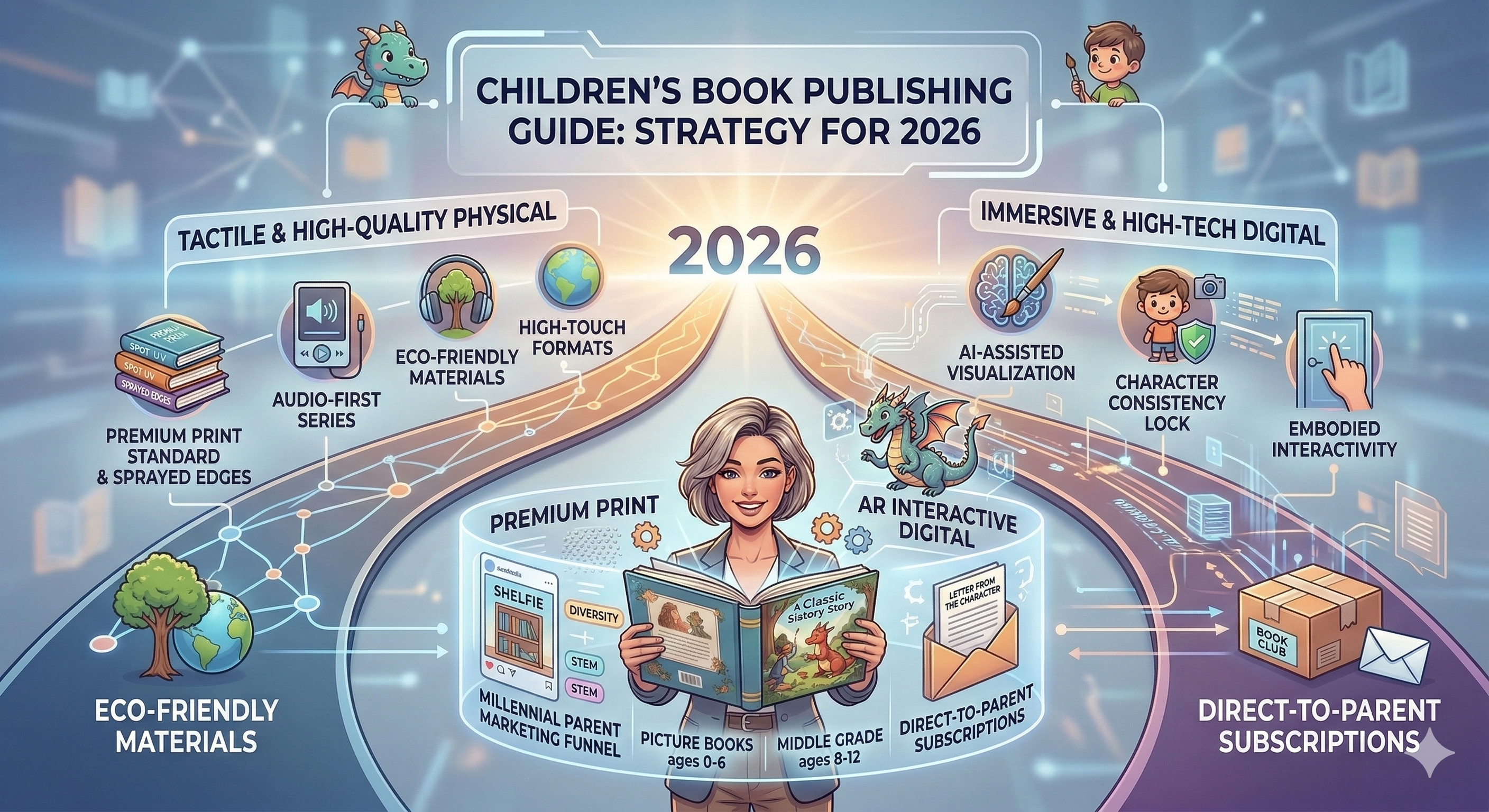
Children’s Book Publishing Guide: Strategy for 2026
Introduction
Children’s books remain one of the most exciting and rewarding areas of publishing. Parents, teachers, and schools constantly search for new stories that educate, inspire, and entertain young readers.
However, many aspiring authors struggle with children’s book publishing. Writing for kids is very different from writing for adults. Authors must understand age groups, storytelling styles, illustrations, and marketing strategies.
Another challenge is the publishing process itself. Many writers don’t know how to move from a manuscript to a finished book that reaches bookstores, schools, and online platforms.
The good news is that children’s book publishing in 2026 offers more opportunities than ever. With digital platforms, print-on-demand services, and global distribution channels, authors can publish and promote their books effectively.
This guide explains the complete strategy to successfully publish and market a children’s book in 2026. From planning your story to reaching young readers, you will learn the essential steps for building a successful children’s book.
Understanding the Children’s Book Market
Before starting the publishing process, it is important to understand the different categories within children’s books. Each category targets a specific age group and requires a different approach.
Major Age Categories
1. Picture Books (Ages 3–7)
Picture books are usually 500–800 words and rely heavily on illustrations.
Key characteristics include:
-
Simple vocabulary
-
Strong visual storytelling
-
Short sentences
-
Clear themes or lessons
Illustrations are just as important as the text. In many cases, they carry the story.
2. Early Readers (Ages 5–8)
These books help children transition from picture books to independent reading.
Common features include:
-
Short chapters
-
Basic vocabulary
-
Repetition of words
-
Supporting illustrations
3. Chapter Books (Ages 7–10)
Chapter books are longer and include more detailed stories.
Typical features include:
-
4,000–15,000 words
-
Several chapters
-
Character-driven storytelling
-
Light illustrations
4. Middle Grade Books (Ages 8–12)
These books focus on more complex themes and longer narratives.
Characteristics include:
-
20,000–50,000 words
-
Deeper character development
-
Adventure, fantasy, or school-life stories
Understanding your target age group is essential in children’s book publishing because it determines writing style, illustrations, formatting, and marketing strategy.
Step-by-Step Children’s Book Publishing Process
Publishing a children’s book involves several stages. Following a structured process helps ensure quality and market success.
Step 1: Develop a Strong Story Idea
Every successful children’s book begins with a powerful concept.
A strong story should:
-
Capture a child’s imagination
-
Be easy to understand
-
Include emotional or educational value
-
Have a memorable character
Popular children’s book themes include:
-
Friendship
-
Adventure
-
Kindness
-
Curiosity
-
Problem-solving
In children’s book publishing, simple stories often work best because young readers respond to clear and engaging narratives.
Step 2: Write for the Target Age Group
Children process language differently from adults.
Writers must adjust their style depending on the reader’s age.
Best practices include:
-
Use short sentences
-
Avoid complex vocabulary
-
Focus on action and dialogue
-
Keep paragraphs short
Children also enjoy repetition and rhythm in storytelling.
Reading your manuscript aloud can help ensure it flows naturally.
Step 3: Professional Editing
Editing is a critical stage in children’s book publishing.
Even simple stories require careful editing to ensure clarity and readability.
Types of editing include:
Developmental Editing
Improves story structure, pacing, and character development.
Copy Editing
Corrects grammar, spelling, and sentence structure.
Proofreading
Ensures the final manuscript is error-free before publishing.
A professionally edited book creates a better reading experience and improves credibility.
Step 4: Illustration and Visual Design
Illustrations play a major role in children’s book publishing, especially for picture books.
Professional illustrations help:
-
Bring characters to life
-
Improve storytelling
-
Capture children's attention
-
Enhance emotional connection
Illustrators typically create:
-
Character designs
-
Page spreads
-
Cover artwork
-
Scene illustrations
Consistency in style and color is important for maintaining visual appeal throughout the book.
Step 5: Book Formatting and Layout
Children’s books require specialized formatting.
Important layout elements include:
-
Balanced text placement
-
Image positioning
-
Proper page spacing
-
Readable font size
Picture books often use large fonts and clear spacing so children can follow the story easily.
Professional formatting ensures the book looks polished and meets publishing standards.
Step 6: Choosing a Publishing Method
Authors today have multiple options for children’s book publishing.
Traditional Publishing
In this model, authors submit manuscripts to publishing houses.
Advantages include:
-
Professional editing
-
Established distribution networks
-
Marketing support
However, traditional publishing can be competitive and time-consuming.
Self-Publishing
Self-publishing gives authors full control over their work.
Benefits include:
-
Faster publishing timeline
-
Creative freedom
-
Higher royalty percentages
-
Global distribution
Many authors choose self-publishing because it allows them to bring their books to market quickly.
Step 7: Book Printing and Distribution
After production is complete, the book must be printed and distributed.
Key distribution channels include:
-
Online bookstores
-
Educational institutions
-
Libraries
-
Retail bookstores
Print-on-demand services allow authors to print books only when orders are placed. This reduces inventory costs and financial risk.
Digital publishing is also growing rapidly, allowing children’s books to reach global readers instantly.
Marketing Strategies for Children’s Books
Publishing a book is only the first step. Marketing is essential for reaching readers.
Effective children’s book publishing requires a strong promotion plan.
Build an Author Brand
Parents and educators often follow trusted authors.
Building an author brand involves:
-
Creating an author website
-
Sharing behind-the-scenes content
-
Engaging with readers online
-
Participating in book events
Consistency helps build long-term recognition.
Use Social Media Platforms
Social media can be a powerful tool for promoting children’s books.
Popular platforms include:
-
Instagram
-
Facebook
-
YouTube
-
Pinterest
Authors often share:
-
Character artwork
-
Story previews
-
Reading sessions
-
Educational content
These platforms help authors connect with parents, teachers, and young readers.
School and Library Outreach
Schools and libraries are important channels for children’s book promotion.
Authors can:
-
Conduct reading sessions
-
Host storytelling events
-
Offer educational workshops
-
Participate in literacy programs
This approach builds trust and encourages word-of-mouth recommendations.
Book Launch Campaign
A well-planned launch increases visibility.
Common launch strategies include:
-
Pre-order campaigns
-
Social media announcements
-
Virtual book readings
-
Giveaway promotions
Early momentum can significantly improve book sales.
Benefits of Professional Children’s Book Publishing
Working with a professional publishing service offers many advantages.
High-Quality Production
Professional publishers ensure:
-
Expert editing
-
Attractive illustrations
-
Professional layout design
-
High-quality printing
These elements make the book competitive in the market.
Global Distribution
Publishing companies often provide access to major distribution networks.
This helps books reach:
-
International bookstores
-
Online retailers
-
Educational institutions
Global distribution increases the chances of long-term success.
Marketing Support
Many professional publishers provide marketing assistance, including:
-
Book launch strategies
-
Promotional materials
-
Author branding guidance
-
Media exposure
Marketing expertise helps authors reach a wider audience.
Time Efficiency
Publishing a book involves multiple technical steps.
Professional services handle:
-
ISBN registration
-
Formatting
-
Printing coordination
-
Distribution setup
This allows authors to focus on writing and creativity.
Common Mistakes to Avoid
Many new authors make avoidable mistakes during children’s book publishing.
Understanding these challenges can help improve success rates.
Writing Without a Target Age Group
A story that does not clearly target a specific age group can confuse readers and publishers.
Always define the age range before writing.
Overcomplicated Language
Children’s books must be simple and clear.
Avoid:
-
Long sentences
-
Difficult vocabulary
-
Complex explanations
Simple storytelling keeps young readers engaged.
Ignoring Illustration Quality
Poor illustrations can weaken even a great story.
Professional artwork is essential for creating an engaging children’s book.
Skipping Professional Editing
Unedited manuscripts often contain grammar errors and weak storytelling.
Professional editing ensures quality and readability.
Lack of Marketing Strategy
Many authors assume publishing a book automatically leads to sales.
In reality, marketing is essential in children’s book publishing.
Authors should plan promotion activities well before the book launch.
Best Practices for Children’s Book Success
Following proven strategies can increase the chances of success.
Key best practices include:
-
Study popular children’s books
-
Focus on strong characters
-
Keep stories engaging and simple
-
Invest in professional illustrations
-
Build an author platform early
Consistency and persistence are also important.
Successful authors often write multiple books and develop a recognizable style.
Why Choose a Professional Publishing Company
Publishing companies provide the expertise needed to transform a manuscript into a market-ready book.
Professional services typically include:
-
Manuscript evaluation
-
Editing and proofreading
-
Illustration and cover design
-
Book formatting
-
ISBN and copyright assistance
-
Global distribution
-
Marketing guidance
This comprehensive support helps authors navigate the complex publishing process.
For first-time authors, professional guidance can make a significant difference in both quality and visibility.