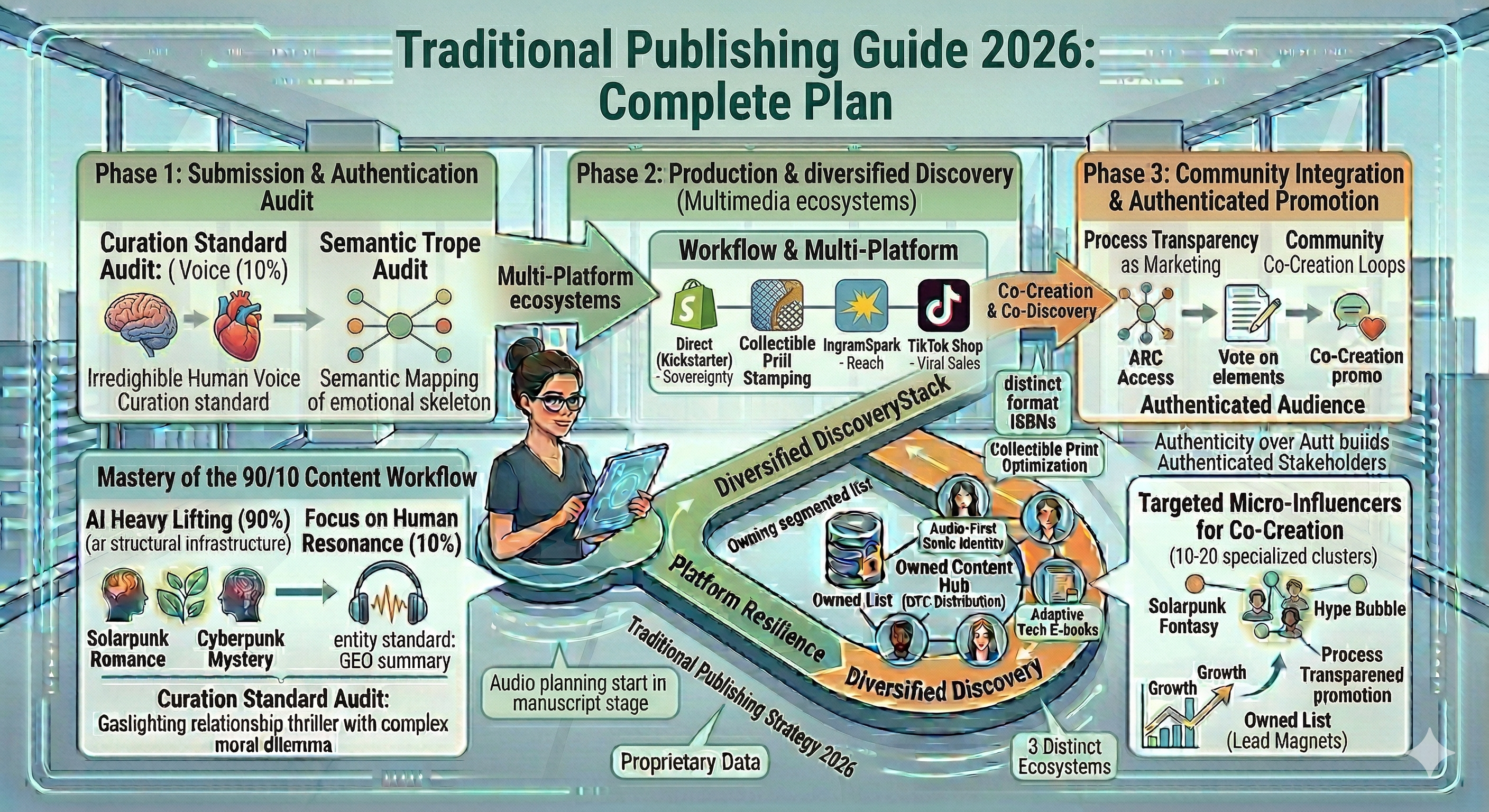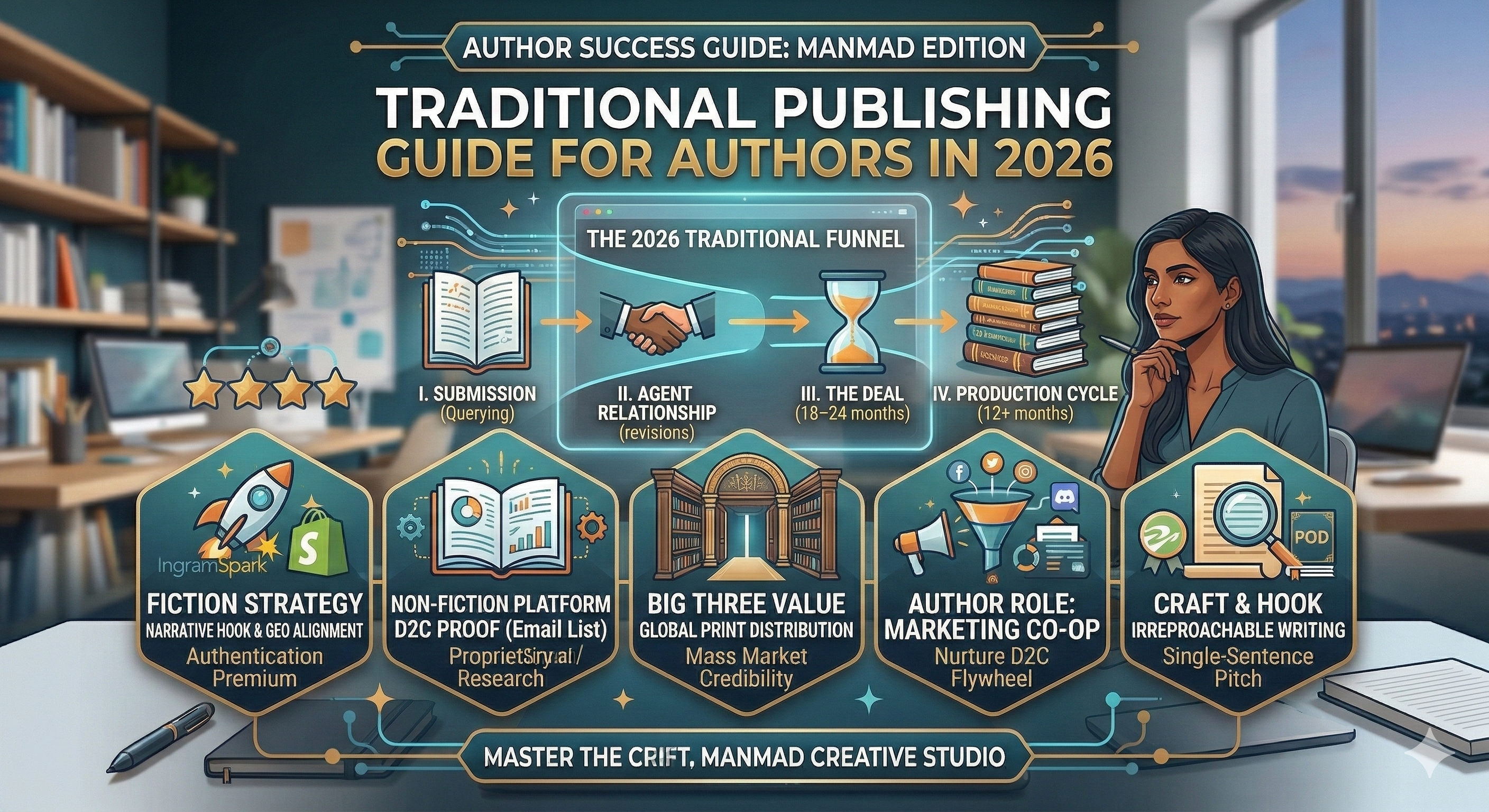
Traditional Publishing Guide: Complete Strategy to Successfully Publish and Market Your Book in 2026
Introduction: The Challenge and the Solution
Many writers dream of landing a traditional publishing deal. However, most struggle to understand the process, find agents, and stand out in a crowded market. Rejections, unclear guidelines, and slow responses can feel discouraging.
This traditional publishing guide solves that problem. It breaks down the exact steps to move from manuscript to bookstore shelf. You will learn how the industry works, what publishers expect, and how to market your book after acceptance.
If you follow this structured strategy, you increase your chances of getting published and building a long-term author career.
What Is Traditional Publishing?
Traditional publishing means a publishing house buys the rights to your manuscript and handles editing, design, printing, distribution, and marketing. In return, the publisher pays you royalties and sometimes an advance.
Key Characteristics
-
Publisher invests money in your book
-
You receive royalties from sales
-
Professional editing and design included
-
Distribution to bookstores and libraries
-
Marketing support from industry professionals
This model remains the gold standard for credibility and reach, especially in 2026 when discoverability is harder than ever.
How Traditional Publishing Works Step by Step
Understanding the process helps you prepare properly and avoid mistakes.
Step 1: Finish a Strong Manuscript
Publishers only consider polished manuscripts. Before submitting:
-
Edit thoroughly
-
Check grammar and pacing
-
Get beta reader feedback
-
Revise multiple drafts
A weak manuscript is the main reason authors get rejected.
Step 2: Research Your Genre Market
Every genre has expectations. Study successful books in your category.
Look for:
-
Word count standards
-
Narrative style
-
Audience tone
-
Cover trends
-
Pricing
This ensures your manuscript matches market demand.
Step 3: Prepare Submission Materials
Most publishers and agents request:
-
Query letter
-
Synopsis
-
Author bio
-
Sample chapters
Each element must be concise and professional.
Tip: Treat your query letter like a job application. It should be short, persuasive, and clear.
Step 4: Find a Literary Agent
Many traditional publishers only accept agented submissions. Agents act as intermediaries who pitch your book to editors.
To find the right agent:
-
Search agency databases
-
Review agent wish lists
-
Match genre specialization
-
Verify submission guidelines
Send personalized queries, not mass emails.
Step 5: Submit and Wait Professionally
Response times can range from weeks to months. During this stage:
-
Track submissions
-
Avoid repeated emails
-
Continue writing new projects
Patience is essential. Publishing moves slowly.
Step 6: Sign a Publishing Contract
If accepted, the publisher offers a contract outlining:
-
Royalty percentage
-
Rights granted
-
Territory distribution
-
Advance payment
-
Deadlines
Always review contracts carefully. If possible, consult a publishing professional before signing.
Step 7: Production Phase
Once signed, your manuscript enters production:
-
Developmental editing
-
Copyediting
-
Typesetting
-
Cover design
-
Proofreading
This stage may take several months.
Step 8: Marketing and Release
After production, your book is scheduled for release. The publisher handles:
-
Distribution
-
Listings
-
Publicity outreach
-
Retail placement
However, author involvement still plays a major role in success.
Benefits of Following a Traditional Publishing Guide
Writers who follow a structured approach gain advantages.
Professional Credibility
Traditional publishers act as gatekeepers. Acceptance signals quality to readers, reviewers, and bookstores.
Wider Distribution
Traditional publishers distribute books to:
-
Major retailers
-
Libraries
-
International markets
-
Academic institutions
Self-published books rarely achieve this level of reach.
Editorial Excellence
Professional editors refine your manuscript to industry standards. This improves readability, clarity, and marketability.
Financial Support
Unlike self-publishing, traditional publishing does not require upfront payment from authors. Publishers cover production costs and sometimes offer advances.
Career Growth Opportunities
Traditional deals often lead to:
-
Translation rights sales
-
Film or audio rights
-
Multi-book contracts
-
Speaking invitations
These opportunities expand your author brand.
Best Practices for Traditional Publishing Success
Following best practices increases acceptance chances.
Write for a Target Audience
Know who your readers are. Publishers want books with a clear audience, not vague concepts.
Follow Submission Guidelines Exactly
Many authors get rejected simply for ignoring formatting rules. Always:
-
Use requested fonts
-
Follow word limits
-
Submit correct file formats
Guidelines exist to test professionalism.
Build an Author Platform
In 2026, publishers prefer authors who already have visibility. Build:
-
Email lists
-
Social media presence
-
Blog or website
-
Speaking experience
Platform size can influence contract decisions.
Polish Your Book Pitch
Your pitch must answer three questions:
-
What is the book about?
-
Who is it for?
-
Why will it sell?
If you cannot answer these clearly, neither can publishers.
Stay Persistent
Most published authors faced dozens of rejections. Persistence often separates successful writers from unsuccessful ones.
Common Mistakes to Avoid
Avoiding these mistakes saves time and improves your chances.
Submitting Too Early
Many writers rush submissions after finishing their first draft. Publishers expect fully refined manuscripts.
Ignoring Market Trends
Publishing is both creative and commercial. If your book has no market demand, it will be harder to sell.
Sending Generic Queries
Mass submissions signal lack of research. Agents prefer personalized pitches that show you chose them intentionally.
Overlooking Contract Details
Contracts determine your long-term earnings. Never sign without understanding:
-
Royalty structure
-
Rights ownership
-
Termination clauses
Depending Only on Publisher Marketing
Even with traditional deals, authors must promote their books. Relying solely on publishers limits reach.
Marketing Strategy After Signing a Publishing Deal
A book’s success depends heavily on marketing. Here is how to promote effectively.
Pre-Launch Promotion
Start marketing months before release:
-
Reveal cover art
-
Share excerpts
-
Offer preorders
-
Build email campaigns
Early buzz boosts launch-day sales.
Launch Week Strategy
Focus on visibility:
-
Schedule interviews
-
Host virtual events
-
Collaborate with reviewers
-
Share launch countdown posts
Strong launch numbers help books gain retailer attention.
Long-Term Promotion
Marketing does not stop after release. Continue:
-
Guest blogging
-
Podcast appearances
-
Speaking engagements
-
Seasonal promotions
Consistent promotion sustains sales momentum.
Why Choose a Professional Publishing Service or Company
Working with professionals can significantly improve results.
Industry Expertise
Publishing professionals understand:
-
Submission standards
-
Market trends
-
Agent expectations
-
Contract negotiation
This insight saves months of trial and error.
Manuscript Improvement
Professional editors refine structure, tone, and pacing. This increases acceptance probability.
Strategic Positioning
Experts help position your book for a specific audience and market niche. Proper positioning makes your manuscript more appealing to publishers.
Time Efficiency
Publishing independently requires research, outreach, and follow-ups. Professional support allows you to focus on writing while experts manage logistics.
Higher Acceptance Rates
Authors who work with experienced publishing consultants often secure deals faster because their submissions meet industry standards from the start.
Advanced Tips for 2026 Publishing Success
The publishing landscape evolves every year. To stay competitive in 2026:
-
Focus on niche audiences rather than broad markets
-
Develop multimedia author platforms
-
Understand digital retail algorithms
-
Engage directly with reader communities
-
Build long-term brand identity, not just one book
Publishing is now both an art and a strategic business.
Traditional Publishing vs Other Publishing Models
Understanding alternatives helps you choose wisely.
| Model | Best For | Investment | Control | Distribution |
|---|---|---|---|---|
| Traditional | Long-term careers | None upfront | Low | Wide |
| Self-Publishing | Fast release | Author pays | High | Limited |
| Hybrid | Balanced approach | Shared cost | Medium | Moderate |
For most authors seeking credibility, wide reach, and industry recognition, traditional publishing remains the preferred route.